
I want to understand my movement
Start with the photo guide, explore measurements and keep your report for a professional consultation. The current tools do not require an account.
Start posture analysisExplore your posture, gait and movement from your own photos and videos. Review image-based measurements, an interactive anatomical model and a clear report to discuss with a professional.
Start without an accountWhere do my images go?

Follow the capture guide in your chosen tool.
Check anatomical landmarks and input quality.
Print your report and discuss it with a professional.
Posture, walking patterns or discomfort during movement. Choose a relevant tool to see the inputs it needs and what it can assess.
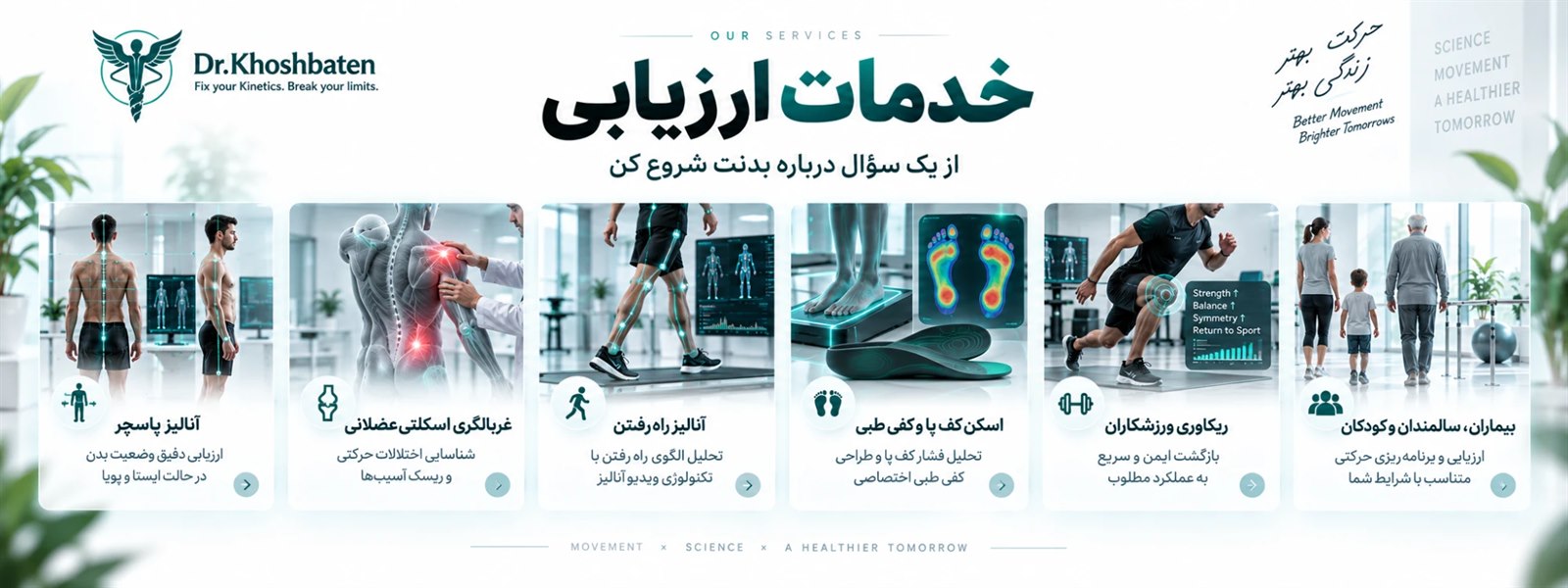
Three standard photos to review head, shoulder, pelvis and knee alignment, with image-based measurements and a printable report.
Start assessment 02Locate discomfort on the anatomical model and explore relevant questions and tests to discuss with a professional.
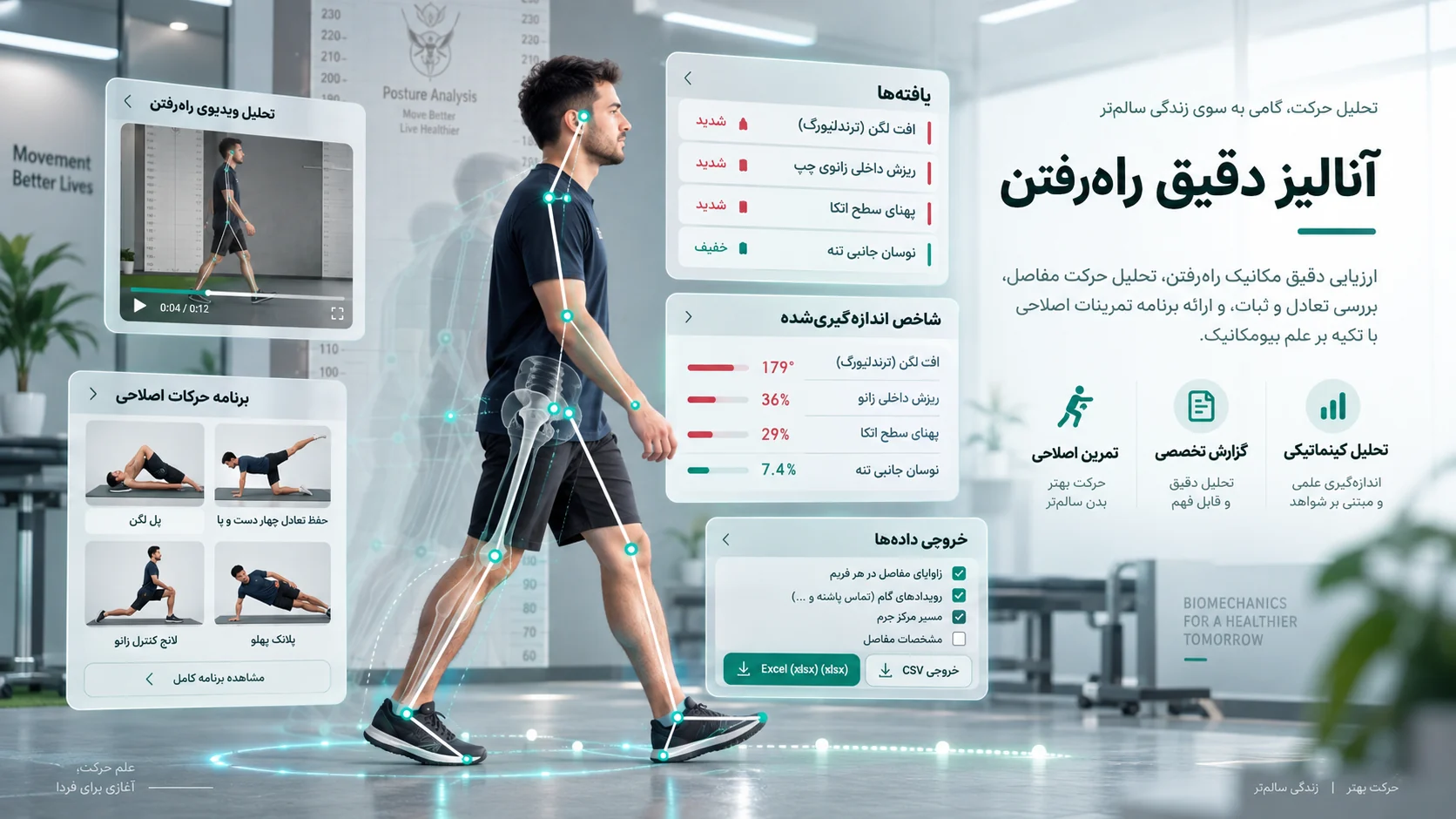
Start assessment 03Review walking video, step rhythm and movement symmetry, with a report of the metrics that can be measured from your footage.
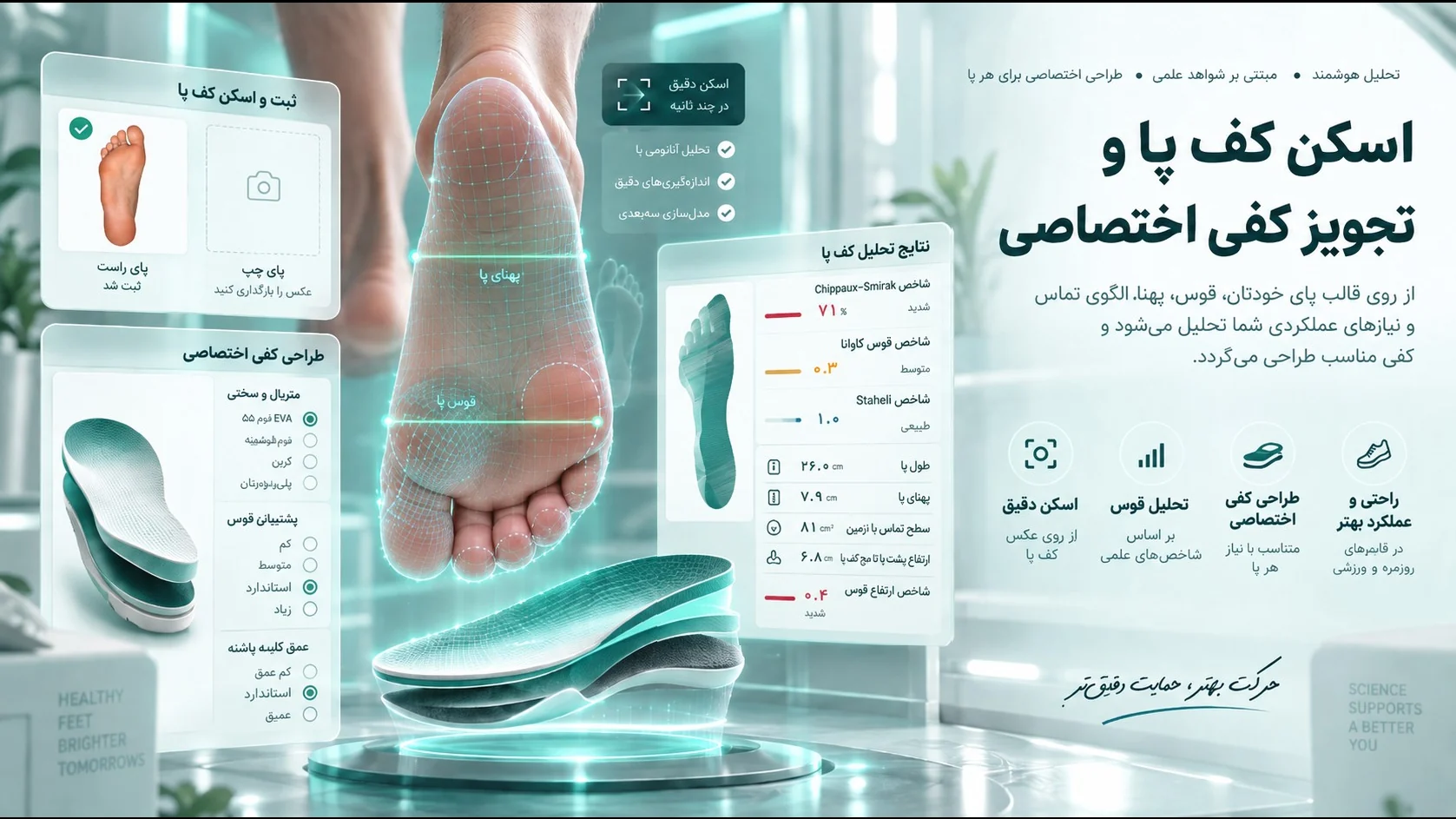
Start assessment 04Explore foot shape and an image-based arch index, with an insole preview for further assessment at the centre.
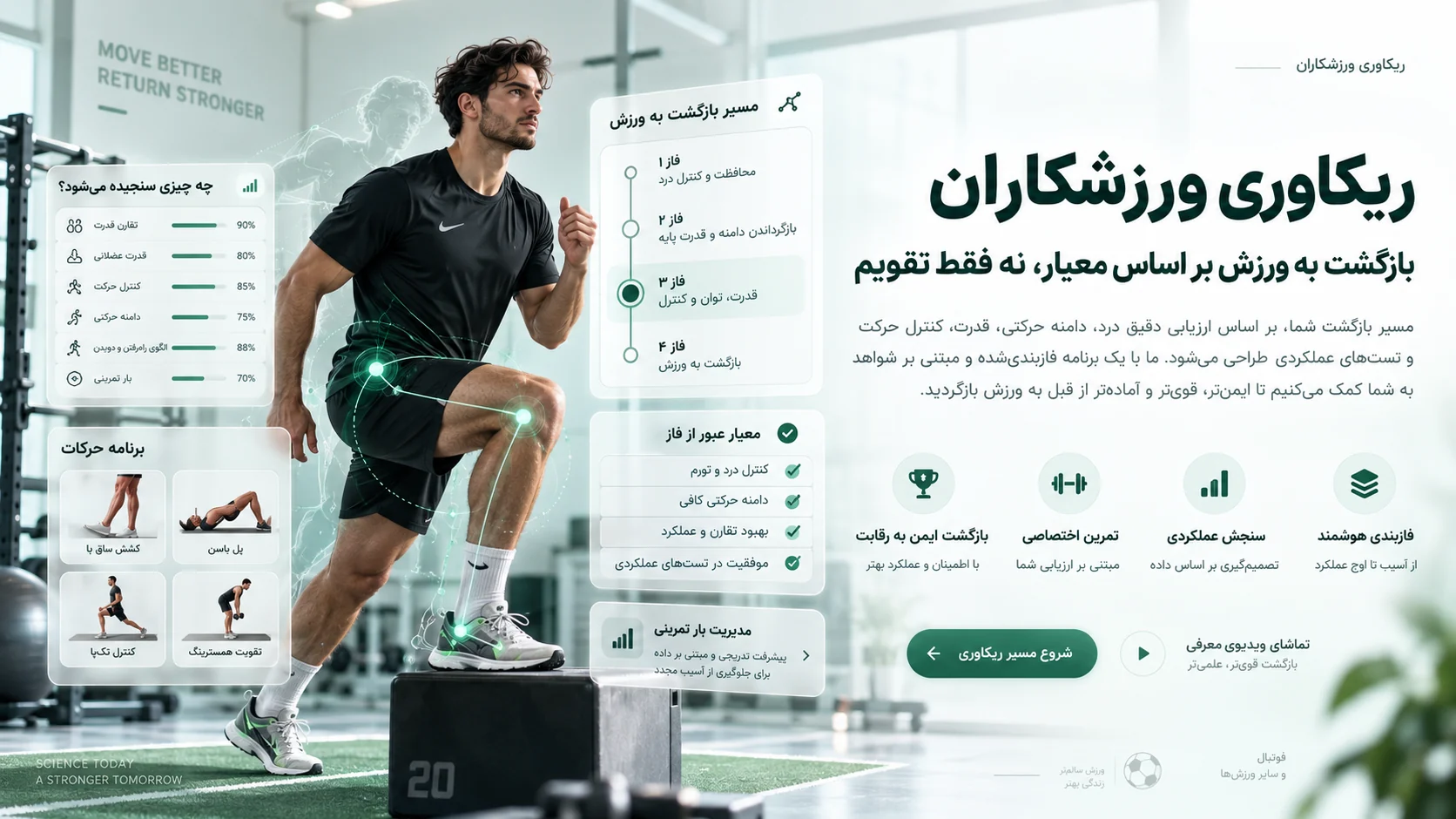
Start assessment 05Review functional measures, side-to-side differences and training progression criteria with a qualified professional.
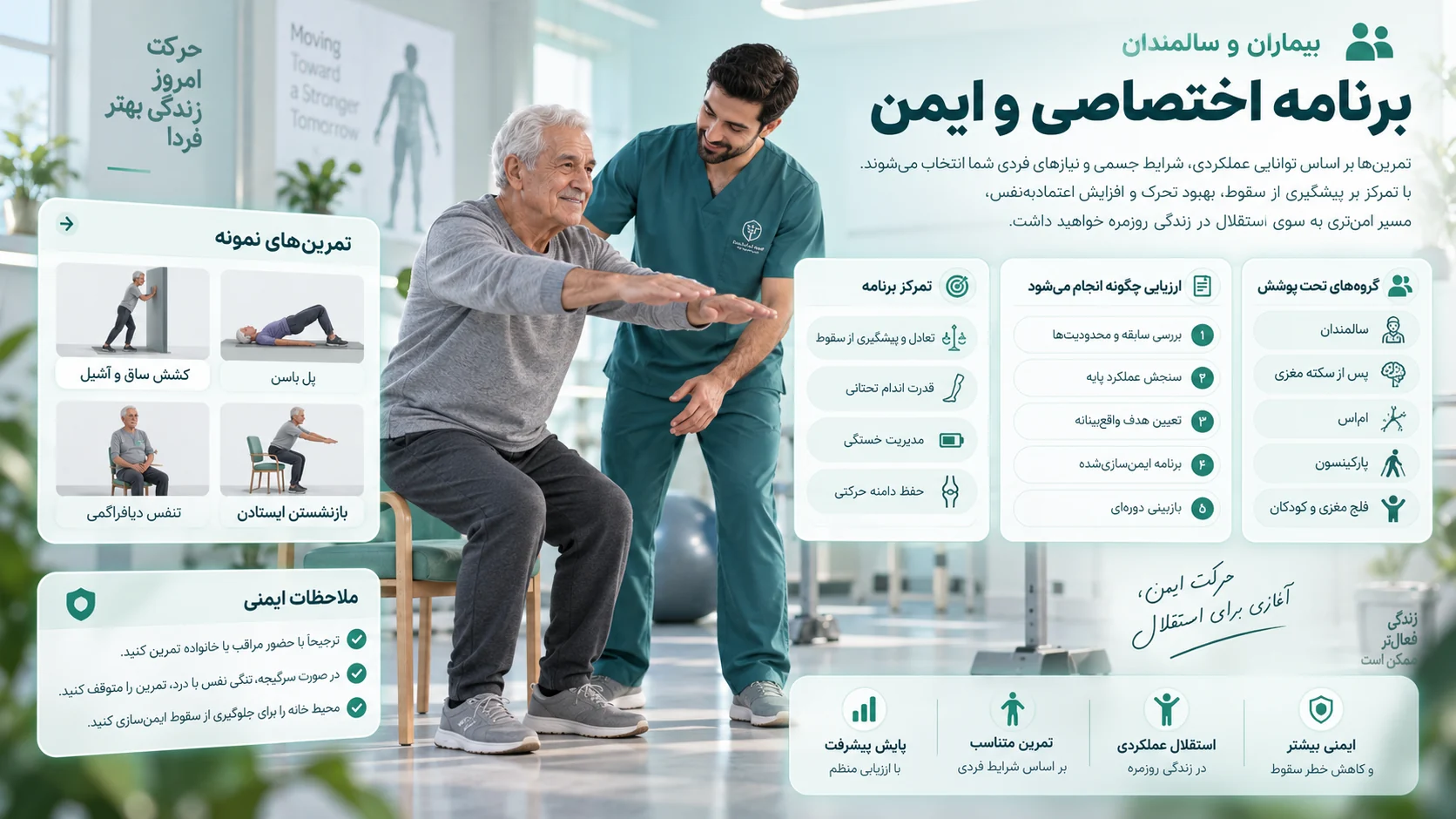
Start assessment 06Assessment adapted to children, older adults and people with specific conditions, with attention to limitations and professional supervision.
Start assessmentA measurement should be traceable: from the landmark on your image to the explanation in your report. Choose a personal report or the more detailed professional version.
Results appear after your images are provided and reviewed.
Start with the photo guide, explore measurements and keep your report for a professional consultation. The current tools do not require an account.
Start posture analysisUse assessment tools, image annotation and the professional report. Interpret findings and make exercise decisions within your professional assessment.
Practitioner workflowAn administrator approves practitioner accounts; access to each record is controlled separately.The screening summary is free. Full reports require active access.
Standard photo guide · The shop and full-report purchaseSee the service, fee and appointment details before booking.
See fees and appointment steps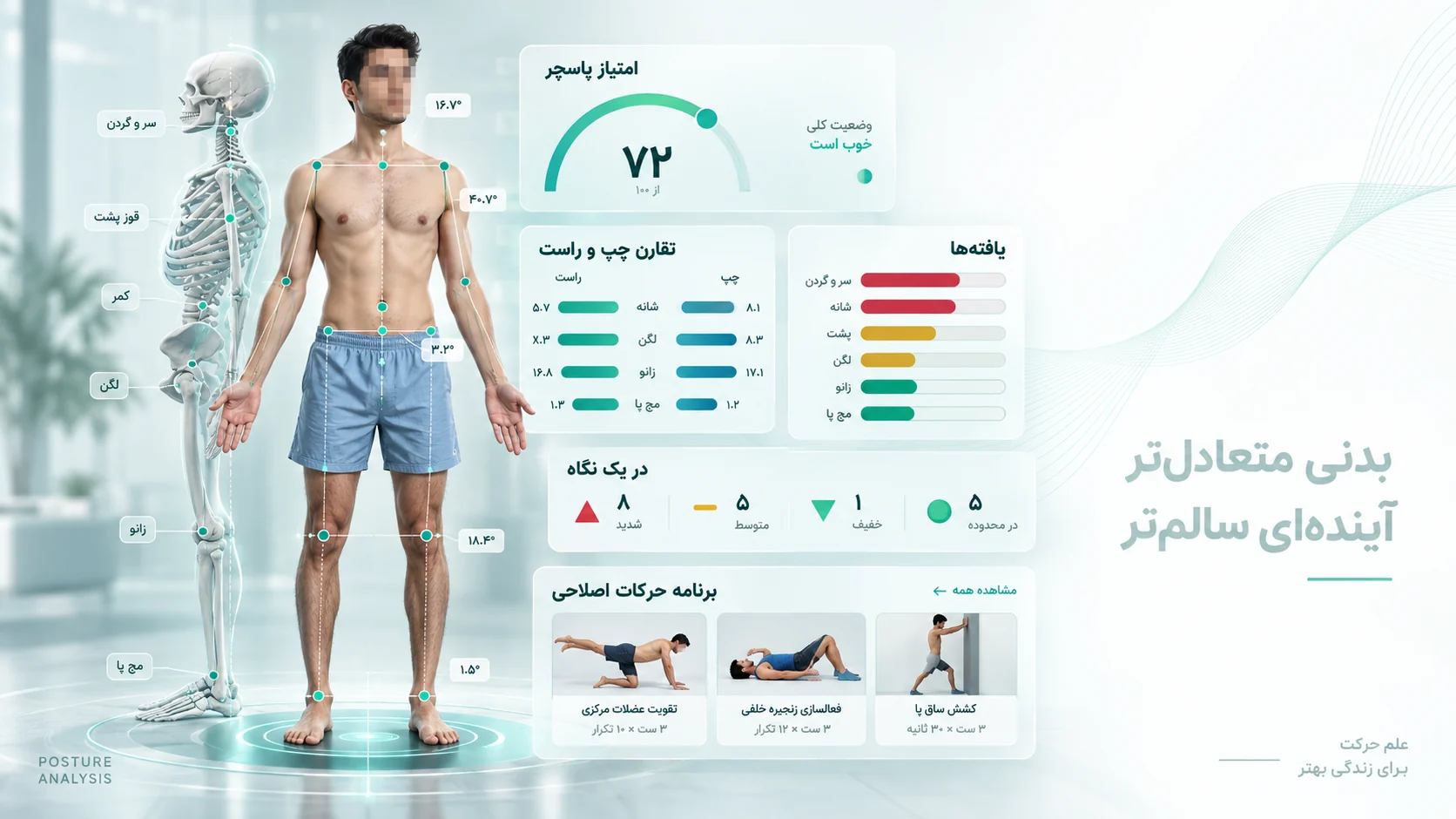
These tools support measurement and screening. A photo result alone is not an injury diagnosis; interpretation requires history and professional assessment.
Full guide to posture analysis
Twenty-one postural findings, each with its threshold, grading and source
This section complements the posture analysis and adds body composition and proportions beside it. ⚠️ Its figures are estimates, not findings, and anything the scan cannot give honestly is withheld rather than printed.
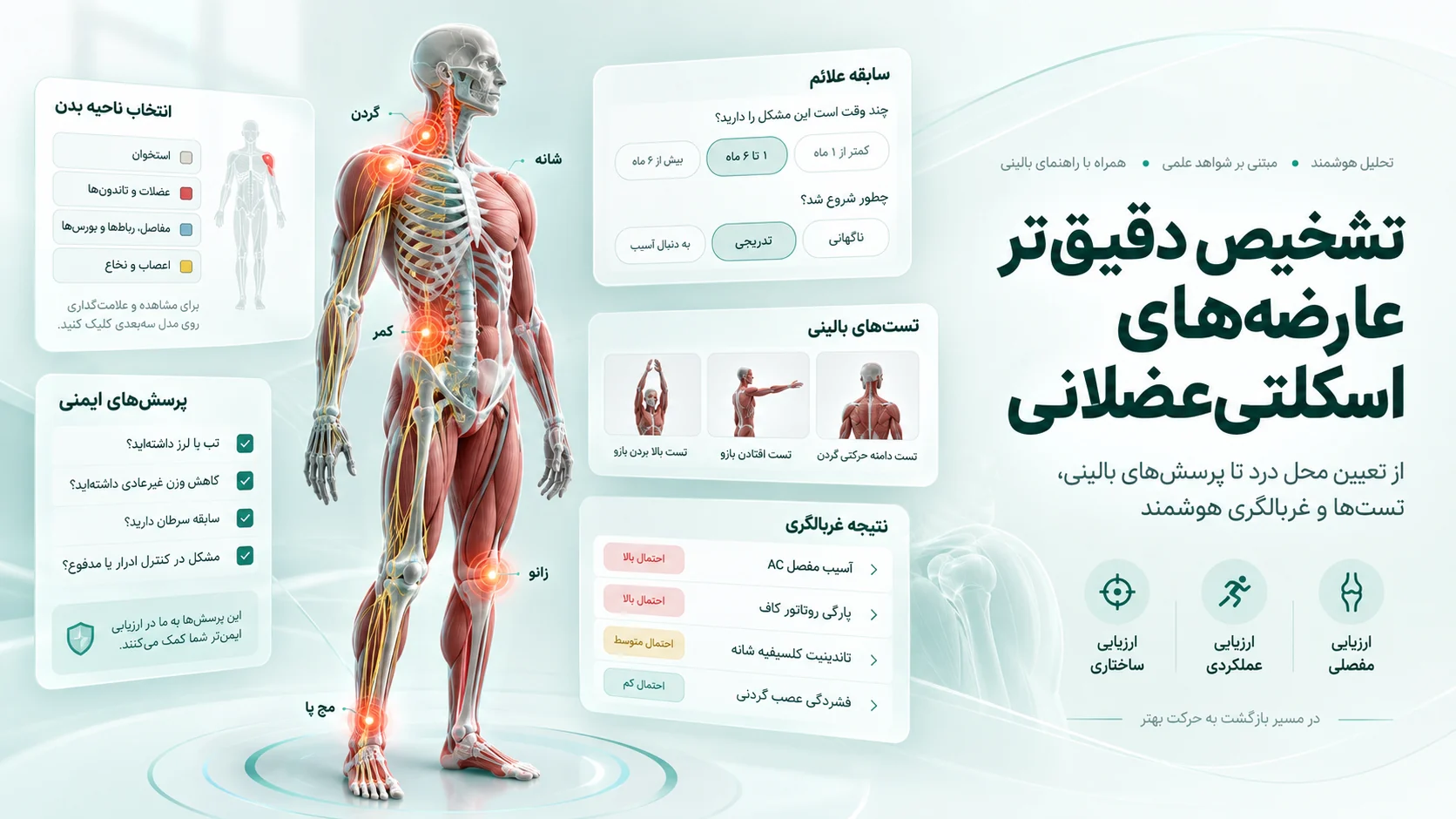
Full guide to musculoskeletal screening
Recent study summaries — with their numbers and their limits
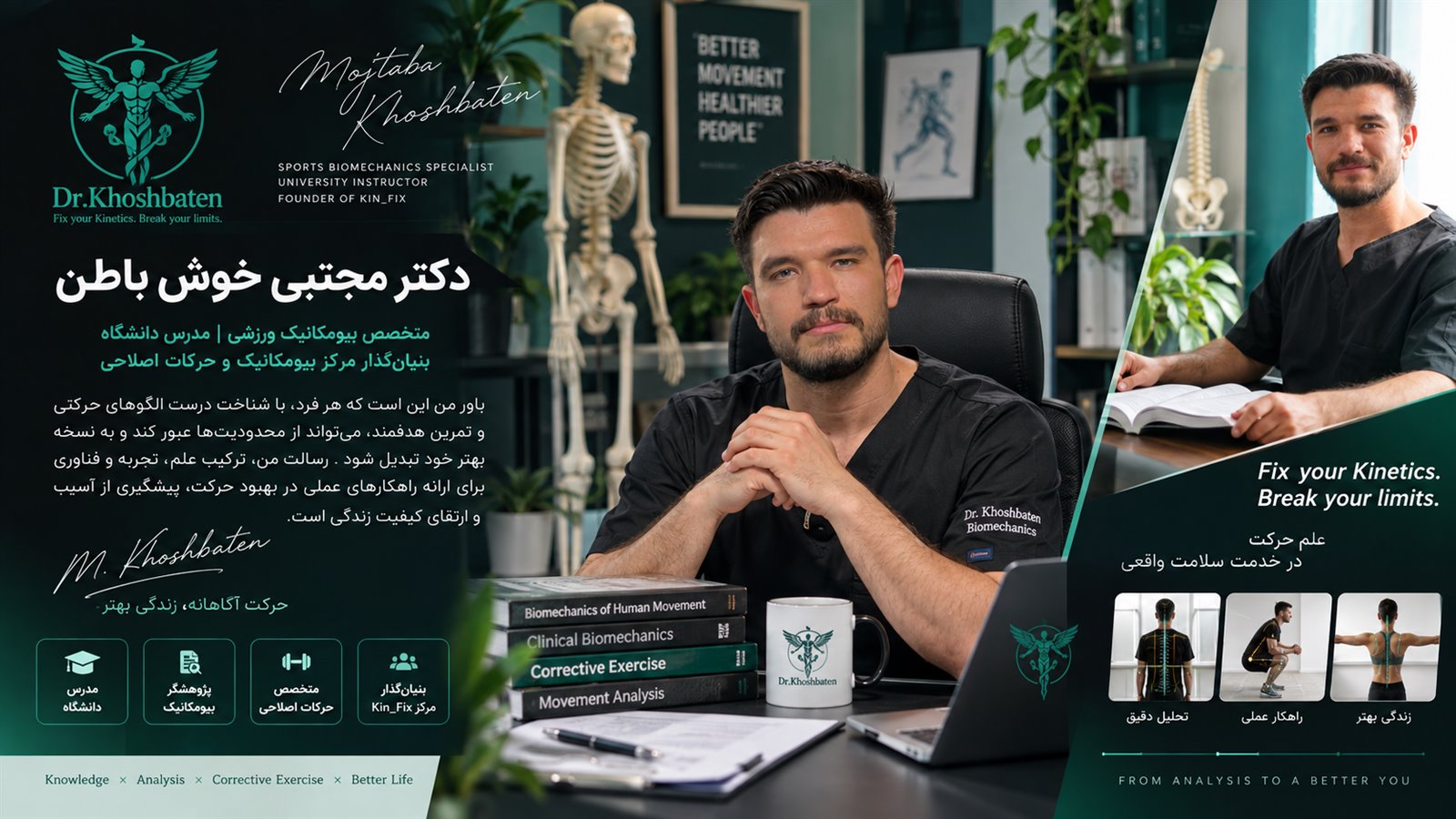
Dr. Mojtaba Khoshbaten holds a PhD in Biomechanics and Corrective Exercise from Kharazmi University and is a university faculty member, with ten years of clinical practice in Tehran.
His work sits where three fields meet: biomechanical modelling of human movement, ergonomic design of orthotics and prosthetics including insoles and braces, and instrumented assessment with electromyography and motion analysis systems. That combination is why assessment here rests on a measured number rather than on visual impression.
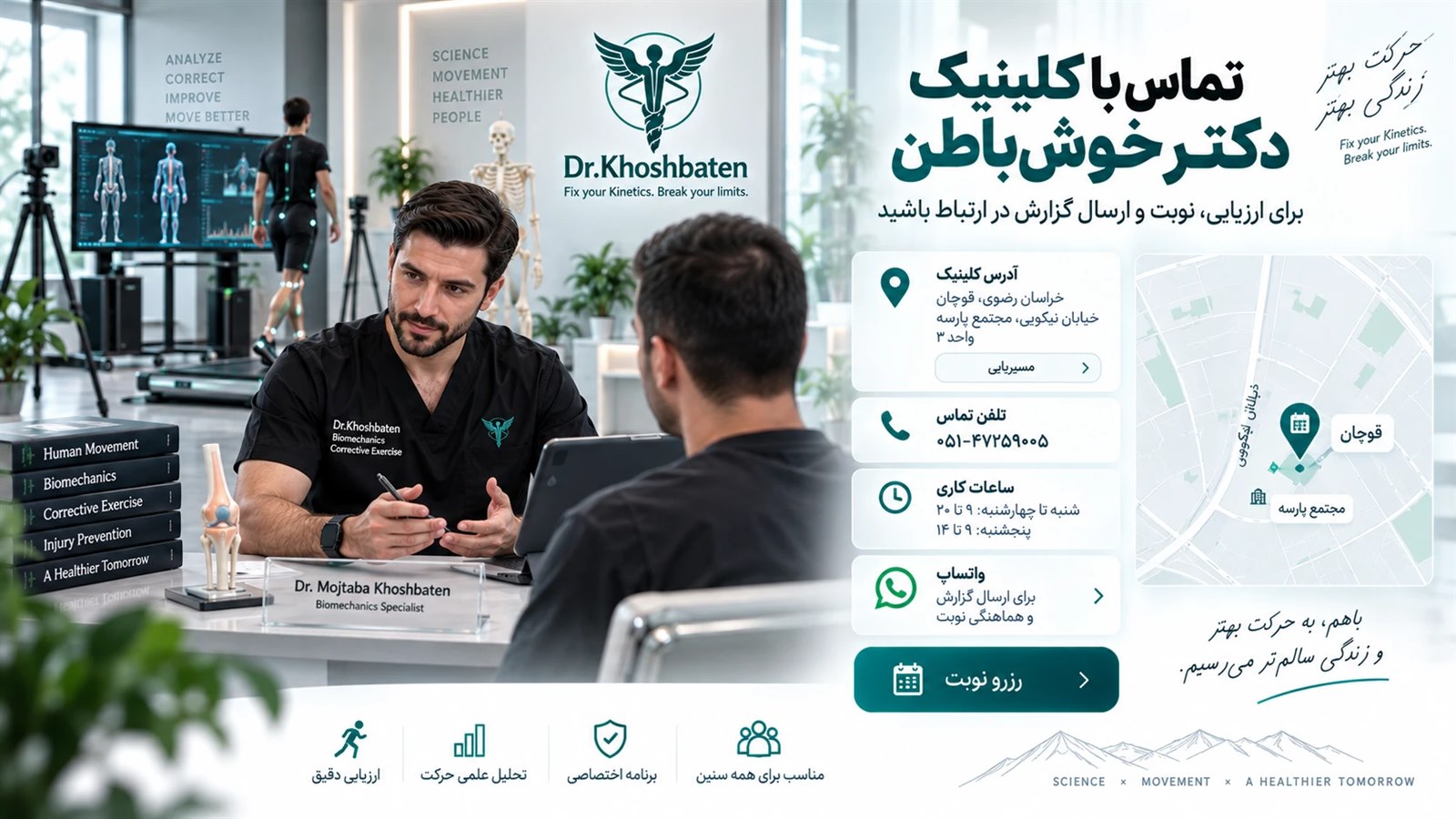
Unit 3, Parseh Complex, Nikouei St., Quchan, Razavi Khorasan, Iran
Open in mapsشنبه تا چهارشنبه: ۹ تا ۲۰
پنجشنبه: ۹ تا ۱۴
Send your report and arrange an appointment
Start a chat