
What it means
A sudden or gradual neck tilt in an adult, with painful spasm.
Where it comes from
Muscle spasm, disc injury or cervical dystonia locking the head in a tilted position.
How it is measured
It is measured on the front view, in the coronal plane. The defining measurement is Head tilted (Lateral head tilt), and it is reported as a finding from above 2°. The number is computed from landmarks on that photograph — not estimated by eye, and not compared against a stock example.
What the numbers mean
| Measurement | Grade |
|---|---|
| up to 2° | Within normal range |
| 2–5° | Mild head tilt |
| 5–10° | Moderate head tilt |
| 10° and above | Severe head tilt |
Source of the bands: Photographic inter-tragus line from horizontal
What is usually seen alongside it
- One shoulder higher (Acromial tilt) — above 2°
None of these is a diagnosis on its own. Together they corroborate the finding; apart, they do not refute it — a measurement nobody took counts neither for nor against.
What confirms it
Congenital torticollis is present from birth and often with a sternocleidomastoid mass; the acquired form has a datable onset. Neck rotation to the opposite side and cervical range complete the picture.
Head tilt — a number with no reference table yet, and a sign that matters more than the number
A slightly tilted head in a photograph is something almost everyone has. The useful question is not "how many degrees" but whether the tilt is persistent, and whether the body is compensating for something with it.
Why there is no reference value here
Singla and colleagues [1] reviewed twenty-one studies of upper-body postural angles. For coronal head tilt — the angle we measure from the front-view photograph — they found:
- Moderate to high intra-rater reliability: one examiner, one method, gives a repeatable number.
- Inter-rater reliability was never reported: it is not known whether two examiners reach the same number on the same photograph.
- Validity against radiographs was never reported either: it is not known how closely this angle tracks the actual skeletal alignment.
That same review calls for standardising camera height, subject distance and software so that normative data for postural angles can be generated. Which is to say: no such table exists yet.
So the number in this clinic's report is a description of that photograph, not a diagnosis. It earns its meaning over time, against your own standardised photographs — not against a universal figure.
And the sign that does matter
Yadegari [2], reviewing abnormal head posture, writes that it arises from ocular, neurological, orthopaedic and ENT causes, among others, and names two opposite errors: not knowing the range of causes sends patients into unnecessary extensive workups, while missing the dangerous ones has serious consequences.
Akbari and colleagues [3] — in 149 patients at Farabi Hospital in Tehran — showed that when the cause is ocular, the commonest sources are superior oblique palsy (44.3%), Duane retraction syndrome (36.2%) and nystagmus (8.1%). In that sample a pure head tilt was 24.8% of the presentations, and the mean tilt was 10.4° (SD 8.9, range 5.0–31.7).
⚠️ The practical point follows: a persistent head tilt is not assumed to be a muscle problem until the eyes have been examined. Stretching and strengthening the neck of someone who tilts their head to avoid double vision is not merely ineffective — it spends the time that diagnosis needed.
So what is the number good for
- As a baseline. Today's value against the value three months from now, on the same photographic method; the direction of change is what carries meaning.
- As one sign among others. A head tilt with a shoulder tilt and a pelvic obliquity is a different picture from a head tilt on its own.
- As a trigger for referral, when the tilt is fixed or comes with restricted neck rotation.
⚠️ What warrants medical assessment: a tilt that is always present, a tilt with double vision or with head-tilting while watching something, restricted neck rotation, a palpable neck mass, sudden onset, or pain.
References
- Singla D, Veqar Z, Hussain ME. Photogrammetric assessment of upper body posture using postural angles: a literature review. J Chiropr Med. 2017;16(2):131–138. PMID 28559753 · DOI 10.1016/j.jcm.2017.01.005
- Yadegari S. Approach to abnormal head posture. Strabismus. 2024;32(4):287–293. PMID 38973509 · DOI 10.1080/09273972.2024.2376554
- Akbari MR, Khorrami-Nejad M, Shakor YA, Dehghanian Nasrabadi F, Kangari H, Dalvand H. The frequency and manifestations of ocular causes of abnormal head posture. J Binocul Vis Ocul Motil. 2024;74(1):9–16. PMID 37983128 · DOI 10.1080/2576117X.2023.2281285
The evidence on this
Study summaries that measured this finding — with their numbers and their limits.
- How accurate is measuring posture from a photograph — Systematic review and meta-analysis, 29 studies
The exercise programme
The head tilts to keep the eyes level, compensating for whatever sits crooked below it.
The stages advance on a standard, not on the calendar:
- Stage 1 — release and wake up — weeks 1–4: Upper trapezius stretch, Levator scapulae stretch
Move on: When the movement is done without pain and without compensating, and the stretch is no longer what limits it. - Stage 2 — control — weeks 3–8: Upper trapezius stretch, Levator scapulae stretch, Chin tuck — deep neck flexors
Move on: When the target muscle is felt through the whole range and the last set looks like the first. - Stage 3 — load and integration — weeks 6–16: Chin tuck — deep neck flexors
Move on: When the corrected pattern holds in everyday movement and under fatigue.
Each session 15–25 minutes, 4–6 times a week, for at least 12 weeks. (the training phases' default, not a study's result)
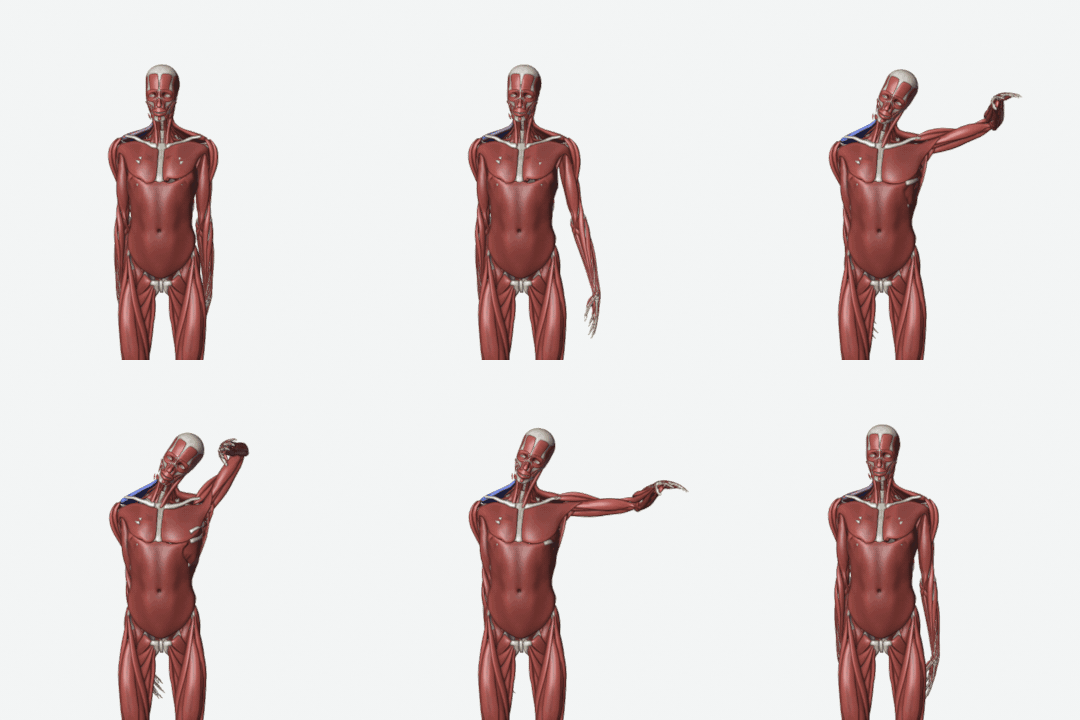
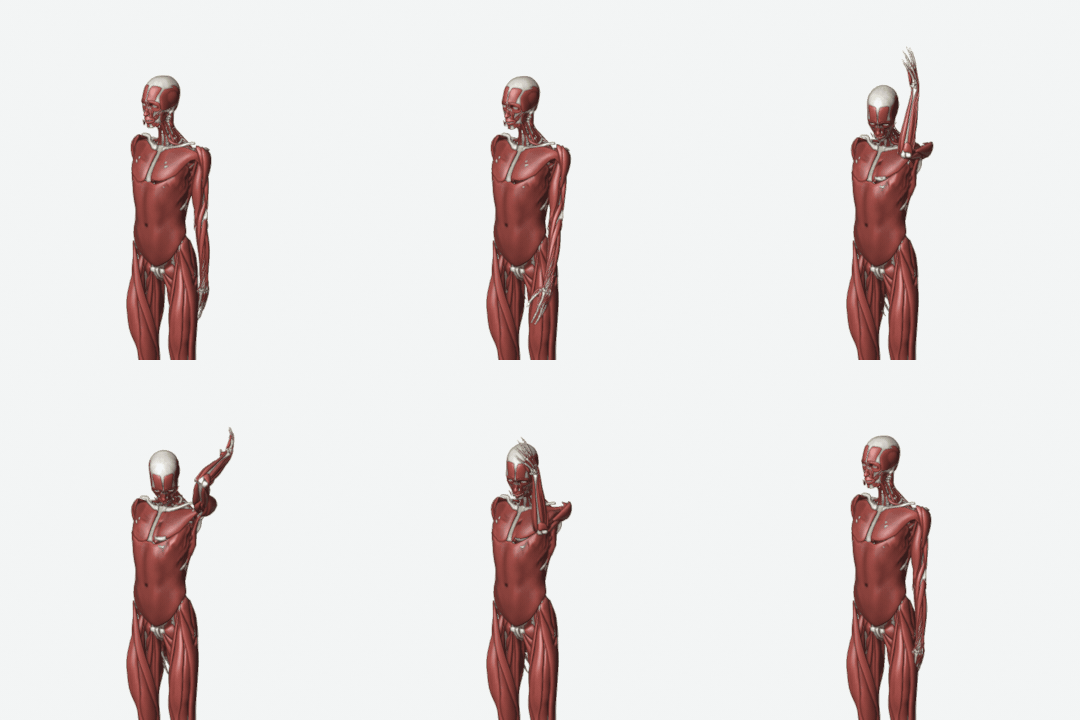
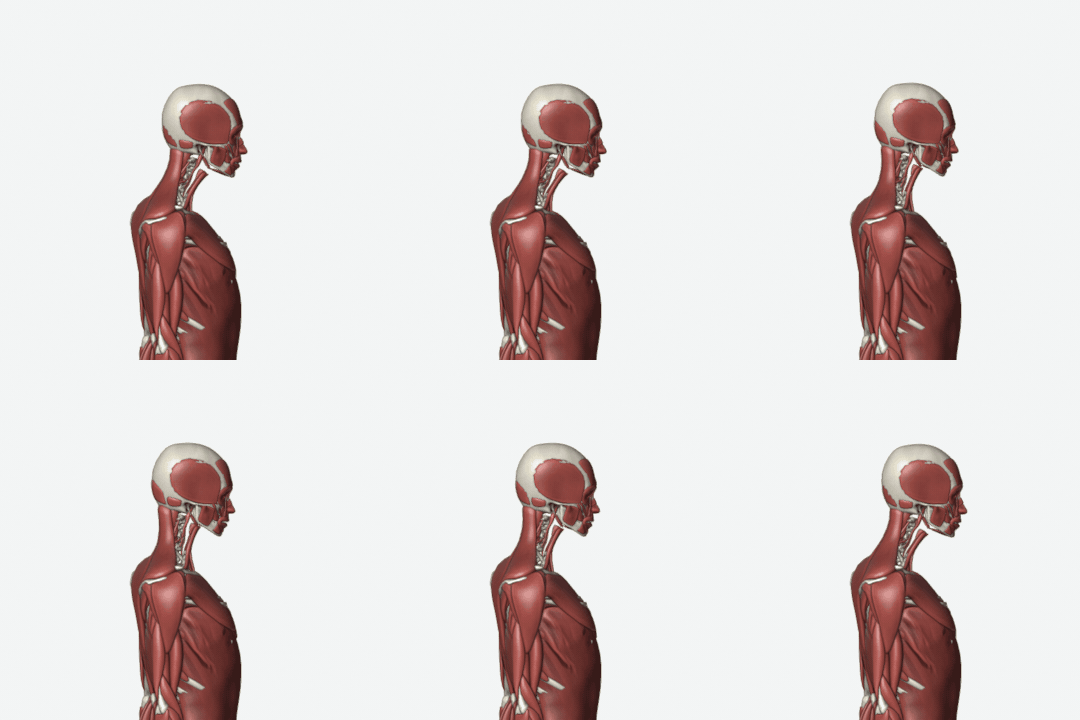
This example is for a moderate grade; each stage runs shorter or longer with the measured grade, and a person's own programme is written after assessment, around their other conditions and limits. If a movement causes pain, stop it and contact the clinic. Muscle colours in the animations: orange working, blue stretching, amber holding still.
Every number on this page is measured on the skin surface in a photograph. That is not the same as a measurement taken on a radiograph: it correlates with one and does not replace it. Wherever the decision depends on imaging, this page and the report itself say so.
What happens at the clinic
The assessment starts with three standing photographs — front, side and back. Every angle is measured on those photographs, the report prints the number and the grade for each, and the exercise programme is built from those numbers rather than from a template. Posture analysis explains the whole path, and the online assessment can be started from your own photograph now.
Frequently asked questions
At what point is acquired torticollis reported?
When head tilted (lateral head tilt) is above 2°, it is reported as a finding. That is where the "Mild head tilt" band begins. The bands come from: Photographic inter-tragus line from horizontal
Can acquired torticollis be assessed from a photograph?
A photograph gives a number, which most assessments do not have. But it is a surface measurement and it does not replace imaging. Congenital torticollis is present from birth and often with a sternocleidomastoid mass; the acquired form has a datable onset. Neck rotation to the opposite side and cervical range complete the picture.
What is the most severe grade?
The worst band in this table is "Severe head tilt". The grade is printed beside the measurement itself in the report, so it is always clear which number produced the word.