
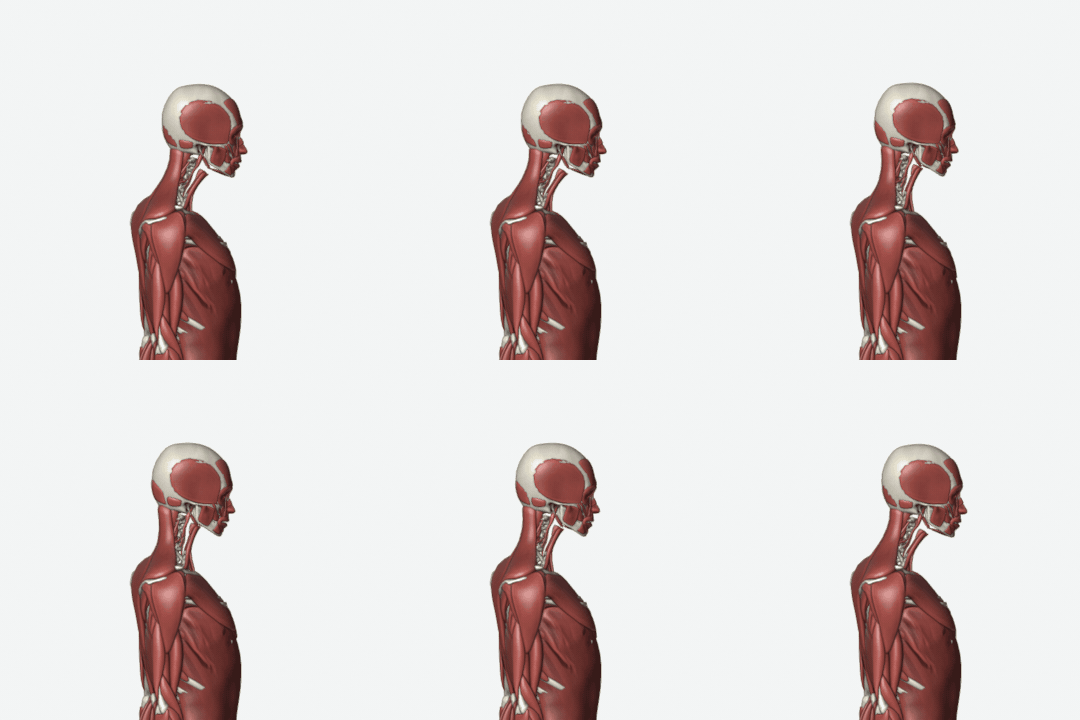
How to do it
Draw the chin straight back to make a double chin. Do not tip the head up.
Default dose
3 × 10 · 5s
This is the library's default dose. Each person's programme is set after assessment, around the grade of their finding and their own conditions and limits.
Muscles involved
- working Deep neck flexors
Muscle colours in the animation: orange working, blue stretching, amber holding still. These muscles were measured on the 3D model.
Where it sits in a programme: Activate the weak
The third phase is activation: strengthening a muscle that has become weak or underused, with controlled movement and light load, so it can carry its share of holding the body up.
Which postural findings it is prescribed for
It appears in the example programme on these pages:
Take care
- If the movement causes pain or makes pain worse, stop and contact the clinic or your doctor.
Source
Trial or systematic review:
- Jull GA, O'Leary SP, Falla DL. Clinical assessment of the deep cervical flexor muscles: the craniocervical flexion test. J Manipulative Physiol Ther. 2008;31(7):525-33.
The deep neck flexors work in upper-cervical flexion — the chin drawn back — not in lifting the head. - Sheikhhoseini R, Shahrbanian S, Sayyadi P, O'Sullivan K. Effectiveness of therapeutic exercise on forward head posture: a systematic review and meta-analysis. J Manipulative Physiol Ther. 2018;41(6):530-9.
Meta-analysis: therapeutic exercise improves the forward head angle.
A related study summary on this site: Does therapeutic exercise change the craniovertebral angle in forward head posture, and does neck disability improve with it?