
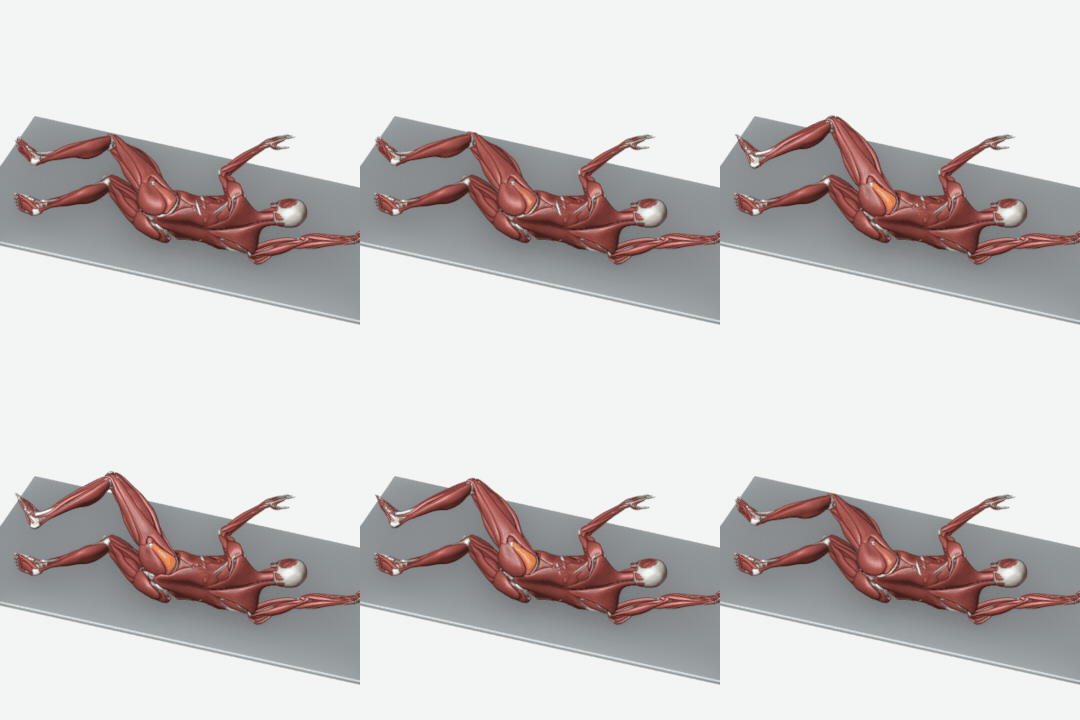
How to do it
On your side, knees bent, heels together. Open the top knee without rolling the pelvis back.
Default dose
3 × 15 · each side
This is the library's default dose. Each person's programme is set after assessment, around the grade of their finding and their own conditions and limits.
Muscles involved
- working Gluteus medius
Muscle colours in the animation: orange working, blue stretching, amber holding still. These muscles were measured on the 3D model.
Where it sits in a programme: Activate the weak
The third phase is activation: strengthening a muscle that has become weak or underused, with controlled movement and light load, so it can carry its share of holding the body up.
Which postural findings it is prescribed for
It appears in the example programme on these pages:
Take care
- If the movement causes pain or makes pain worse, stop and contact the clinic or your doctor.
Source
Measurement study:
- Distefano LJ, Blackburn JT, Marshall SW, Padua DA. Gluteal muscle activation during common therapeutic exercises. J Orthop Sports Phys Ther. 2009;39(7):532-40.
EMG: gluteus medius and maximus activity across twelve common exercises — side-lying hip abduction (the most gluteus medius), the clamshell, the banded side-step, the single-limb squat and deadlift, and lunges. - Selkowitz DM, Beneck GJ, Powers CM. Which exercises target the gluteal muscles while minimizing activation of the tensor fascia lata? J Orthop Sports Phys Ther. 2013;43(2):54-64.
Fine-wire EMG: the clamshell and the bridge work the gluteals with the least tensor fascia latae.