
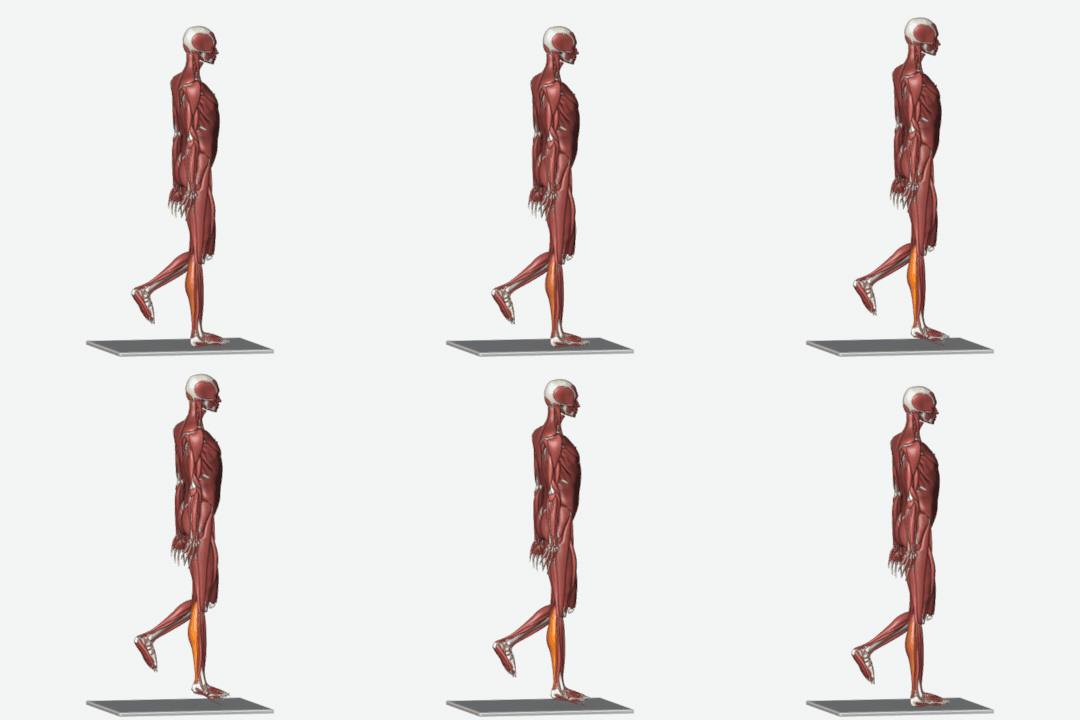
How to do it
Up quickly, down slowly over four seconds. The heel must not drift outward.
Default dose
3 × 15 · each side
This is the library's default dose. Each person's programme is set after assessment, around the grade of their finding and their own conditions and limits.
Muscles involved
- working Gastrocnemius, Soleus
Muscle colours in the animation: orange working, blue stretching, amber holding still. These muscles were measured on the 3D model.
Where it sits in a programme: Activate the weak
The third phase is activation: strengthening a muscle that has become weak or underused, with controlled movement and light load, so it can carry its share of holding the body up.
Which postural findings it is prescribed for
It appears in the example programme on these pages:
Take care
- In the acute phase of a fresh injury, this exercise is taken off the programme.
- Multiple sclerosis — Only under supervision: Balance varies with fatigue and body temperature. The same movement is safe on a good day and not on a relapse day, so: beside something solid, and supervised.
- Parkinson's disease — Only under supervision: Postural instability and gait freezing make these the movements a fall happens in — and also the movements the training is for, so they stay, supervised.
- Stroke — Only under supervision: Asymmetric strength and proprioception mean the affected side will not hold the load the sound side does.
- If the movement causes pain or makes pain worse, stop and contact the clinic or your doctor.
Source
Trial or systematic review:
- Alfredson H, Pietilä T, Jonsson P, Lorentzon R. Heavy-load eccentric calf muscle training for the treatment of chronic Achilles tendinosis. Am J Sports Med. 1998;26(3):360-6.
Trial: slow eccentric heel lowering, 3 × 15 with the knee straight and bent.