
What it means
A medial arch lower than normal, measured as navicular height against foot length. Whether that arch is flexible or rigid does not follow from this measurement and needs its own test.
Where it comes from
The medial longitudinal arch lowering under load, with the talus rotating medially and the heel everting.
How it is measured
It is measured on the front view, in the sagittal plane. The defining measurement is archIndexR, and it is reported as a finding from below 0.22. The number is computed from landmarks on that photograph — not estimated by eye, and not compared against a stock example.
What the numbers mean
| Measurement | Grade |
|---|---|
| 0.22 and above | Within normal range |
| 0.21–0.22 | Borderline arch |
| 0.17–0.21 | Flat foot |
| 0.17 and below | Severely flat foot |
Source of the bands: NNHt adult bands: <0.17 highly pronated, 0.17-0.21 pronated, 0.22-0.31 normal
What is usually seen alongside it
- How flat the inner arch is (Medial arch angle)
- Heel rolls inward (Rearfoot angle)
None of these is a diagnosis on its own. Together they corroborate the finding; apart, they do not refute it — a measurement nobody took counts neither for nor against.
What confirms it
This number gives the height of the arch, not its flexibility. The single heel raise separates a flexible flat foot from a rigid one, and the two are not treated alike.
Flat feet in children and adults — what is actually normal
A toddler's flat foot is the most common reason parents come to a clinic about feet. The short answer is that at that age a flat foot is a normal finding, and what is worth looking for is pain and stiffness — not the shape of the arch.
How and when an arch forms
In the first years the foot looks level with the ground under load: the fat pad is thick and the ligaments are lax, so body weight spreads the soft tissue out. As the muscles strengthen and bone alignment changes, the medial longitudinal arch gradually appears.
Staheli and colleagues [1] surveyed both feet of 441 people — 882 feet, aged one to eighty — and found flat feet usual in infants, common in children, and still within the normal range in adults. Their own recommendation for a flexible flat foot inside that range was documentation and observation, not intervention.
The systematic review by Uden and colleagues [2] adds two points worth carrying. First, the word "normal" is itself misleading for a child's foot, because at certain ages a flat foot is the normal finding. Second, and more important for anyone taking a measurement: of the sixteen foot-posture measures they found, no two are comparable — the number you get depends on the method — and the review could reach no firm conclusion about the age at which the foot stops developing.
Flexible or rigid — the distinction everything rests on
In a flexible flat foot the arch flattens under load but reappears when the load is removed or the person rises onto their toes. Halabchi and colleagues [4] note that most flexible flat feet are physiologic, asymptomatic and need no treatment; it is the symptomatic foot that is treated. The same paper is a reminder to identify obesity and ligamentous laxity where they are present.
⚠️ There is one exception that should not be missed. Mosca [3] separates out the flexible flat foot with a short Achilles tendon, and it is that form which causes pain and disability in some adolescents and adults. "Flexible" on its own is therefore not reassurance: ankle motion has to be assessed too.
In a rigid flat foot no arch forms in any position and the joints are stiff. That is not normal and calls for medical assessment. Telling flexible from rigid is an examination, not something visible from across a room.
What is different in adults
An adult flat foot is either the flexible childhood foot carried on without symptoms, or something newly acquired and progressive. Deland [6] calls the second "adult-acquired flatfoot deformity" — previously known as posterior tibial tendon dysfunction — and stresses that establishing the diagnosis early is one of the most important factors in treatment. Unlike the asymptomatic childhood foot, a newly dropping arch in an adult usually comes with pain and swelling along the inner ankle, and needs following up.
Orthoses and exercise: what the evidence actually says
The common belief is that an insole or an exercise builds the arch. Mosca [3] states plainly that there is no evidence that a longitudinal arch can be created in a child's foot by any external force or device.
The Cochrane review [5] examined sixteen trials covering 1,058 children. ⚠️ Two qualifications, without which quoting it misleads: the outcomes it assessed were pain, function, quality of life, treatment success and adverse events — arch formation was not among them — and it rated the certainty of its own evidence very low to low. For asymptomatic children, custom orthoses compared with shoes made little or no difference at one year to the proportion of children without pain.
The honest summary: an orthosis is not a way to build an arch, and for a painless flat foot in a child the evidence has not shown a benefit. Where there is pain, that is a clinical decision about a particular person. Exercise is worth doing for strength, balance and activity tolerance; the claim that it permanently changes bony structure is not supported.
Why looking at home is not enough
A wet footprint on a tile creates more worry than clarity. As the Uden review [2] showed, the number you get from a foot depends on how it was measured, and the methods are not comparable with one another. The foot is also one part of a chain that includes the knee, the pelvis and the spine.
This page is not a self-diagnosis tool. Whether something needs following up is decided from an examination.
When to have it looked at
- Pain in the sole, heel, shin or knee, during activity or after it.
- No arch on tiptoe, or stiff foot joints.
- Limited ankle motion or a tight Achilles — the exception Mosca [3] singles out.
- Clear asymmetry between the two feet.
- Reduced activity tolerance: a child who tires quickly or avoids running.
- A newly dropping arch in an adult, especially with pain or swelling at the inner ankle.
References
- Staheli LT, Chew DE, Corbett M. The longitudinal arch. A survey of eight hundred and eighty-two feet in normal children and adults. J Bone Joint Surg Am. 1987;69(3):426–428. PMID 3818704 · DOI 10.2106/00004623-198769030-00014
- Uden H, Scharfbillig R, Causby R. The typically developing paediatric foot: how flat should it be? A systematic review. J Foot Ankle Res. 2017;10:37. PMID 28814975 · DOI 10.1186/s13047-017-0218-1
- Mosca VS. Flexible flatfoot in children and adolescents. J Child Orthop. 2010;4(2):107–121. PMID 21455468 · DOI 10.1007/s11832-010-0239-9
- Halabchi F, Mazaheri R, Mirshahi M, Abbasian L. Pediatric flexible flatfoot; clinical aspects and algorithmic approach. Iran J Pediatr. 2013;23(3):247–260. PMID 23795246
- Evans AM, Rome K, Carroll M, Hawke F. Foot orthoses for treating paediatric flat feet. Cochrane Database Syst Rev. 2022;1(1):CD006311. PMID 35080267 · DOI 10.1002/14651858.CD006311.pub4
- Deland JT. Adult-acquired flatfoot deformity. J Am Acad Orthop Surg. 2008;16(7):399–406. PMID 18611997 · DOI 10.5435/00124635-200807000-00005
The evidence on this
Study summaries that measured this finding — with their numbers and their limits.
- Foot orthoses for flat feet in children — Systematic review, 22 studies
- What foot orthoses improve in heel pain — Systematic review and meta-analysis, 8 randomised controlled trials
- How much does exercise reduce falls in older adults — Systematic review and meta-analysis, 37 randomised controlled trials
The exercise programme
The medial arch settles under body weight. The work belongs in the small muscles of the sole and in tibialis posterior, the ones that hold the arch from inside — not in the arch itself.
The stages advance on a standard, not on the calendar:
- Stage 1 — release and wake up — weeks 1–4: Plantar fascia release, Calf and Achilles stretch, Soleus stretch (bent knee)
Move on: When the movement is done without pain and without compensating, and the stretch is no longer what limits it. - Stage 2 — control — weeks 3–8: Calf and Achilles stretch, Soleus stretch (bent knee), Short foot exercise, Tibialis posterior strengthening, Heel raise
Move on: When the target muscle is felt through the whole range and the last set looks like the first. - Stage 3 — load and integration — weeks 6–16: Short foot exercise, Tibialis posterior strengthening, Heel raise, Single-leg balance and squat
Move on: When the corrected pattern holds in everyday movement and under fatigue.
Each session 20–30 minutes, 3–3 times a week, for at least 24 weeks. (from a study)
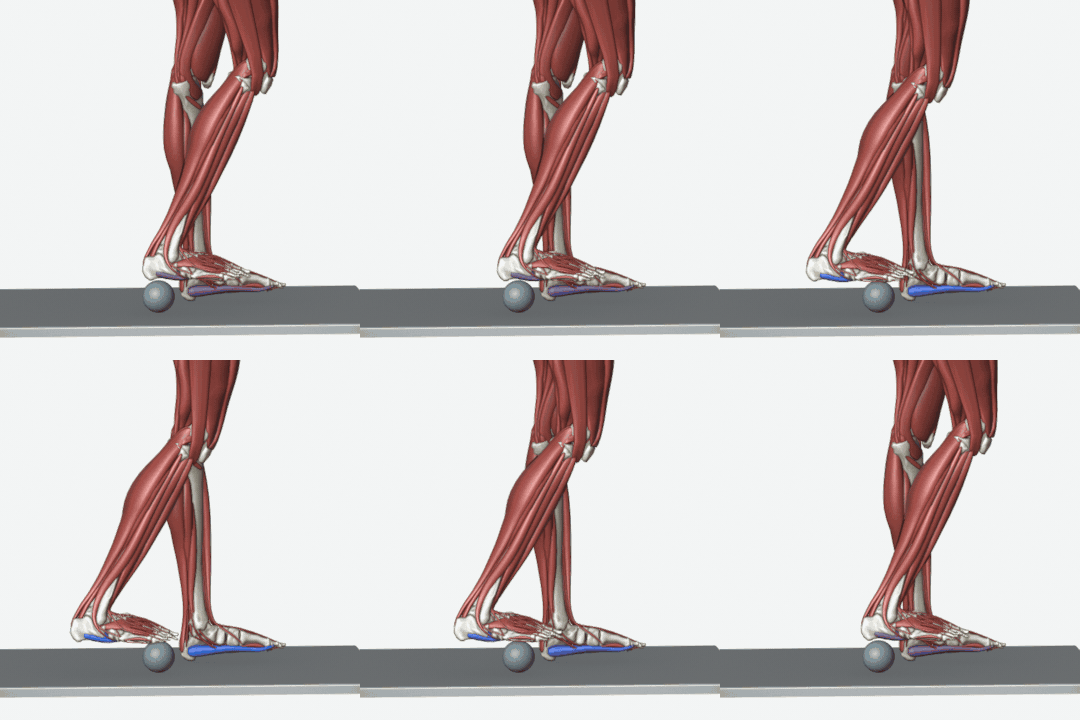
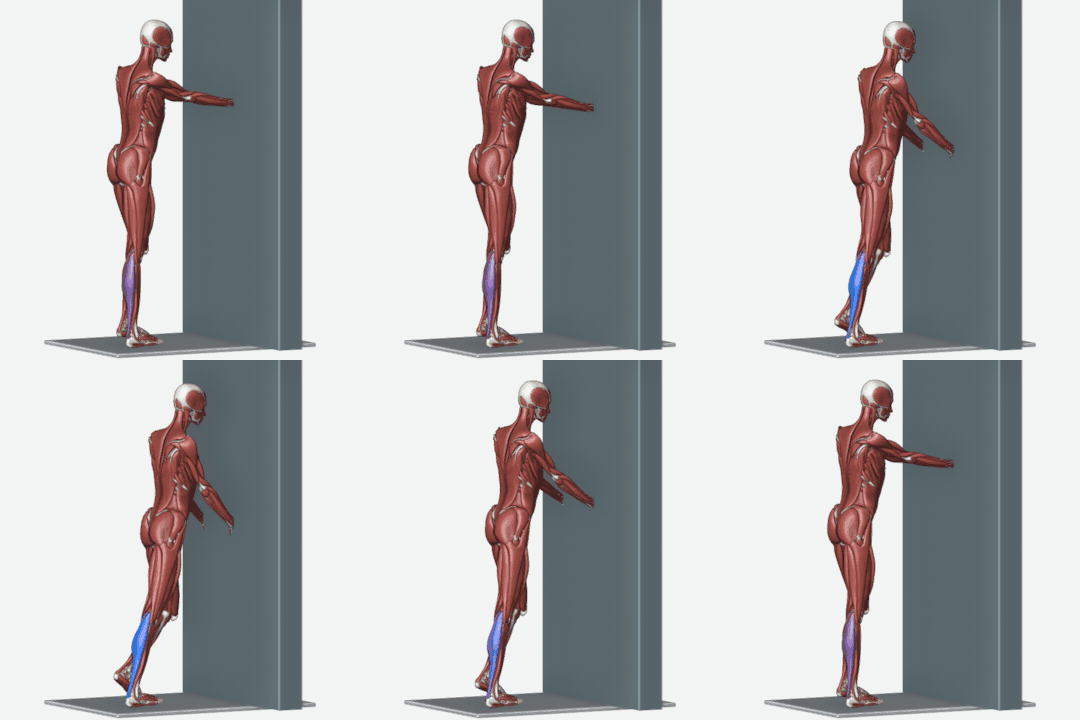
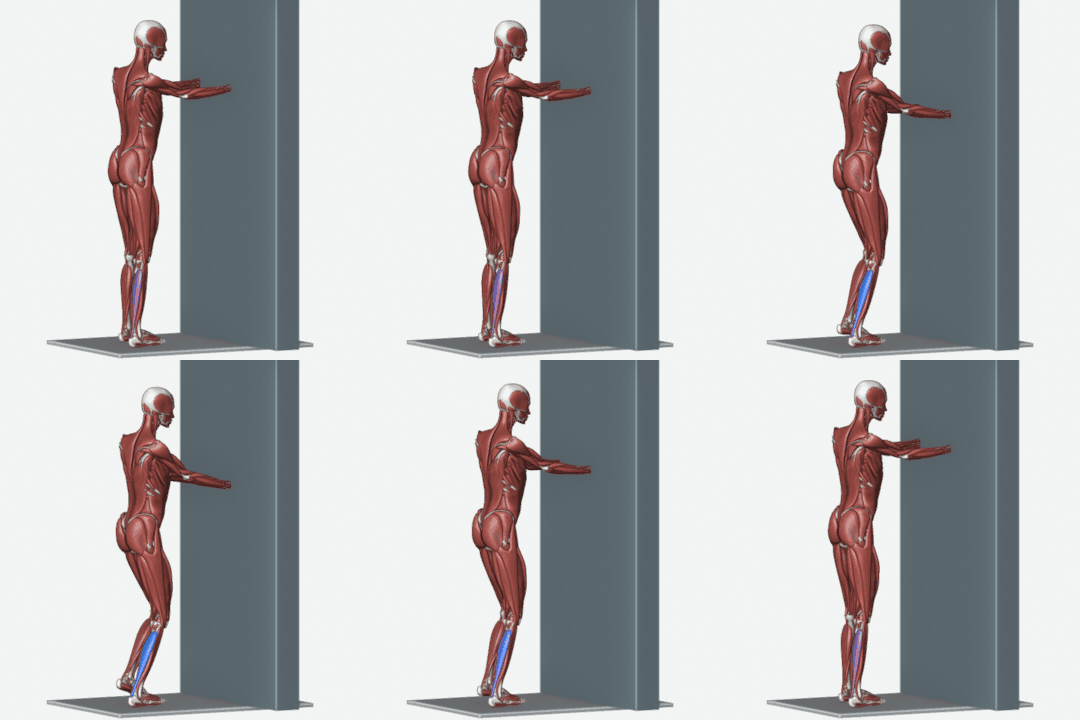
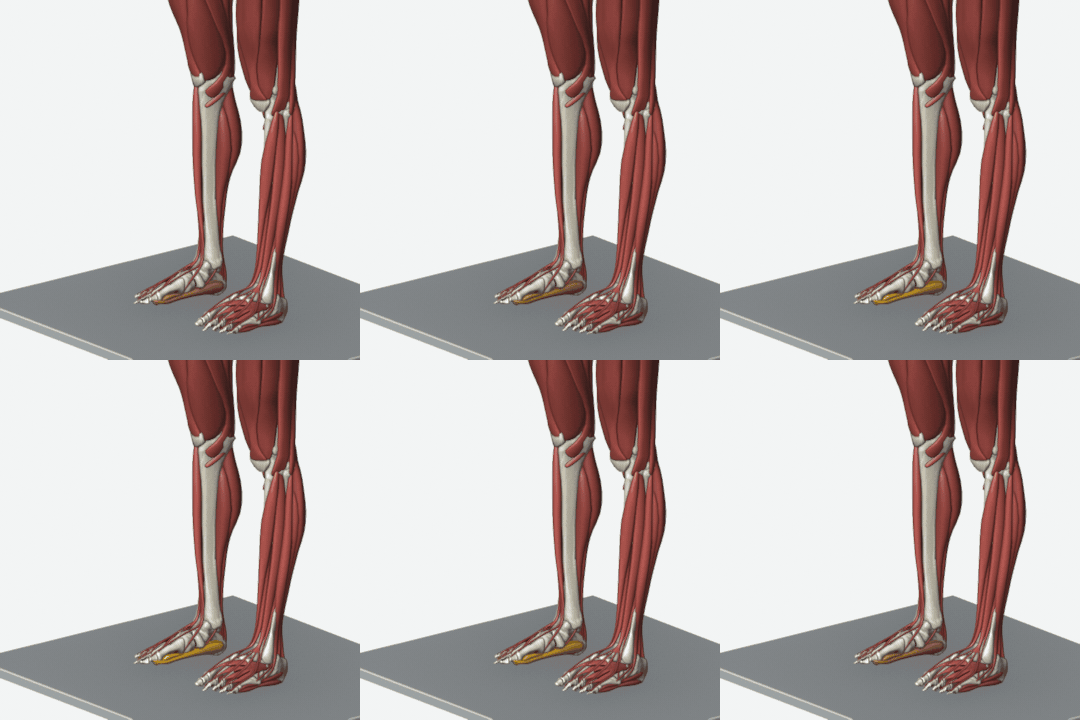
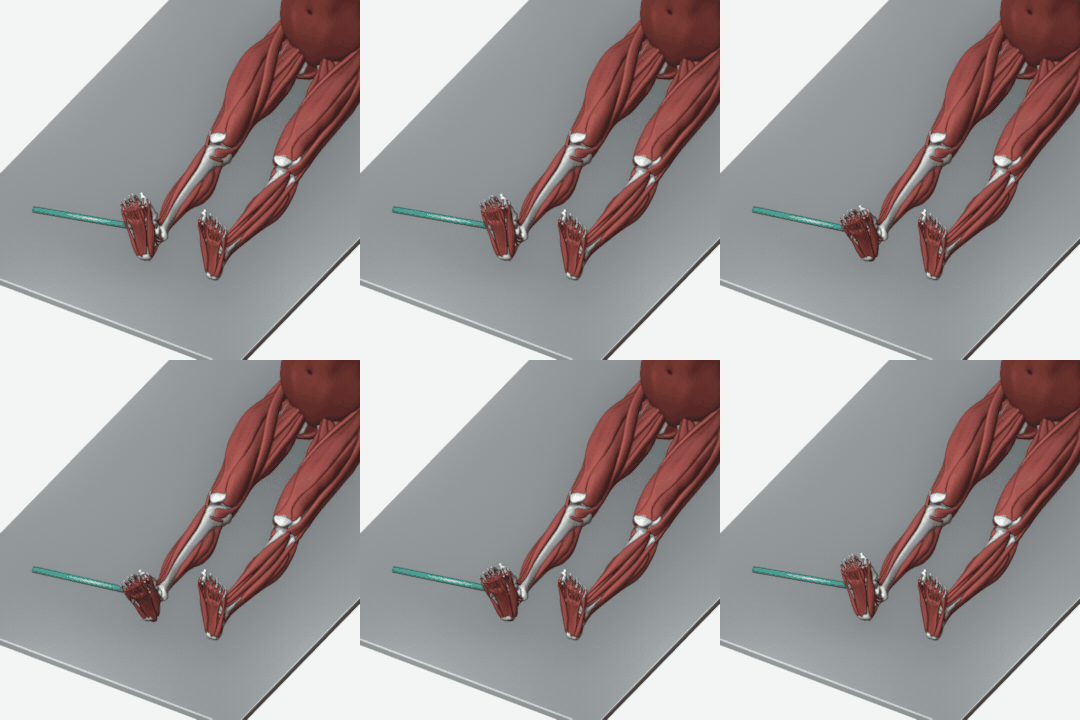
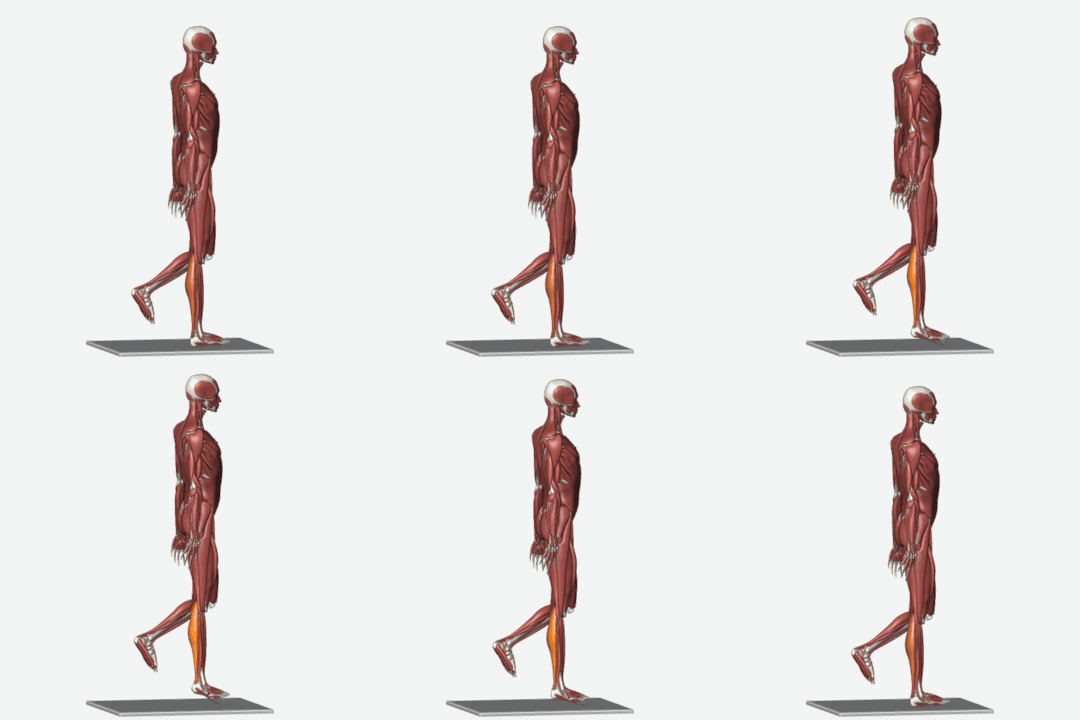
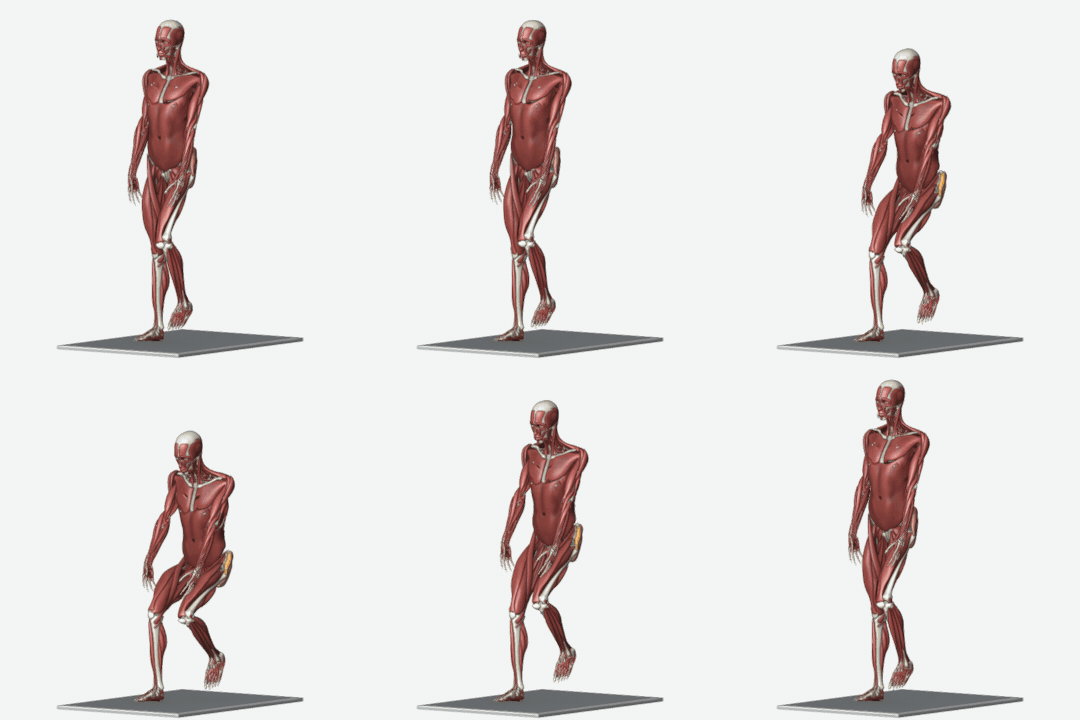
This example is for a moderate grade; each stage runs shorter or longer with the measured grade, and a person's own programme is written after assessment, around their other conditions and limits. If a movement causes pain, stop it and contact the clinic. Muscle colours in the animations: orange working, blue stretching, amber holding still.
Every number on this page is measured on the skin surface in a photograph. That is not the same as a measurement taken on a radiograph: it correlates with one and does not replace it. Wherever the decision depends on imaging, this page and the report itself say so.
What happens at the clinic
The assessment starts with three standing photographs — front, side and back. Every angle is measured on those photographs, the report prints the number and the grade for each, and the exercise programme is built from those numbers rather than from a template. Posture analysis explains the whole path, and the online assessment can be started from your own photograph now.
Frequently asked questions
At what point is pes planus (by arch height) reported?
When archindexr is below 0.22, it is reported as a finding. That is where the "Borderline arch" band begins. The bands come from: NNHt adult bands: <0.17 highly pronated, 0.17-0.21 pronated, 0.22-0.31 normal
Can pes planus (by arch height) be assessed from a photograph?
A photograph gives a number, which most assessments do not have. But it is a surface measurement and it does not replace imaging. This number gives the height of the arch, not its flexibility. The single heel raise separates a flexible flat foot from a rigid one, and the two are not treated alike.
What is the most severe grade?
The worst band in this table is "Severely flat foot". The grade is printed beside the measurement itself in the report, so it is always clear which number produced the word.