
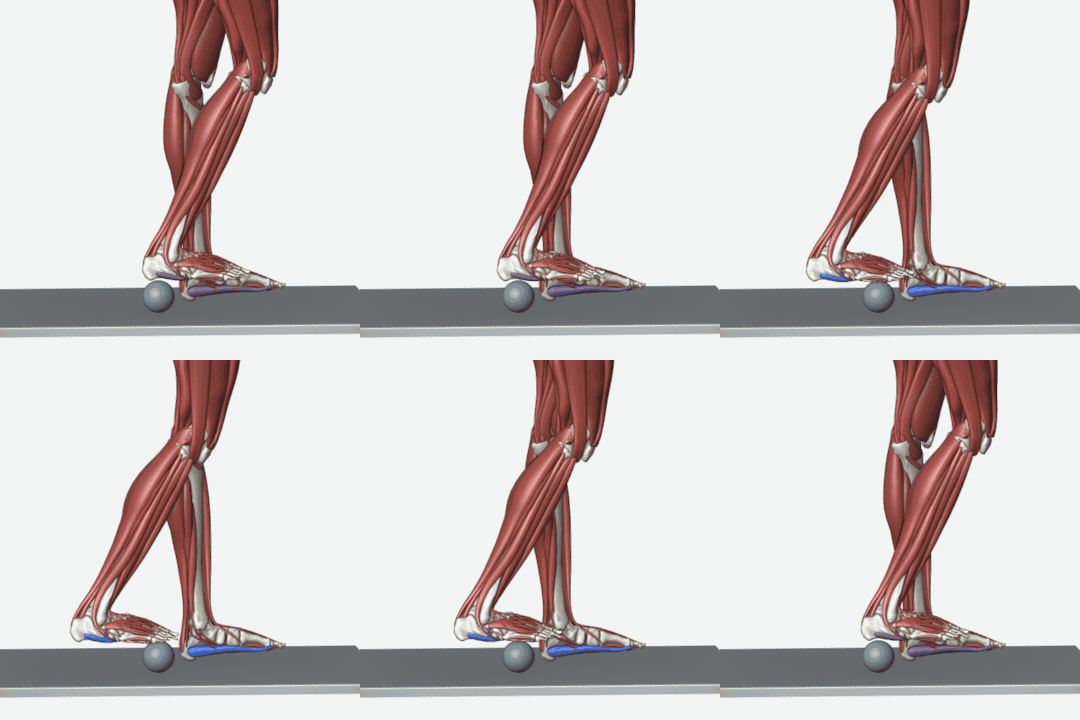
How to do it
Small ball under the arch, roll slowly from heel to toes.
Default dose
90s · each side
This is the library's default dose. Each person's programme is set after assessment, around the grade of their finding and their own conditions and limits.
Muscles involved
- release Plantar foot muscles
Muscle colours in the animation: orange working, blue stretching, amber holding still. These muscles were measured on the 3D model.
Where it sits in a programme: Release and inhibit
The first phase of a corrective programme is release: easing the tension and sensitivity of overactive tissue — usually with gentle pressure from a ball or foam roller — so that the movements after it come more easily and more cleanly.
Which postural findings it is prescribed for
It appears in the example programme on these pages:
Take care
- If the movement causes pain or makes pain worse, stop and contact the clinic or your doctor.
Source
Textbook:
- Clark MA, Lucett SC. NASM Essentials of Corrective Exercise Training. Lippincott Williams & Wilkins; 2011.
The four-phase corrective continuum — inhibit, lengthen, activate, integrate — this library is ordered by. - Koc TA Jr, Bise CG, Neville C, Carreira D, Martin RL, McDonough CM. Heel pain – plantar fasciitis: revision 2023. J Orthop Sports Phys Ther. 2023;53(12):CPG1-CPG39.
Clinical guideline: plantar fascia and calf stretching and soft-tissue manual therapy for heel pain.