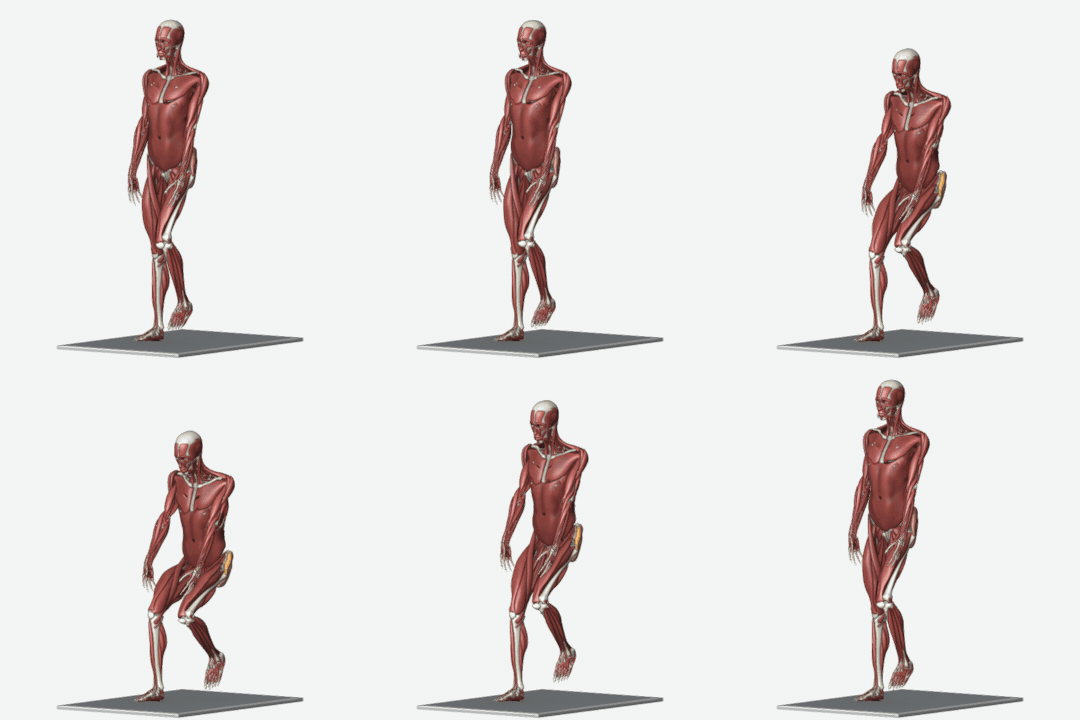
How to do it
On one leg, knee over the second toe, pelvis level. If the other hip drops, reduce the depth.
Default dose
3 × 8 · each side
This is the library's default dose. Each person's programme is set after assessment, around the grade of their finding and their own conditions and limits.
Muscles involved
- holding still Gluteus medius, Gluteus maximus
Muscle colours in the animation: orange working, blue stretching, amber holding still. These muscles were measured on the 3D model.
Where it sits in a programme: Integrate
The fourth phase is integration: using the new pattern in whole, everyday movements — standing, bending, squatting, walking — so the correction does not stay on the exercise mat.
Which postural findings it is prescribed for
It appears in the example programme on these pages:
- Genu recurvatum
- Pelvic obliquity
- Leg length discrepancy
- Lateral trunk shift
- Genu varum
- Genu valgum
- Rearfoot valgus
- Rearfoot varus
- Pes planus (by arch height)
- Pes cavus (by arch height)
Take care
- Osteoporosis — Only under supervision: Axial loading and single-leg work are useful and recommended, but they should be started under supervision and progressed slowly.
- Multiple sclerosis — Only under supervision: Balance varies with fatigue and body temperature. The same movement is safe on a good day and not on a relapse day, so: beside something solid, and supervised.
- Parkinson's disease — Only under supervision: Postural instability and gait freezing make these the movements a fall happens in — and also the movements the training is for, so they stay, supervised.
- Stroke — Only under supervision: Asymmetric strength and proprioception mean the affected side will not hold the load the sound side does.
- Cerebral palsy — Only under supervision: Spasticity and limited joint range make correct performance different from person to person; that is an assessor's decision, not a list's.
- If the movement causes pain or makes pain worse, stop and contact the clinic or your doctor.
Source
Clinical guideline:
- Crossley KM, van Middelkoop M, Callaghan MJ, et al. 2016 Patellofemoral pain consensus statement from the 4th International Patellofemoral Pain Research Retreat, Manchester. Part 2: recommended physical interventions (exercise, taping, bracing, foot orthoses and combined interventions). Br J Sports Med. 2016;50(14):844-52.
Consensus: combined hip and knee exercise is recommended for patellofemoral pain. - Distefano LJ, Blackburn JT, Marshall SW, Padua DA. Gluteal muscle activation during common therapeutic exercises. J Orthop Sports Phys Ther. 2009;39(7):532-40.
EMG: gluteus medius and maximus activity across twelve common exercises — side-lying hip abduction (the most gluteus medius), the clamshell, the banded side-step, the single-limb squat and deadlift, and lunges.
A related study summary on this site: Does exercise improve balance and reduce falls in older people — and at what dose?