
What it means
A knee that passes the straight line and locks backward on standing.
Where it comes from
Posterior capsule laxity with the habit of standing on a locked knee.
How it is measured
It is measured on the side view, in the sagittal plane. The defining measurement is Knee locks backward (Genu recurvatum), and it is reported as a finding from above 5°. The number is computed from landmarks on that photograph — not estimated by eye, and not compared against a stock example.
What the numbers mean
| Measurement | Grade |
|---|---|
| up to 5° | Within normal range |
| 5–10° | Mild hyperextension |
| 10–15° | Moderate hyperextension |
| 15° and above | Severe hyperextension |
Source of the bands: Loudon JK et al, JOSPT 1998;27:373-8 (knee recurvatum ≥ 5°)
What is usually seen alongside it
- Pelvis tipped forward or back (Sagittal pelvic tilt) — above 15°
None of these is a diagnosis on its own. Together they corroborate the finding; apart, they do not refute it — a measurement nobody took counts neither for nor against.
What confirms it
Generalised laxity is scored with the Beighton scale, of which knee hyperextension is one of the nine items.
Hyperextending knee — a sign of general laxity, not just one joint
Knee hyperextension is usually looked at on its own, when it is more often a sign of something wider: generalised joint hypermobility. Knee hyperextension is one of the nine items of the Beighton score.
And that score's threshold is not one number
Singh and colleagues [1] assessed a thousand people aged three to a hundred and one with the Beighton system. What they found:
- Scores vary across the lifespan and are significantly influenced by age, sex and ethnicity.
- Women and non-Caucasian participants had higher scores throughout life.
- Which led them to question the commonly used ≥4 cut-off and propose age- and sex-specific ones instead.
⚠️ So "you are hypermobile", said without age and sex, is an incomplete sentence — and no published Iranian normative data is available. The same position the knock-knee and bow-leg pages are in.
So how should the number be read
The threshold on this page (5° and above) comes from its own literature and is printed with its source in the table above. What the number does not say is whether you have generalised hypermobility — that is what the Beighton score measures, it has eight other items, and it is an examination.
⚠️ Generalised joint hypermobility can have an inherited connective-tissue basis. With recurrent pain, dislocations, or a family history alongside it, that needs medical assessment rather than an exercise programme.
References
- Singh H, McKay M, Baldwin J, Nicholson L, Chan C, Burns J, Hiller CE. Beighton scores and cut-offs across the lifespan: cross-sectional study of an Australian population. Rheumatology (Oxford). 2017;56(11):1857–1864. PMID 28340003 · DOI 10.1093/rheumatology/kex043
The evidence on this
Study summaries that measured this finding — with their numbers and their limits.
- How accurate is motion capture from a phone camera — Systematic review and three-level meta-analysis, 12 studies
- How much does exercise reduce falls in older adults — Systematic review and meta-analysis, 37 randomised controlled trials
The exercise programme
The knee locks backwards in standing, so the load lands on ligament instead of muscle.
The stages advance on a standard, not on the calendar:
- Stage 1 — release and wake up — weeks 1–4: Calf and Achilles stretch
Move on: When the movement is done without pain and without compensating, and the stretch is no longer what limits it. - Stage 2 — control — weeks 3–8: Calf and Achilles stretch, Standing hamstring curl, Glute bridge, Heel raise
Move on: When the target muscle is felt through the whole range and the last set looks like the first. - Stage 3 — load and integration — weeks 6–16: Standing hamstring curl, Glute bridge, Heel raise, Bodyweight squat, Single-leg balance and squat, Standing posture reset
Move on: When the corrected pattern holds in everyday movement and under fatigue.
Each session 20–30 minutes, 3–3 times a week, for at least 24 weeks. (from a study)
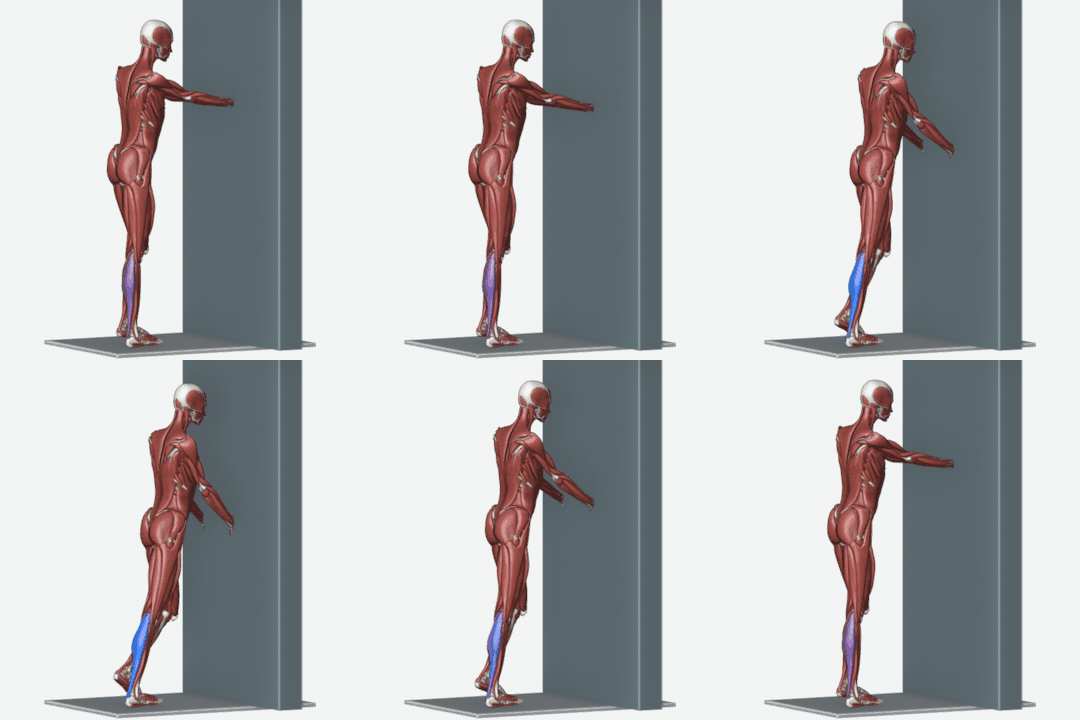
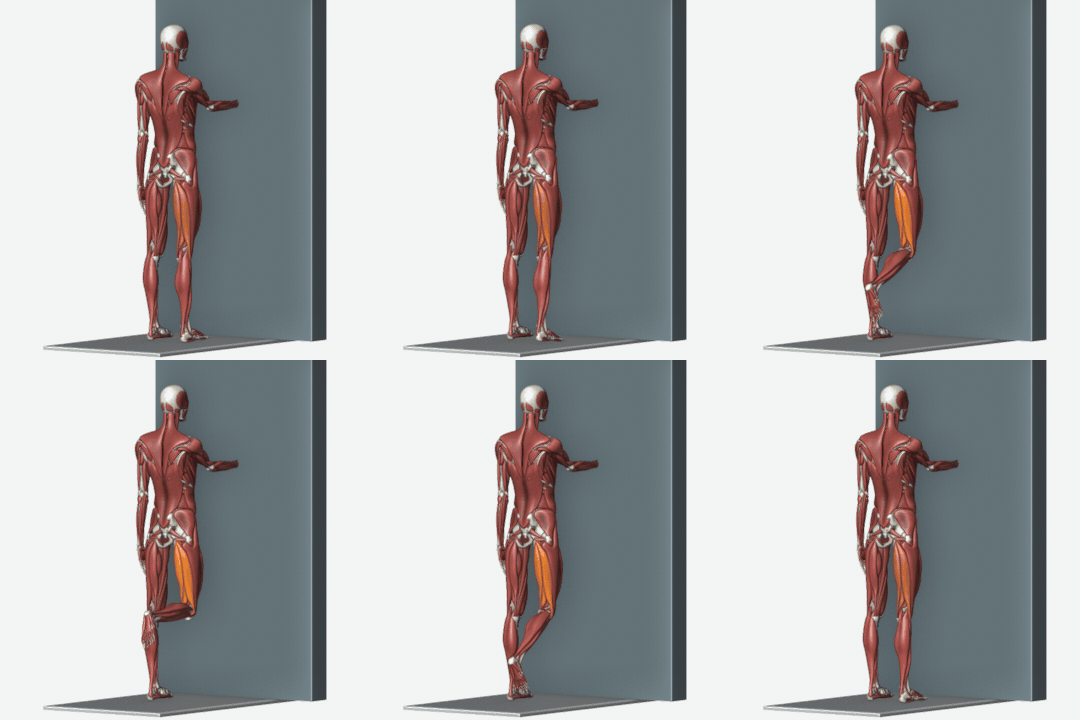
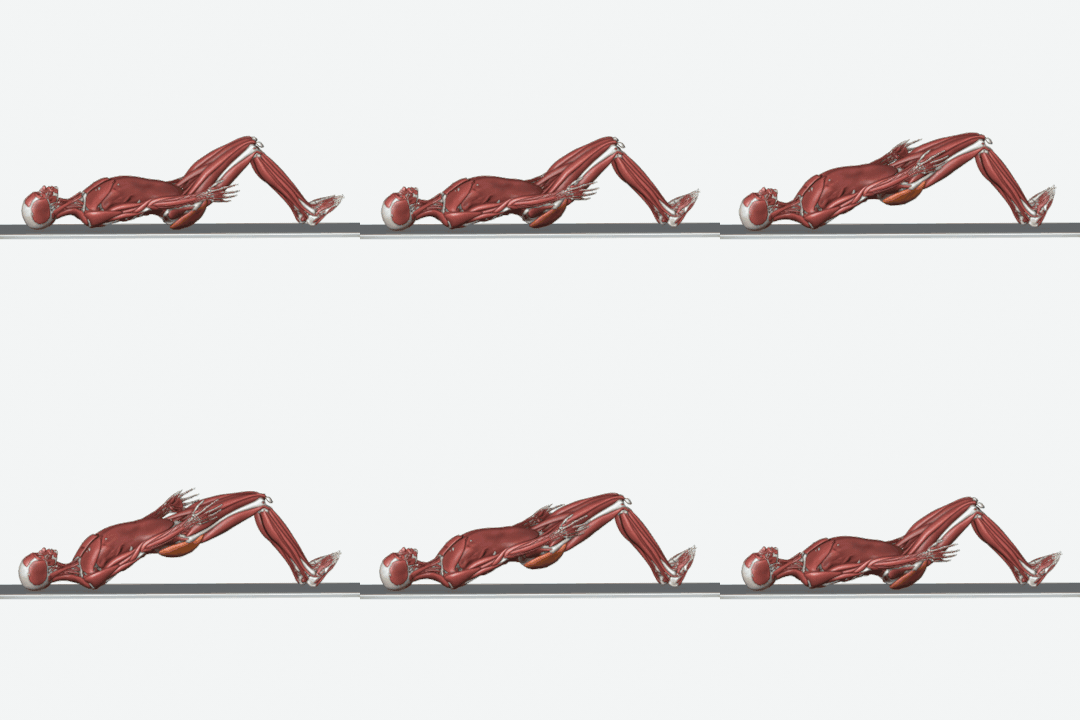
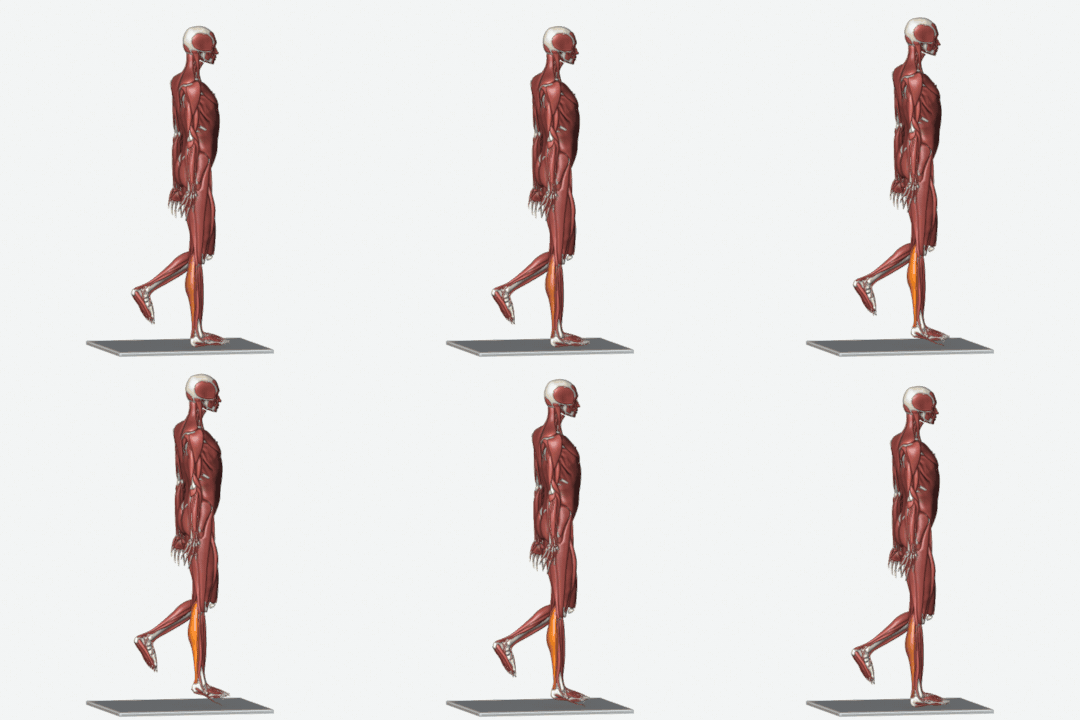
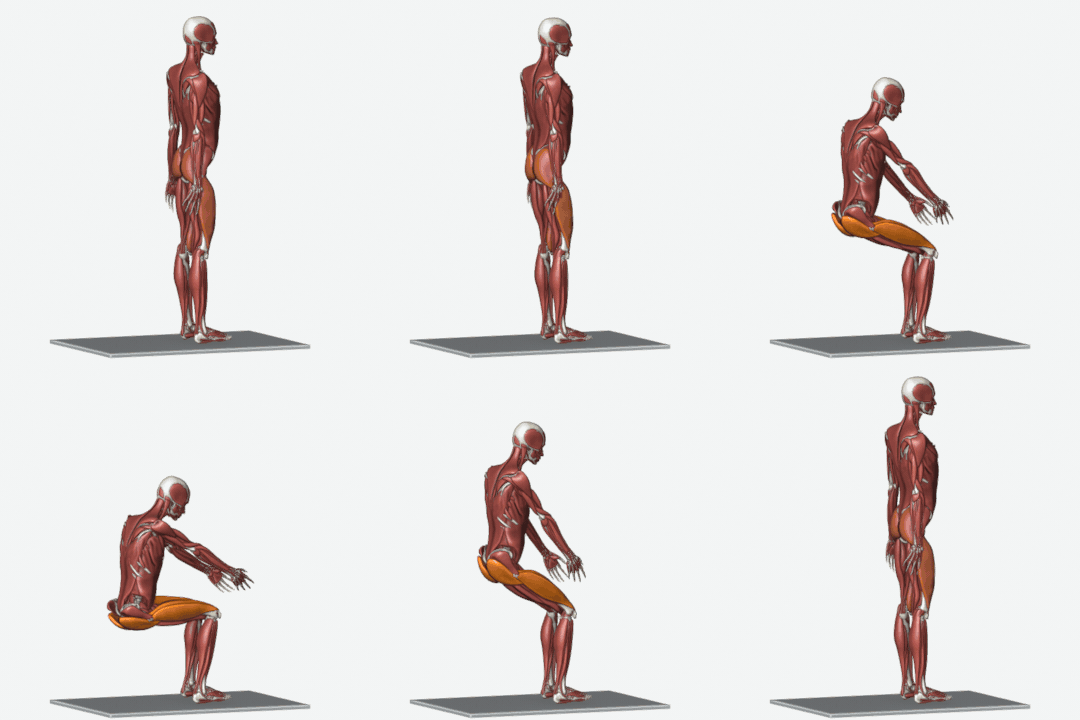
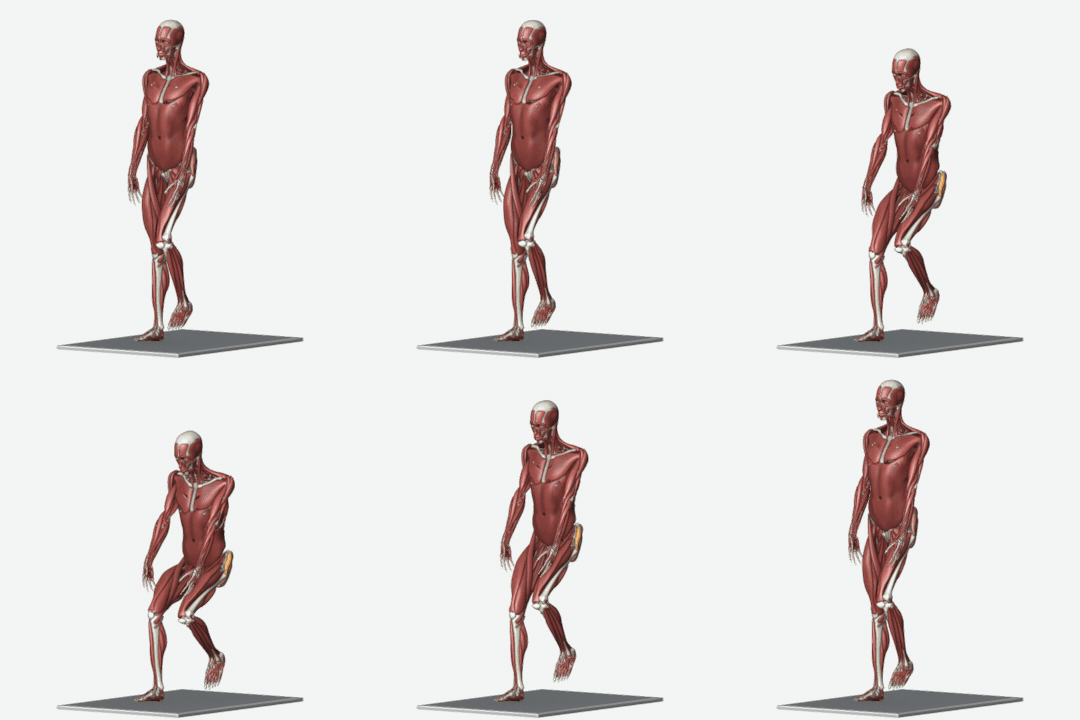
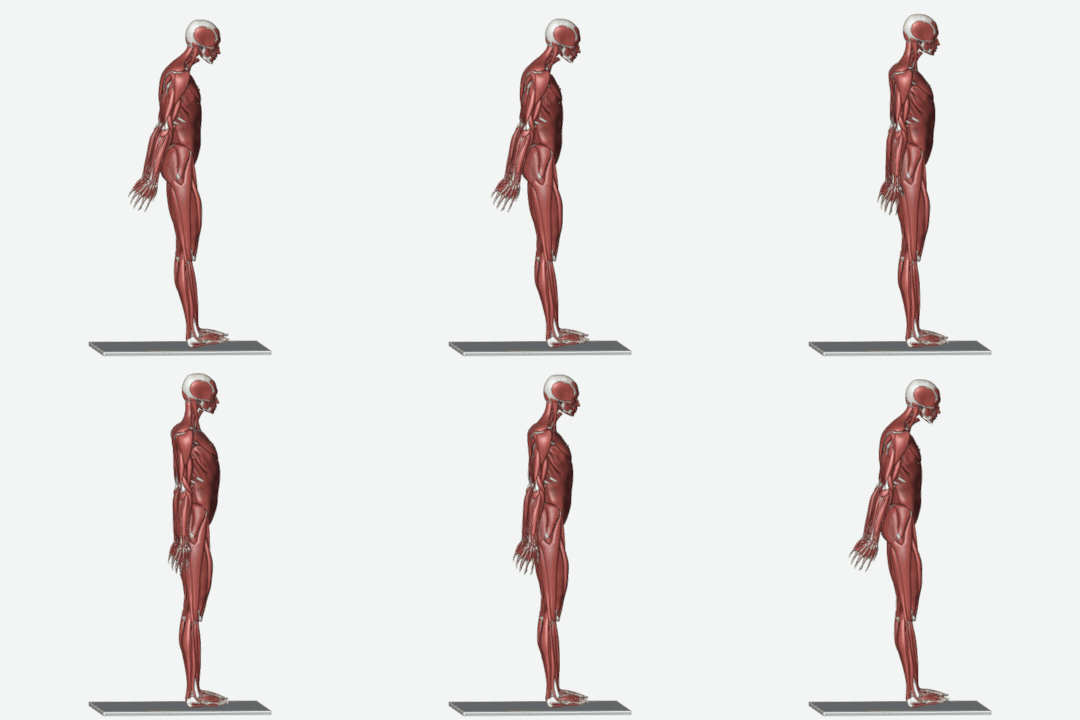
This example is for a moderate grade; each stage runs shorter or longer with the measured grade, and a person's own programme is written after assessment, around their other conditions and limits. If a movement causes pain, stop it and contact the clinic. Muscle colours in the animations: orange working, blue stretching, amber holding still.
Every number on this page is measured on the skin surface in a photograph. That is not the same as a measurement taken on a radiograph: it correlates with one and does not replace it. Wherever the decision depends on imaging, this page and the report itself say so.
What happens at the clinic
The assessment starts with three standing photographs — front, side and back. Every angle is measured on those photographs, the report prints the number and the grade for each, and the exercise programme is built from those numbers rather than from a template. Posture analysis explains the whole path, and the online assessment can be started from your own photograph now.
Frequently asked questions
At what point is genu recurvatum reported?
When knee locks backward (genu recurvatum) is above 5°, it is reported as a finding. That is where the "Mild hyperextension" band begins. The bands come from: Loudon JK et al, JOSPT 1998;27:373-8 (knee recurvatum ≥ 5°)
Can genu recurvatum be assessed from a photograph?
A photograph gives a number, which most assessments do not have. But it is a surface measurement and it does not replace imaging. Generalised laxity is scored with the Beighton scale, of which knee hyperextension is one of the nine items.
What is the most severe grade?
The worst band in this table is "Severe hyperextension". The grade is printed beside the measurement itself in the report, so it is always clear which number produced the word.