
What it means
One half of the pelvis higher than the other on standing, with uneven shoulders.
Where it comes from
A leg length difference or an imbalance in the lateral trunk and hip muscles.
How it is measured
It is measured on the front view, in the coronal plane. The defining measurement is One hip higher (Pelvic obliquity), and it is reported as a finding from above 2°. The number is computed from landmarks on that photograph — not estimated by eye, and not compared against a stock example.
What the numbers mean
| Measurement | Grade |
|---|---|
| up to 2° | Within normal range |
| 2–4° | Mild obliquity |
| 4–6° | Moderate obliquity |
| 6° and above | Severe obliquity |
Source of the bands: Photographic inter-ASIS line from horizontal
What is usually seen alongside it
- Sideways curve of the spine (Cobb angle) — above 10°
- One shoulder higher (Acromial tilt) — above 2°
None of these is a diagnosis on its own. Together they corroborate the finding; apart, they do not refute it — a measurement nobody took counts neither for nor against.
What confirms it
Leg-length difference, gluteus medius weakness and adductor contracture are the three usual causes, separated by a tape measure, the Trendelenburg test and the Ober test.
Pelvic obliquity — first work out where it comes from
A pelvis that is not perfectly level is not, on its own, a worrying finding. What matters is where it comes from — and there are two quite different sources.
The first: a leg-length difference
Knutson [1], using accurate radiographic methods, found anatomic leg-length inequality in 90% of people, mean 5.2 mm. The presence of a difference therefore explains nothing; its size does — and for most people it does not become clinically significant until around 20 mm.
The second: functional, not skeletal
Part II of the same review [2] holds that the functional "short leg" — what is seen lying down, unloaded — is a different phenomenon, possibly from suprapelvic muscle hypertonicity. The two interact in standing and not when lying.
⚠️ The order of work follows from that: functional asymmetry should be resolved before any treatment of an anatomic difference. The other way round means compensating for something that was never bone — a shoe raise for a difference that is not there.
And the size of the obliquity did not separate pain from no pain
Fann [3] measured pelvic obliquity and the lateral sacral base angle on postural radiographs in 93 people with chronic low back pain and 76 without. No statistically significant difference was found between the groups.
⚠️ His own conclusion is the most honest part of the paper: heel lifts are used to correct pelvic obliquity and most of their patients report at least some improvement — but since the extent of obliquity is the same in both groups, some other factor must account for who benefits. A treatment can work without its mechanism being the one assumed.
And asymmetry is itself normal
Herrington [4], in 120 asymptomatic people, found a significant side-to-side difference in pelvic angle among the men. Perfect symmetry is not what a healthy population looks like.
⚠️ What warrants assessment: an obliquity accompanied by pain, a limp, or a recent change in walking pattern — not simply a number that is not symmetrical.
References
- Knutson GA. Anatomic and functional leg-length inequality: a review and recommendation for clinical decision-making. Part I, anatomic leg-length inequality: prevalence, magnitude, effects and clinical significance. Chiropr Osteopat. 2005;13:11. PMID 16026625 · DOI 10.1186/1746-1340-13-11
- Knutson GA. Anatomic and functional leg-length inequality: a review and recommendation for clinical decision-making. Part II, the functional or unloaded leg-length asymmetry. Chiropr Osteopat. 2005;13:12. PMID 16080787 · DOI 10.1186/1746-1340-13-12
- Fann AV. The prevalence of postural asymmetry in people with and without chronic low back pain. Arch Phys Med Rehabil. 2002;83(12):1736–1738. PMID 12474179 · DOI 10.1053/apmr.2002.35653
- Herrington L. Assessment of the degree of pelvic tilt within a normal asymptomatic population. Man Ther. 2011;16(6):646–648. PMID 21658988 · DOI 10.1016/j.math.2011.04.006
The exercise programme
One side of the pelvis rides low: gluteus medius is weak on the dropped side and quadratus lumborum is short on the high side.
The stages advance on a standard, not on the calendar:
- Stage 1 — release and wake up — weeks 1–4: TFL and lateral thigh release, Quadratus lumborum stretch
Move on: When the movement is done without pain and without compensating, and the stretch is no longer what limits it. - Stage 2 — control — weeks 3–8: Quadratus lumborum stretch, Clamshell — gluteus medius, Side-lying hip abduction, Banded lateral walk, Side plank
Move on: When the target muscle is felt through the whole range and the last set looks like the first. - Stage 3 — load and integration — weeks 6–16: Clamshell — gluteus medius, Side-lying hip abduction, Banded lateral walk, Side plank, Single-leg balance and squat
Move on: When the corrected pattern holds in everyday movement and under fatigue.
Each session 15–20 minutes, 6–7 times a week, for at least 16 weeks. (from a study)
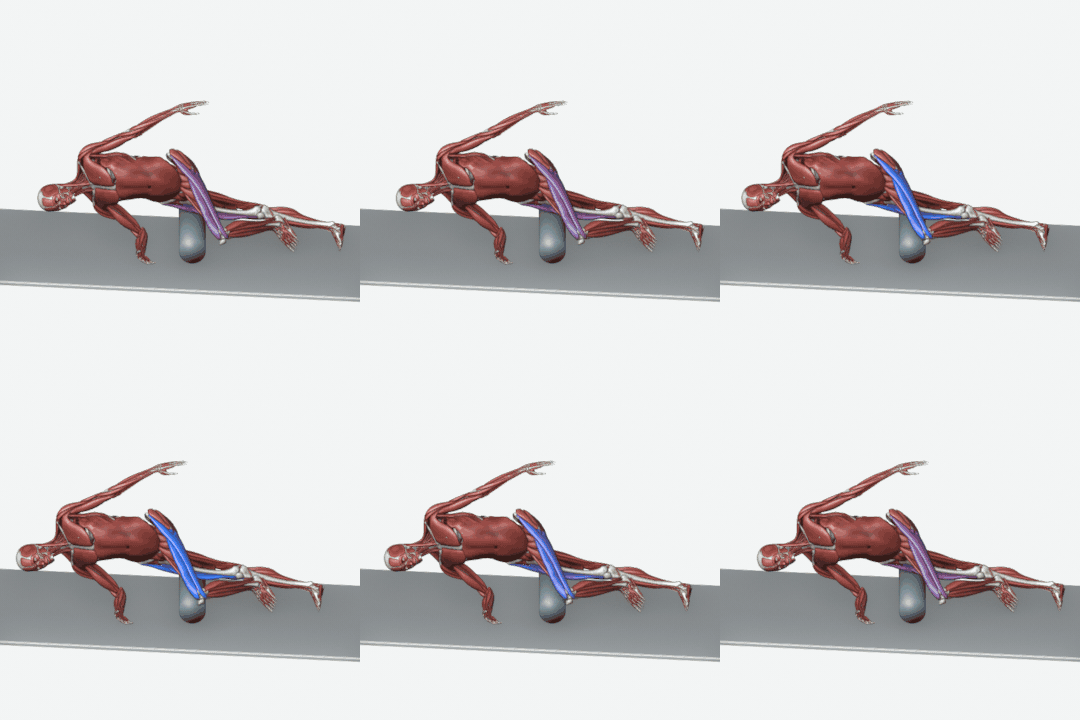
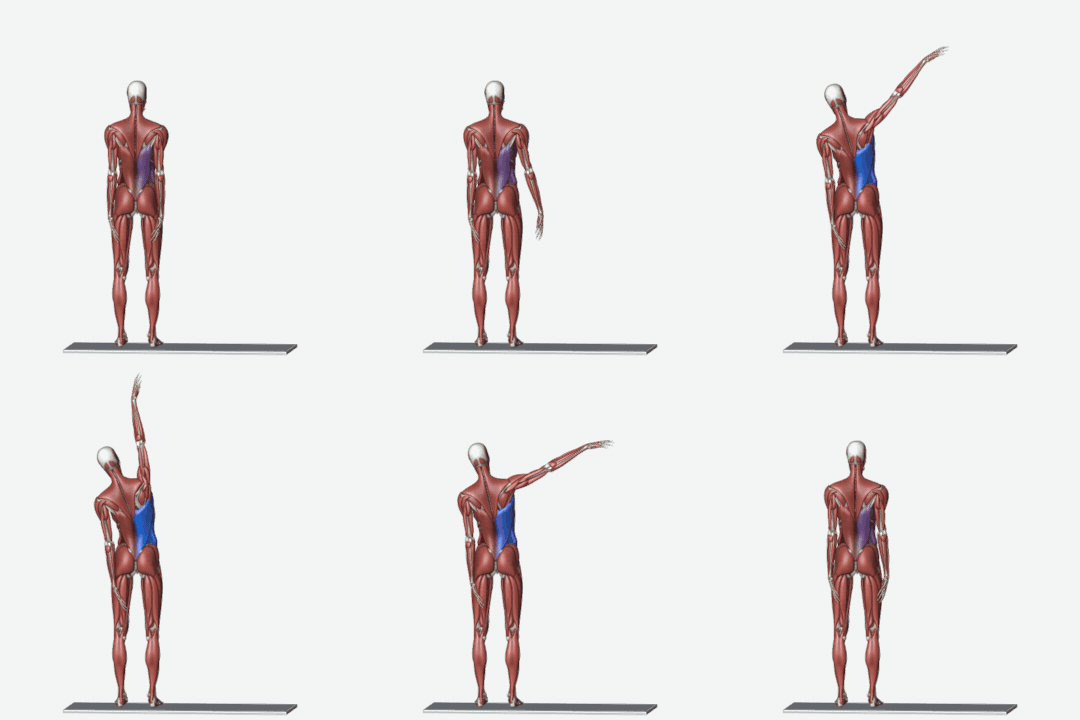
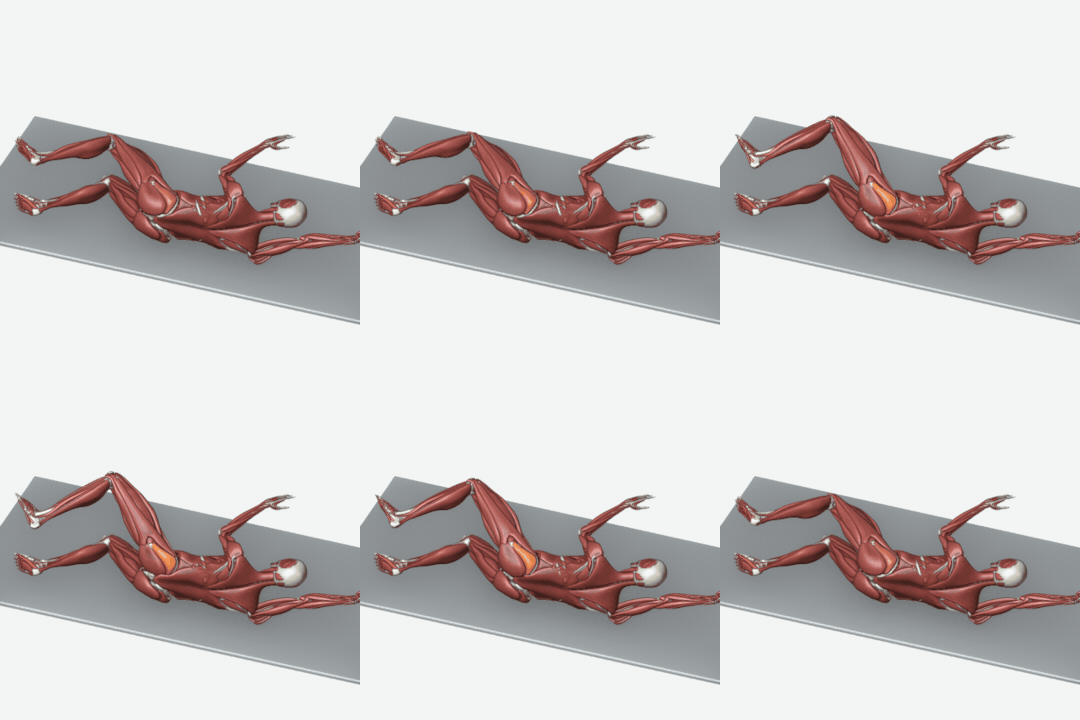
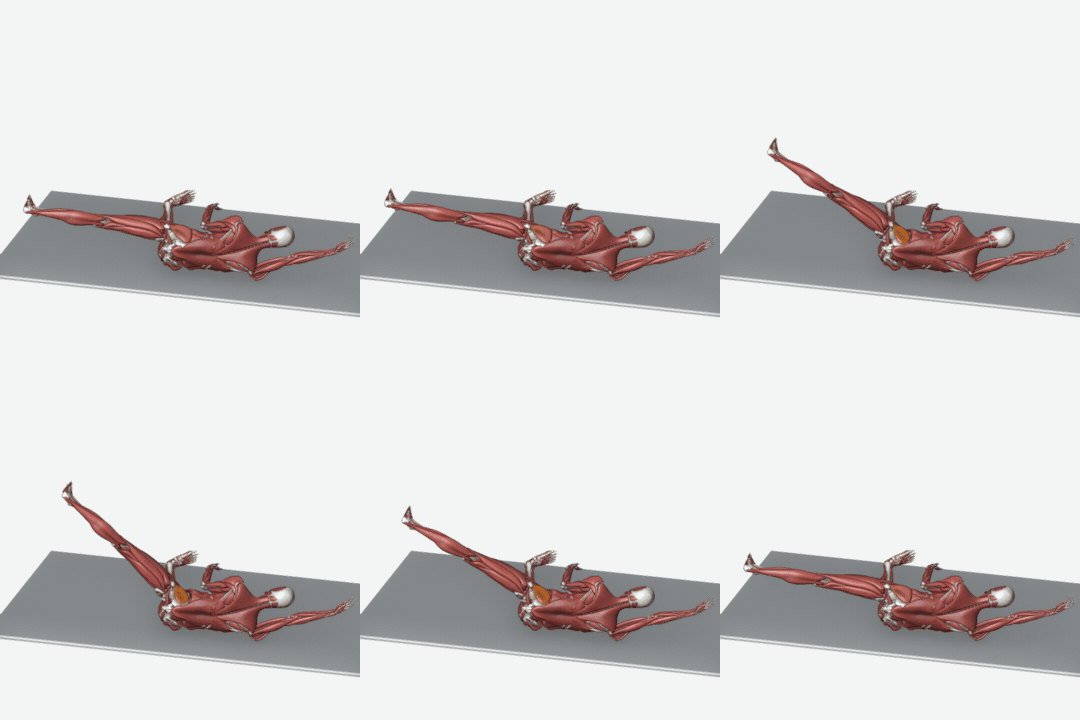
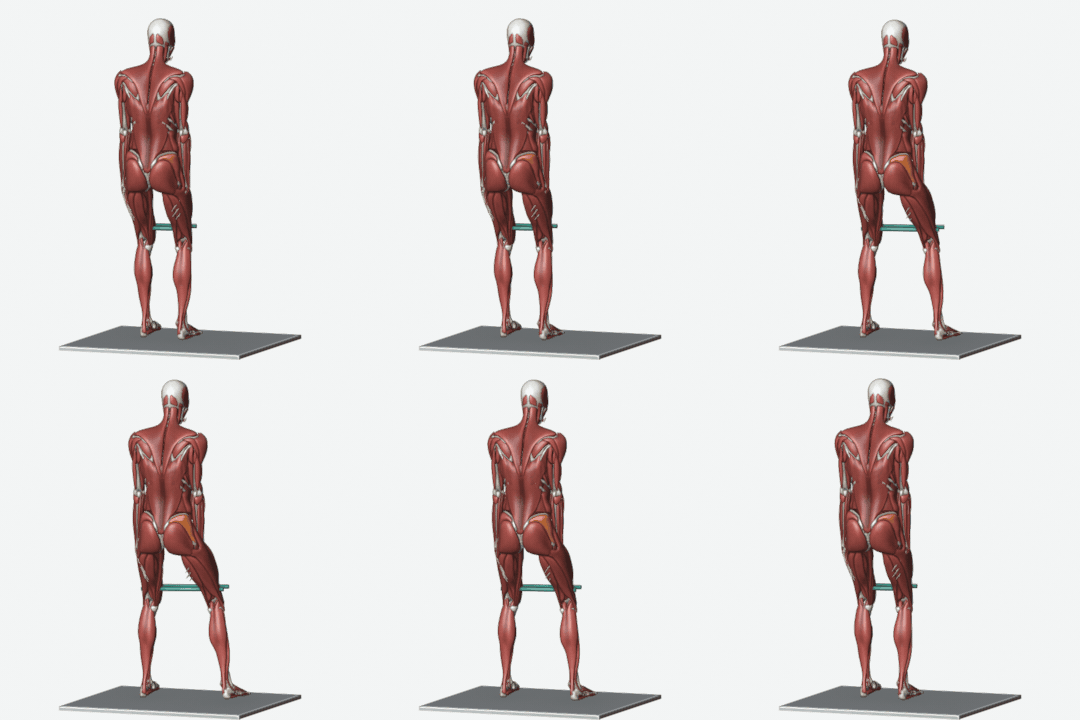
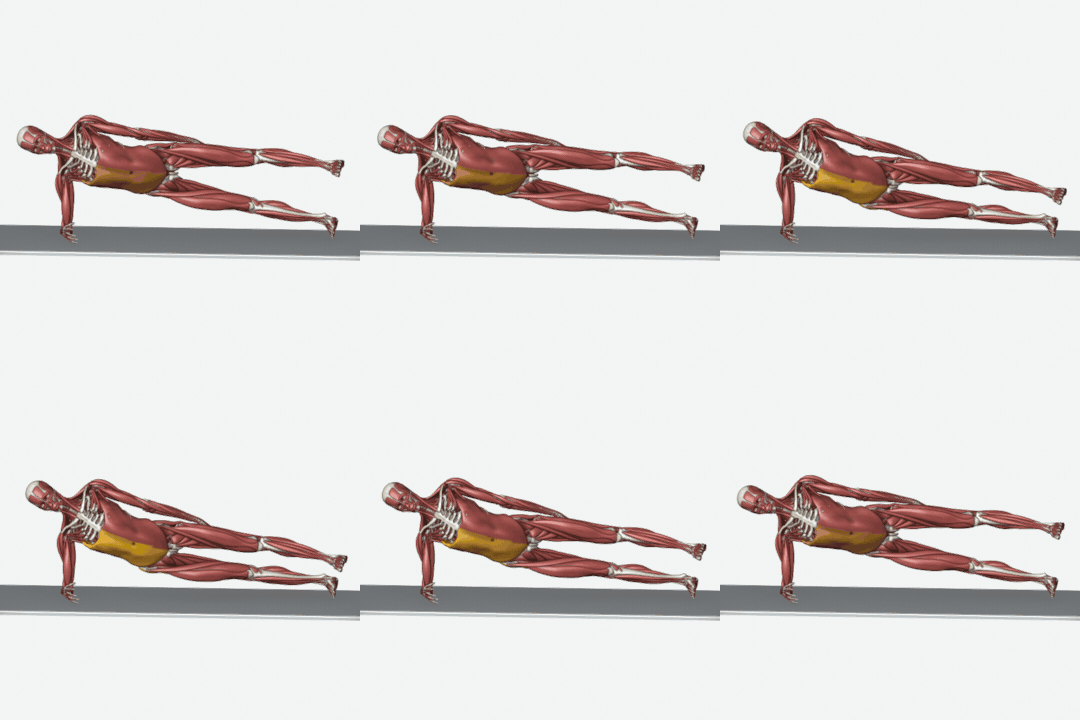
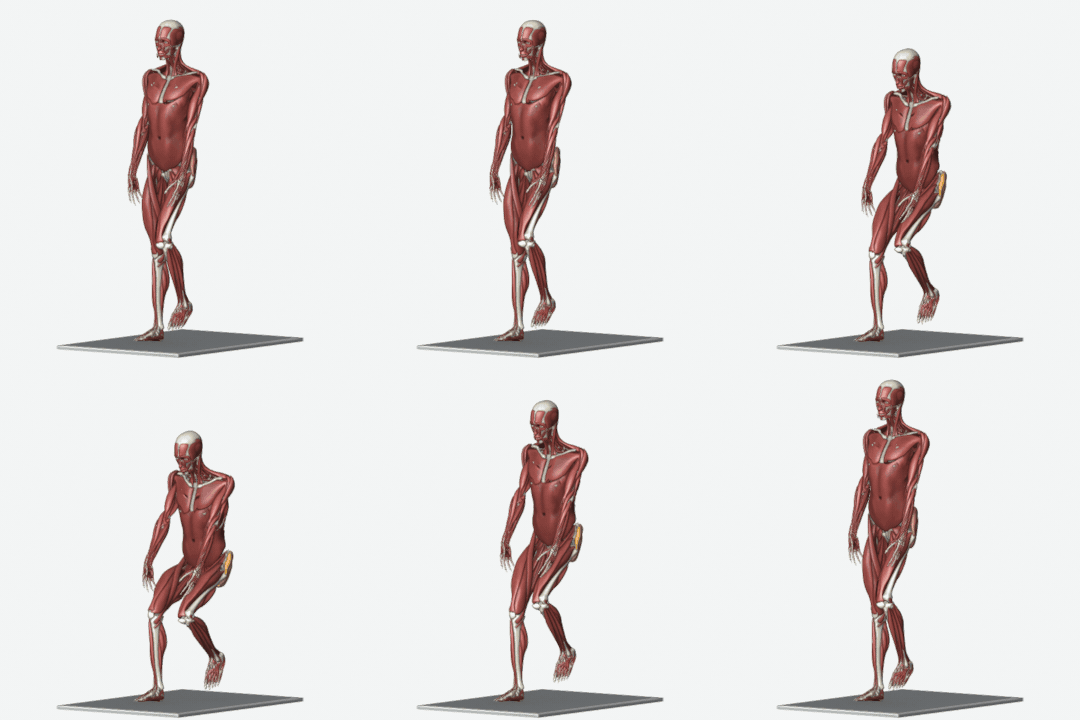
This example is for a moderate grade; each stage runs shorter or longer with the measured grade, and a person's own programme is written after assessment, around their other conditions and limits. If a movement causes pain, stop it and contact the clinic. Muscle colours in the animations: orange working, blue stretching, amber holding still.
Every number on this page is measured on the skin surface in a photograph. That is not the same as a measurement taken on a radiograph: it correlates with one and does not replace it. Wherever the decision depends on imaging, this page and the report itself say so.
What happens at the clinic
The assessment starts with three standing photographs — front, side and back. Every angle is measured on those photographs, the report prints the number and the grade for each, and the exercise programme is built from those numbers rather than from a template. Posture analysis explains the whole path, and the online assessment can be started from your own photograph now.
Frequently asked questions
At what point is pelvic obliquity reported?
When one hip higher (pelvic obliquity) is above 2°, it is reported as a finding. That is where the "Mild obliquity" band begins. The bands come from: Photographic inter-ASIS line from horizontal
Can pelvic obliquity be assessed from a photograph?
A photograph gives a number, which most assessments do not have. But it is a surface measurement and it does not replace imaging. Leg-length difference, gluteus medius weakness and adductor contracture are the three usual causes, separated by a tape measure, the Trendelenburg test and the Ober test.
What is the most severe grade?
The worst band in this table is "Severe obliquity". The grade is printed beside the measurement itself in the report, so it is always clear which number produced the word.