
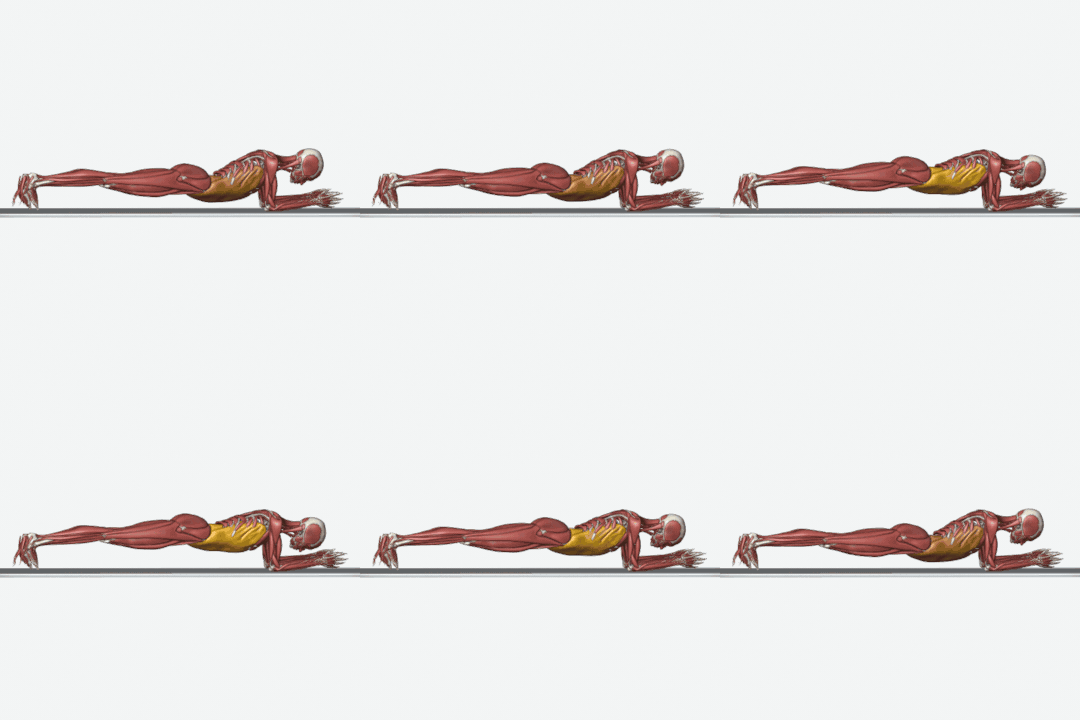
How to do it
Tuck the pelvis slightly so the low back flattens. If it sags, shorten the hold.
Default dose
3 × 30s
This is the library's default dose. Each person's programme is set after assessment, around the grade of their finding and their own conditions and limits.
Muscles involved
- holding still Rectus abdominis, Transversus abdominis, Abdominal obliques
Muscle colours in the animation: orange working, blue stretching, amber holding still. These muscles were measured on the 3D model.
Where it sits in a programme: Integrate
The fourth phase is integration: using the new pattern in whole, everyday movements — standing, bending, squatting, walking — so the correction does not stay on the exercise mat.
Which postural findings it is prescribed for
It appears in the example programme on these pages:
Take care
- Cardiovascular disease — Only under supervision: A long isometric hold pushes blood pressure up while it is held and invites breath-holding. Short holds and continuous breathing out, supervised.
- High blood pressure — Only under supervision: A long isometric hold raises blood pressure while it is held, especially if the breath is held with it. It needs a shorter hold and continuous breathing out.
- Pregnancy — Taken off the programme: After the first trimester, work lying flat on the back and heavy loading of the abdominal midline are not appropriate.
- If the movement causes pain or makes pain worse, stop and contact the clinic or your doctor.
Source
Textbook:
- McGill S. Low Back Disorders: Evidence-Based Prevention and Rehabilitation. 3rd ed. Human Kinetics; 2016.
The foundational spine-stability exercises and the neutral-spine hip hinge.