
What it means
A deep lumbar curve with the belly forward, worse on prolonged standing.
Where it comes from
An anterior pelvic tilt from short hip flexors and a weak deep core.
How it is measured
It is measured on the side view, in the sagittal plane. The defining measurement is Sway back (Lumbar lordosis), and it is reported as a finding from above 45°. The number is computed from landmarks on that photograph — not estimated by eye, and not compared against a stock example.
What the numbers mean
| Measurement | Grade |
|---|---|
| up to 45° | Within normal range |
| 45–55° | Mild hyperlordosis |
| 55–70° | Moderate hyperlordosis |
| 70° and above | Severe hyperlordosis |
Source of the bands: Conventional 20-45° lumbar window; surface measurement
What is usually seen alongside it
- Pelvis tipped forward or back (Sagittal pelvic tilt) — above 15°
- Knee locks backward (Genu recurvatum) — above 5°
None of these is a diagnosis on its own. Together they corroborate the finding; apart, they do not refute it — a measurement nobody took counts neither for nor against.
What confirms it
The Thomas test shows the hip-flexor shortness that most often drives the anterior pelvic tilt.
Lumbar lordosis and back pain — a relationship that runs the other way
The common belief is that too much lumbar curve causes back pain, and a good deal of exercise prescription rests on it. The meta-analysis shows something else.
What the meta-analysis found
Chun and colleagues [1] pooled thirteen studies: 796 people with low back pain and 927 without, all measured radiologically. Those with back pain tended to have a smaller lordotic angle, not a larger one.
Across six age-matched studies the difference held without statistical heterogeneity (SMD −0.33). In five studies of disc herniation or degeneration it was larger (SMD −0.94).
⚠️ The qualification matters: the studies were heterogeneous, and the authors identify age, pain severity and the underlying spinal condition as accounting for a significant part of the variance between them. This is not one simple one-way relationship.
And a problem that comes before any conclusion
Been and Kalichman [2] reviewed more than 120 articles and concluded that there is no uniform way of measuring the lumbar lordosis angle. The number depends on how the person is positioned and on how many vertebrae are included, and they call for a standard method to be agreed.
So when two places give you two different numbers, your back has not necessarily changed — the method may have. Comparison only means something when both measurements were taken the same way.
The number on this page measures the curve. Where your back pain comes from is established by examination — and as the meta-analysis showed, "too much curve" is not the simple answer it is often assumed to be.
References
- Chun SW, Lim CY, Kim K, Hwang J, Chung SG. The relationships between low back pain and lumbar lordosis: a systematic review and meta-analysis. Spine J. 2017;17(8):1180–1191. PMID 28476690 · DOI 10.1016/j.spinee.2017.04.034
- Been E, Kalichman L. Lumbar lordosis. Spine J. 2014;14(1):87–97. PMID 24095099 · DOI 10.1016/j.spinee.2013.07.464
The evidence on this
Study summaries that measured this finding — with their numbers and their limits.
- Does bad posture mean pain — Systematic scoping review, 12 databases
- Which exercise for chronic back pain, and how much — Systematic review and network meta-analysis, 24 randomised controlled trials
The exercise programme
Short hip flexors tip the pelvis forward and the low back arches to compensate. The work belongs in the glutes and deep abdominals, not in the back itself.
The stages advance on a standard, not on the calendar:
- Stage 1 — release and wake up — weeks 1–4: Hip flexor release, Half-kneeling hip flexor stretch, Quadriceps stretch, Cat-camel
Move on: When the movement is done without pain and without compensating, and the stretch is no longer what limits it. - Stage 2 — control — weeks 3–8: Half-kneeling hip flexor stretch, Quadriceps stretch, Cat-camel, Dead bug, McGill curl-up, Glute bridge, Single-leg bridge
Move on: When the target muscle is felt through the whole range and the last set looks like the first. - Stage 3 — load and integration — weeks 6–16: Dead bug, McGill curl-up, Glute bridge, Single-leg bridge, Hip hinge pattern, Plank with neutral pelvis
Move on: When the corrected pattern holds in everyday movement and under fatigue.
Each session 15–20 minutes, 6–7 times a week, for at least 16 weeks. (from a study)
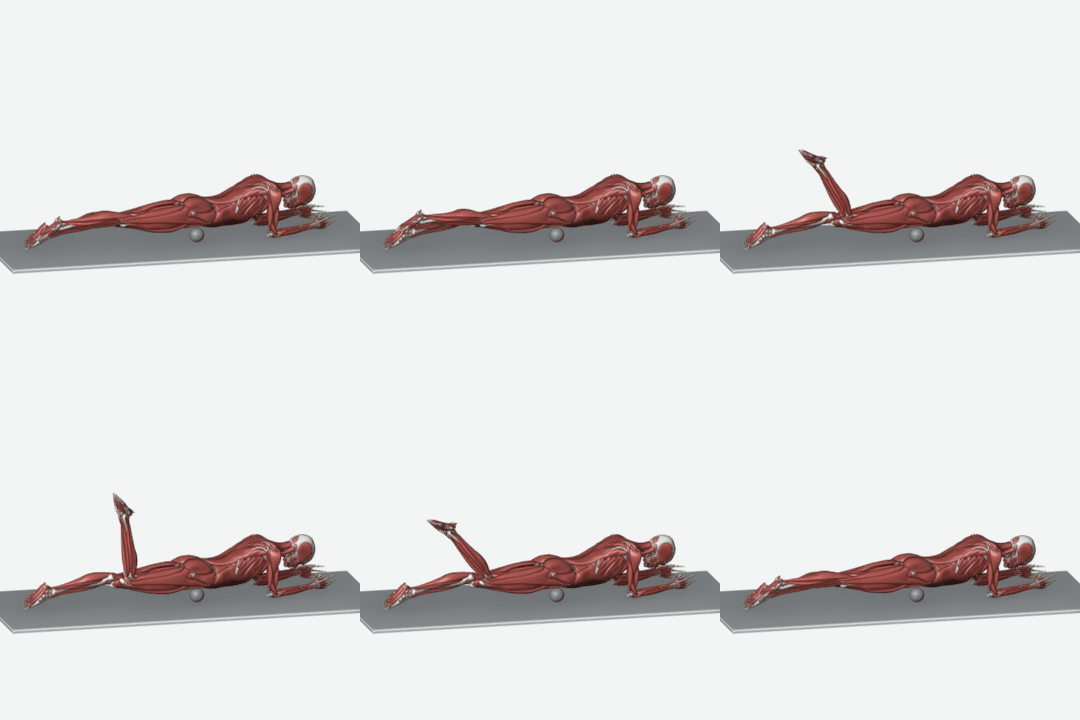
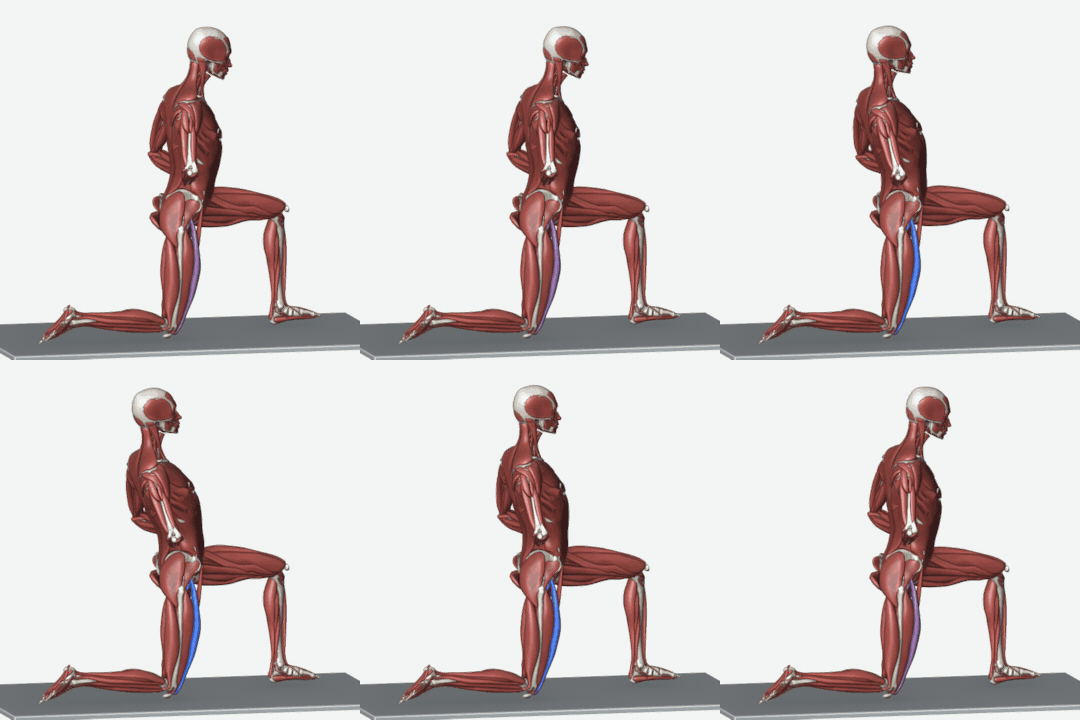
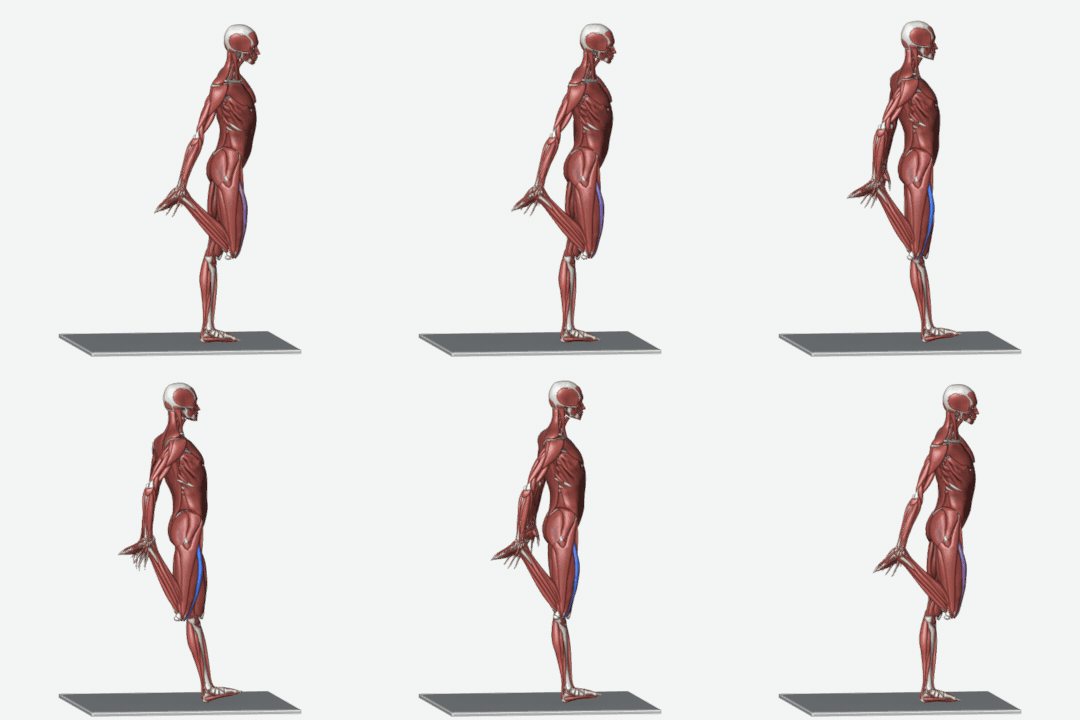
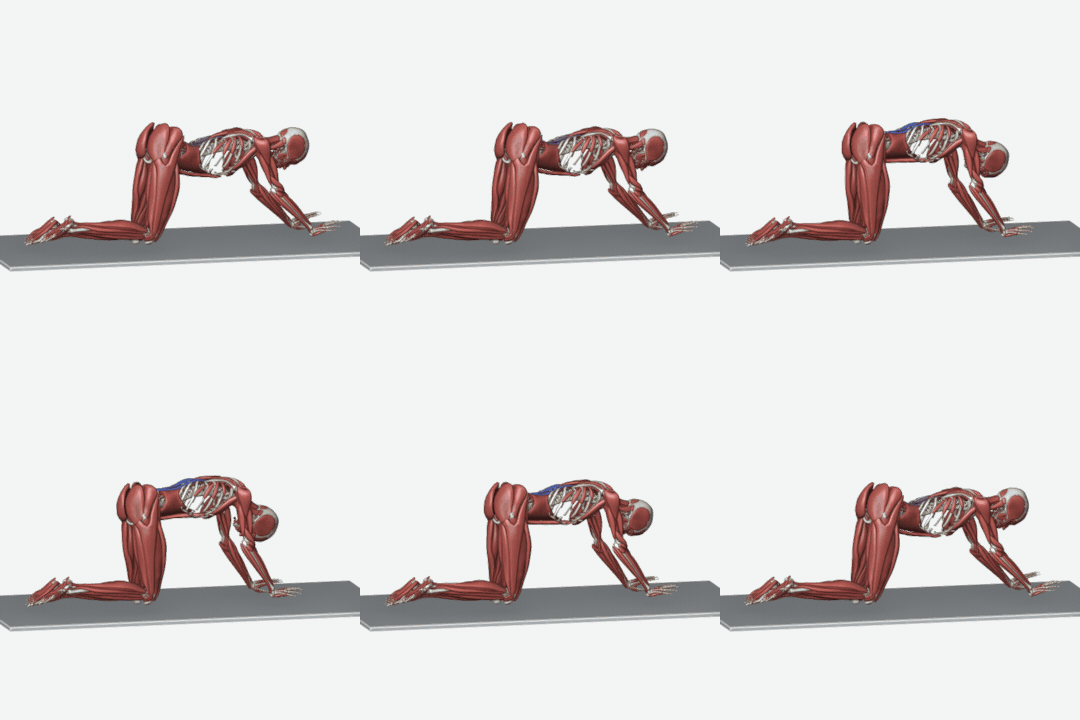
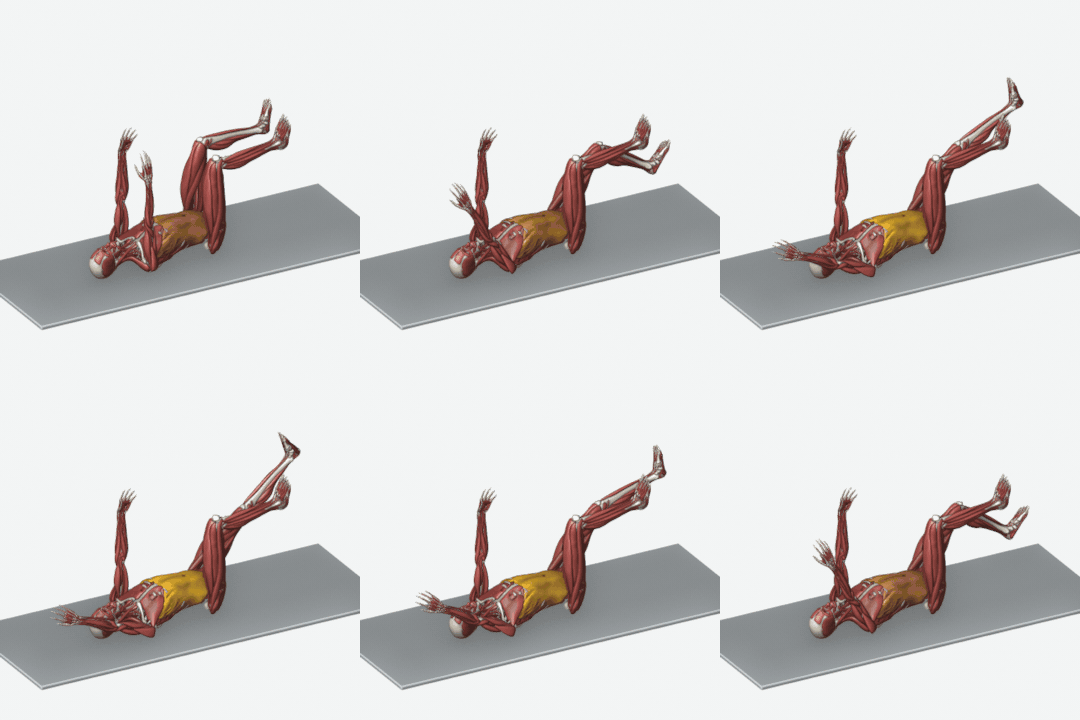
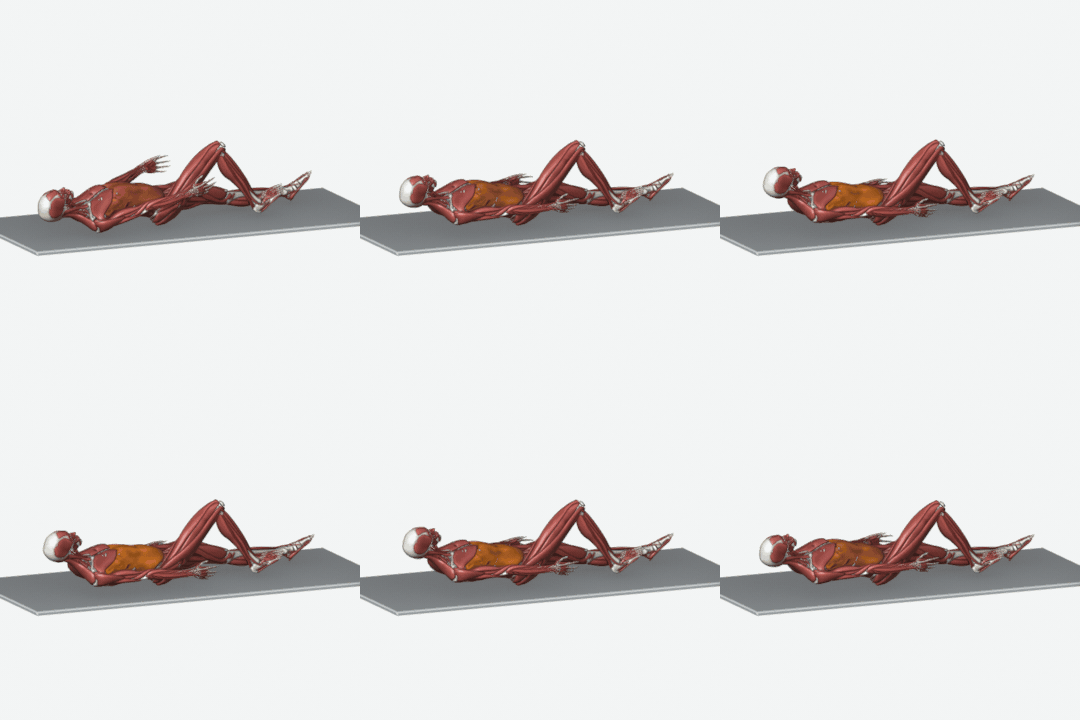
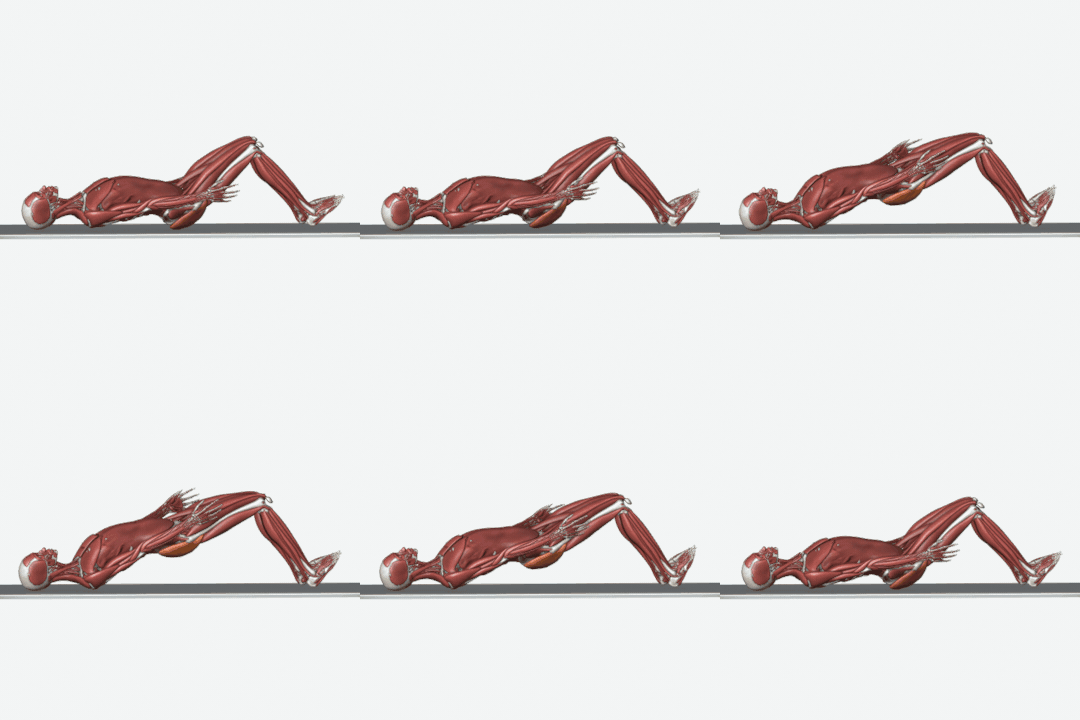
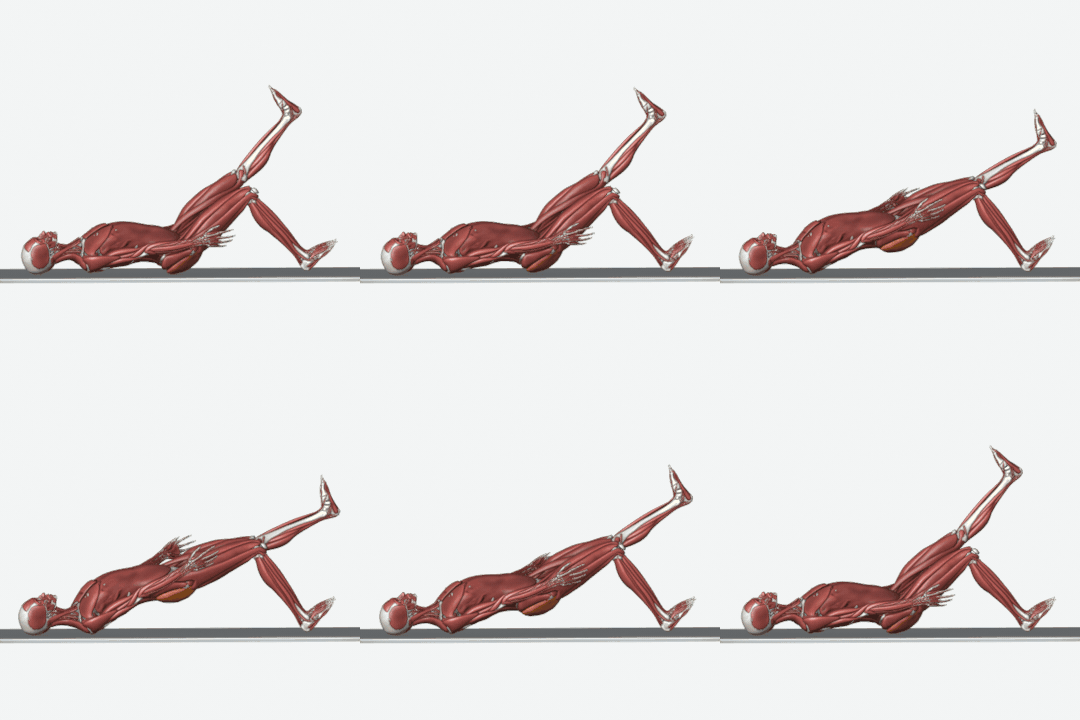
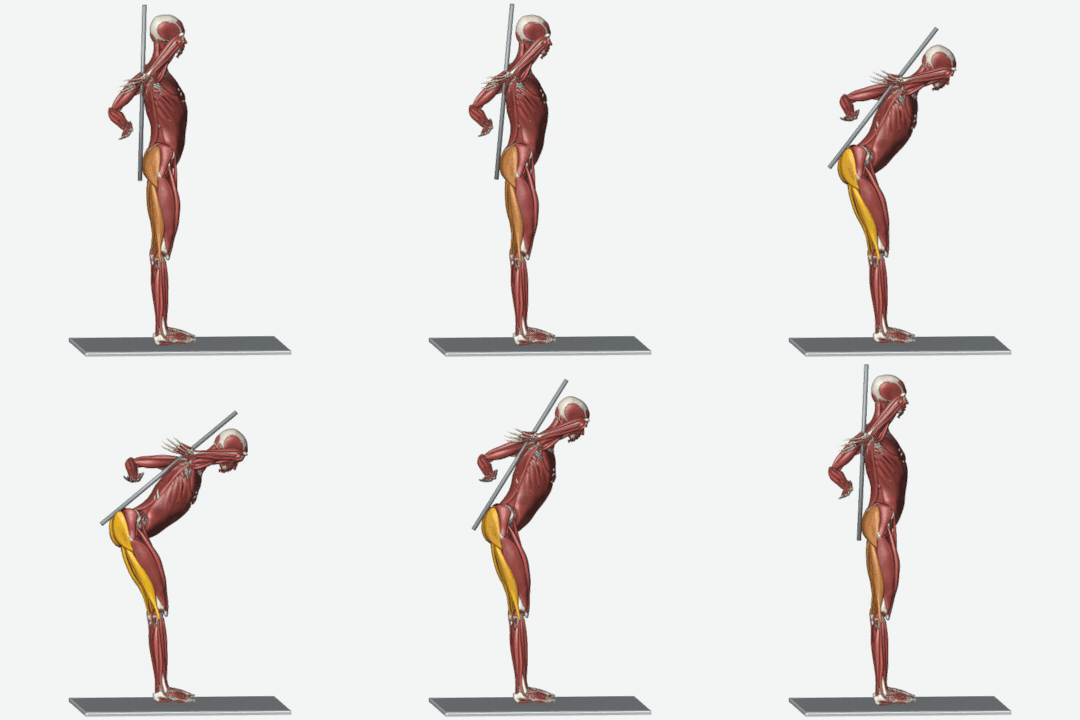
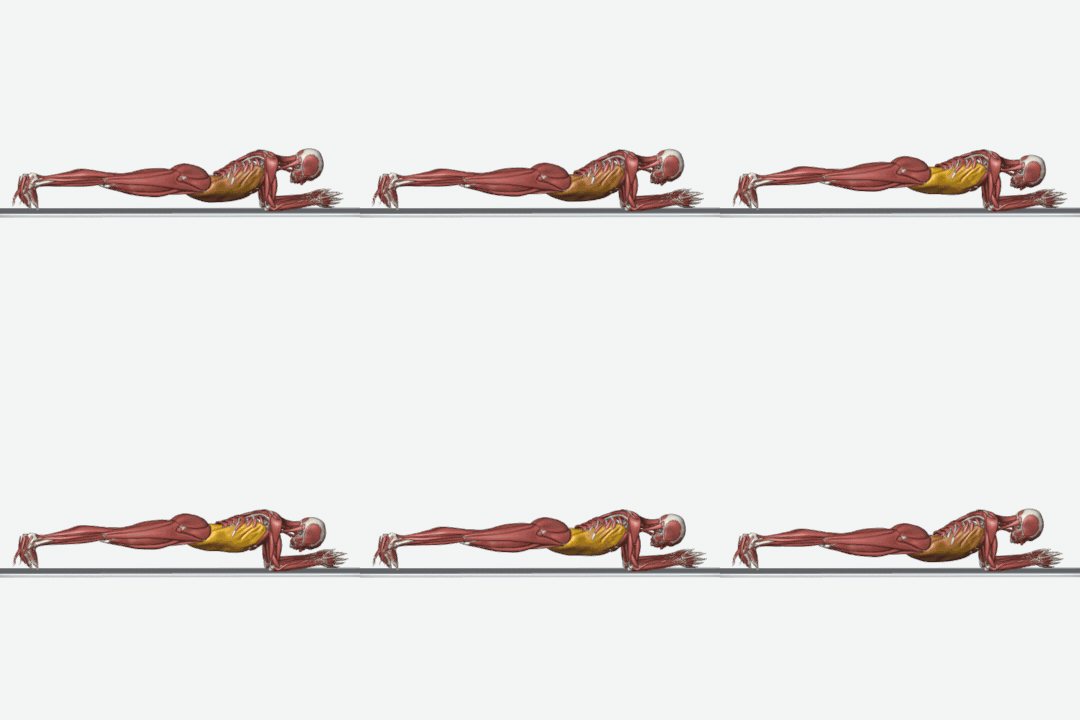
This example is for a moderate grade; each stage runs shorter or longer with the measured grade, and a person's own programme is written after assessment, around their other conditions and limits. If a movement causes pain, stop it and contact the clinic. Muscle colours in the animations: orange working, blue stretching, amber holding still.
Every number on this page is measured on the skin surface in a photograph. That is not the same as a measurement taken on a radiograph: it correlates with one and does not replace it. Wherever the decision depends on imaging, this page and the report itself say so.
What happens at the clinic
The assessment starts with three standing photographs — front, side and back. Every angle is measured on those photographs, the report prints the number and the grade for each, and the exercise programme is built from those numbers rather than from a template. Posture analysis explains the whole path, and the online assessment can be started from your own photograph now.
Frequently asked questions
At what point is lumbar hyperlordosis reported?
When sway back (lumbar lordosis) is above 45°, it is reported as a finding. That is where the "Mild hyperlordosis" band begins. The bands come from: Conventional 20-45° lumbar window; surface measurement
Can lumbar hyperlordosis be assessed from a photograph?
A photograph gives a number, which most assessments do not have. But it is a surface measurement and it does not replace imaging. The Thomas test shows the hip-flexor shortness that most often drives the anterior pelvic tilt.
What is the most severe grade?
The worst band in this table is "Severe hyperlordosis". The grade is printed beside the measurement itself in the report, so it is always clear which number produced the word.