
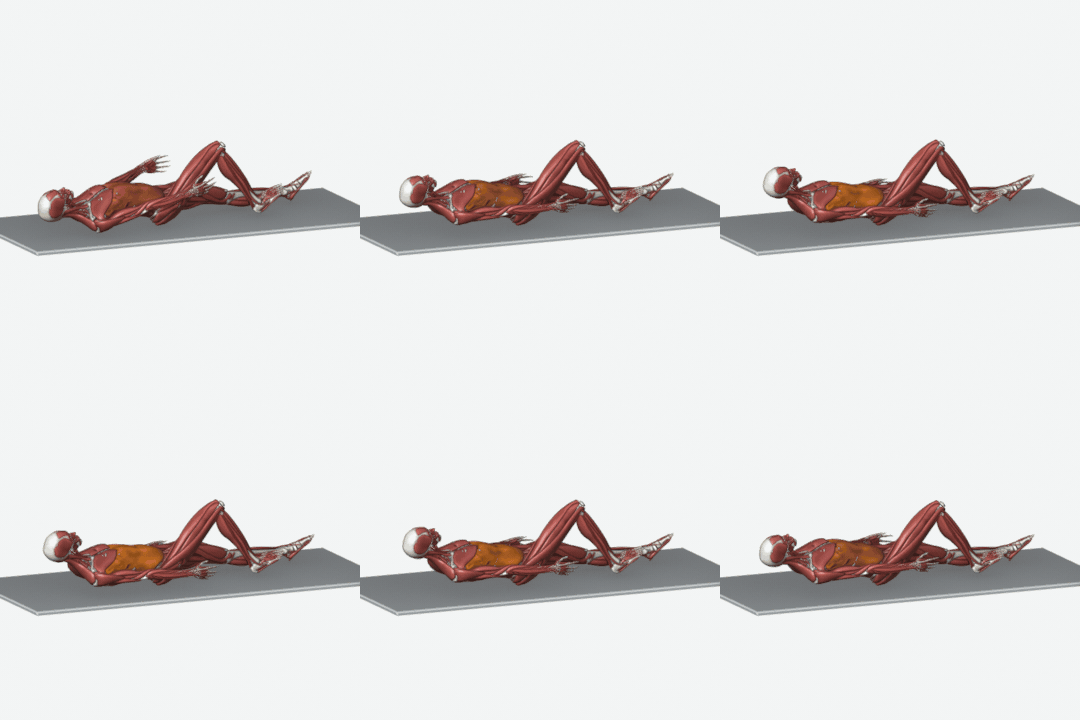
How to do it
On your back, one knee bent and the other leg straight, hands under the low back. Lift the head and shoulders a few centimetres as one unit without tucking the chin or flattening the back; hold and keep breathing.
Default dose
3 × 6 · 8s
This is the library's default dose. Each person's programme is set after assessment, around the grade of their finding and their own conditions and limits.
Muscles involved
- working Rectus abdominis, Abdominal obliques
Muscle colours in the animation: orange working, blue stretching, amber holding still. These muscles were measured on the 3D model.
Where it sits in a programme: Activate the weak
The third phase is activation: strengthening a muscle that has become weak or underused, with controlled movement and light load, so it can carry its share of holding the body up.
Which postural findings it is prescribed for
It appears in the example programme on these pages:
Take care
- If the movement causes pain or makes pain worse, stop and contact the clinic or your doctor.
Source
Textbook:
- McGill S. Low Back Disorders: Evidence-Based Prevention and Rehabilitation. 3rd ed. Human Kinetics; 2016.
The foundational spine-stability exercises and the neutral-spine hip hinge.