
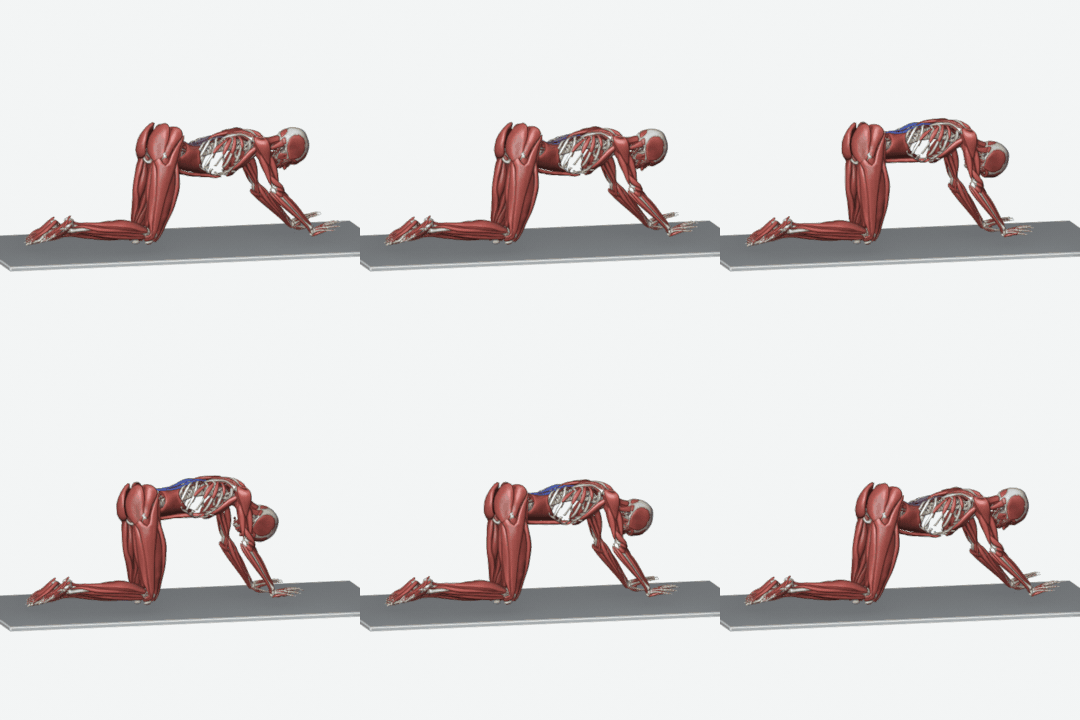
How to do it
On hands and knees. Round the back slowly up, then let it return slowly down, only as far as is comfortable; smooth, with the breath, never pushing into the end.
Default dose
2 × 8
This is the library's default dose. Each person's programme is set after assessment, around the grade of their finding and their own conditions and limits.
Muscles involved
- working Rectus abdominis
- stretching Erector spinae, thoracic, Erector spinae, lumbar
Muscle colours in the animation: orange working, blue stretching, amber holding still. These muscles were measured on the 3D model.
Where it sits in a programme: Lengthen
The second phase is lengthening: stretching a muscle or tissue that has shortened, so the joint regains the range it needs for a better posture.
Which postural findings it is prescribed for
It appears in the example programme on these pages:
Take care
- In the acute phase of a fresh injury, this exercise is taken off the programme.
- If the movement causes pain or makes pain worse, stop and contact the clinic or your doctor.
Source
Textbook:
- McGill S. Low Back Disorders: Evidence-Based Prevention and Rehabilitation. 3rd ed. Human Kinetics; 2016.
The foundational spine-stability exercises and the neutral-spine hip hinge.