
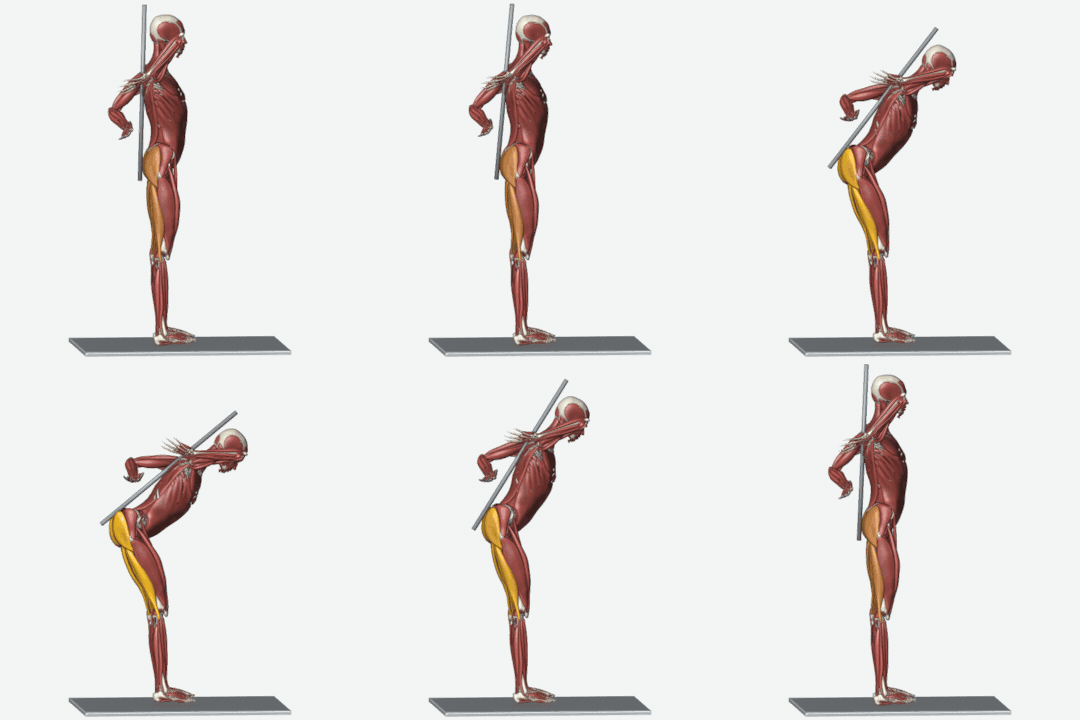
How to do it
With a dowel along the spine, push the hips back and keep the back neutral. All three contact points stay.
Default dose
3 × 12
This is the library's default dose. Each person's programme is set after assessment, around the grade of their finding and their own conditions and limits.
Muscles involved
- holding still Gluteus maximus, Hamstrings (biceps femoris), Hamstrings (semimembranosus and semitendinosus)
Muscle colours in the animation: orange working, blue stretching, amber holding still. These muscles were measured on the 3D model.
Where it sits in a programme: Integrate
The fourth phase is integration: using the new pattern in whole, everyday movements — standing, bending, squatting, walking — so the correction does not stay on the exercise mat.
Which postural findings it is prescribed for
It appears in the example programme on these pages:
Take care
- Osteoporosis — Only under supervision: Axial loading and single-leg work are useful and recommended, but they should be started under supervision and progressed slowly.
- Cerebral palsy — Only under supervision: Spasticity and limited joint range make correct performance different from person to person; that is an assessor's decision, not a list's.
- If the movement causes pain or makes pain worse, stop and contact the clinic or your doctor.
Source
Textbook:
- McGill S. Low Back Disorders: Evidence-Based Prevention and Rehabilitation. 3rd ed. Human Kinetics; 2016.
The foundational spine-stability exercises and the neutral-spine hip hinge.