
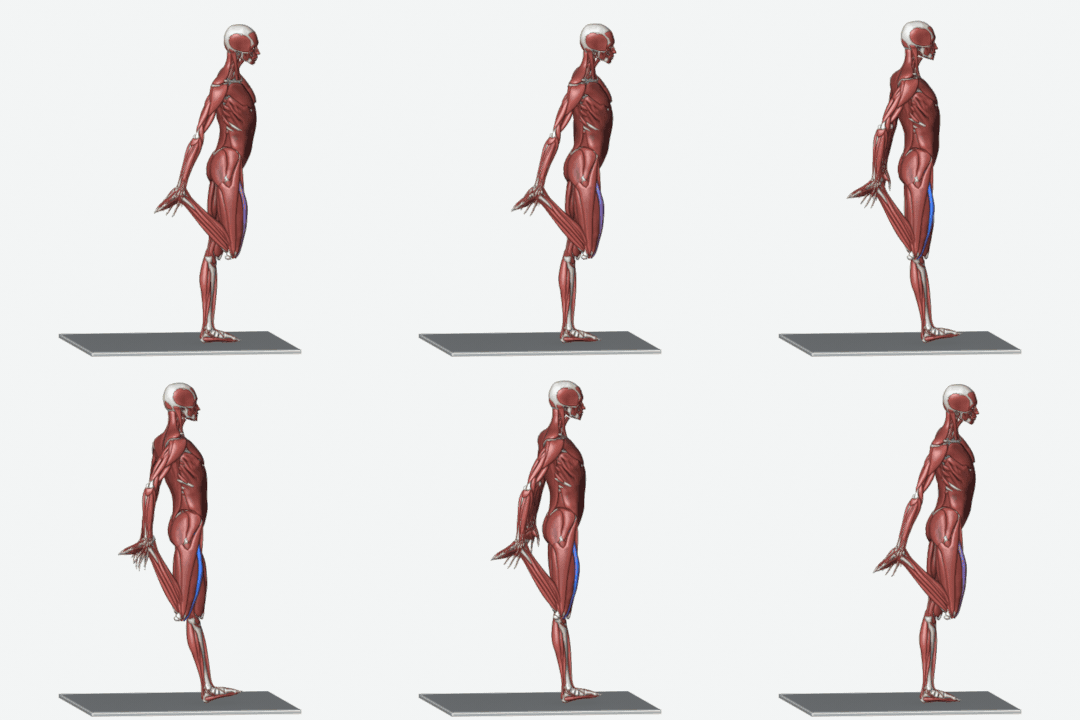
How to do it
Draw the ankle to the buttock, knees together and pelvis tucked.
Default dose
3 × 30s · each side
This is the library's default dose. Each person's programme is set after assessment, around the grade of their finding and their own conditions and limits.
Muscles involved
- stretching Rectus femoris (quadriceps)
Muscle colours in the animation: orange working, blue stretching, amber holding still. These muscles were measured on the 3D model.
Where it sits in a programme: Lengthen
The second phase is lengthening: stretching a muscle or tissue that has shortened, so the joint regains the range it needs for a better posture.
Which postural findings it is prescribed for
It appears in the example programme on these pages:
Take care
- In the acute phase of a fresh injury, this exercise is taken off the programme.
- If the movement causes pain or makes pain worse, stop and contact the clinic or your doctor.
Source
Textbook:
- Kendall FP, McCreary EK, Provance PG, Rodgers MM, Romani WA. Muscles: Testing and Function with Posture and Pain. 5th ed. Lippincott Williams & Wilkins; 2005.
The classic reference for muscle testing and the posture types — sway back, flat back, lordosis — with the short and weak muscles of each. - Bandy WD, Irion JM, Briggler M. The effect of time and frequency of static stretching on flexibility of the hamstring muscles. Phys Ther. 1997;77(10):1090-6.
Trial: a 30-second static stretch did as well as 60 seconds and better than 15.