
What it means
The trunk shifted to one side relative to the pelvis, usually with low back pain.
Where it comes from
A compensatory shift to take pressure off an irritated nerve root.
How it is measured
It is measured on the front view, in the coronal plane. The defining measurement is Upper body shifted to one side (Lateral trunk shift), and it is reported as a finding from above 1 cm. The number is computed from landmarks on that photograph — not estimated by eye, and not compared against a stock example.
What the numbers mean
| Measurement | Grade |
|---|---|
| up to 1 cm | Within normal range |
| 1–2.5 cm | Mild shift |
| 2.5–4 cm | Moderate shift |
| 4 cm and above | Severe shift |
Source of the bands: Coronal trunk balance; a shift beyond ~2 cm is the conventional decompensation threshold
What is usually seen alongside it
- Sideways curve of the spine (Cobb angle) — above 10°
- One hip higher (Pelvic obliquity) — above 2°
None of these is a diagnosis on its own. Together they corroborate the finding; apart, they do not refute it — a measurement nobody took counts neither for nor against.
What confirms it
Measured with a plumb line from the C7 spinous process to the gluteal cleft.
Lateral trunk shift — a healthy body is not exactly centred either
When a plumb line dropped from C7 does not land in the middle of the gluteal cleft, the first thought is usually scoliosis. The normative figures say a small offset is the ordinary state of a body with no disease at all.
The reference value, from 236 people without deformity
Gharbi and colleagues [1] compared standing radiographs of 236 individuals without spinal deformity against 140 patients with scoliosis under 35°. In the group without deformity:
- The C7 plumb line to the central sacral vertical line measured 8.3 mm (SD 7.5) — under a centimetre, but not zero.
- Pelvic obliquity was 1.7° and the coracoid angle, which measures shoulder level, 1.8°.
In other words, mild asymmetry is itself a normal finding. A body that photographs perfectly symmetrical is the exception, not the rule.
And the more important point
In the same study, the C7 offset in the scoliosis group was 10.2 mm. The difference from the healthy group reached statistical significance, but its size is about two millimetres.
⚠️ Which means a lateral trunk shift on its own does not separate mild scoliosis from normal. What separated the two groups was the Cobb angle, not global coronal balance. That is why this measurement is read alongside the Cobb angle in the report, and never instead of it.
A third finding from that paper matters for interpretation: the coronal parameters did not change with age, while the sagittal ones — cervical lordosis, thoracic kyphosis, pelvic incidence — changed significantly. So unlike a rounded back or a swayed lower back, "it comes with age" is not an available explanation for a lateral trunk shift.
The threshold used in practice
In deformity surgery, an offset beyond three centimetres between the C7 plumb line and the central sacral vertical line is the conventional line for coronal imbalance. This clinic's threshold is stricter, because its purpose is to find something worth following rather than to decide an operation.
Fann [2] adds a caution that belongs here: postural asymmetry is as common in people without chronic low back pain as in those with it. Finding a shift does not, on its own, explain a pain.
⚠️ What warrants assessment: a shift that is increasing, a shift alongside a Cobb angle above 10°, an asymmetric rib or lumbar prominence on forward bending, night pain, or neurological signs.
References
- Gharbi A, Obeid I, Larrieu D, Boissière L, Huneidi M, Lamotte-Paulet P, Tamir M, Aleman C, Charles YP. Coronal alignment in normal individuals and moderate scoliosis: normative values, variation with age and comparison with sagittal alignment. Brain Spine. 2024;4:103917. PMID 39823062 · DOI 10.1016/j.bas.2024.103917
- Fann AV. The prevalence of postural asymmetry in people with and without chronic low back pain. Arch Phys Med Rehabil. 2002;83(12):1736–1738. PMID 12474179 · DOI 10.1053/apmr.2002.35653
The evidence on this
Study summaries that measured this finding — with their numbers and their limits.
- Scoliosis-specific exercise and the Cobb angle — Systematic review and meta-analysis, 18 randomised trials
- How heavy can a school bag be — Systematic review, 12 papers
- How much does exercise reduce falls in older adults — Systematic review and meta-analysis, 37 randomised controlled trials
The exercise programme
The centre of mass sits off the midline, so one side carries more load with every step.
The stages advance on a standard, not on the calendar:
- Stage 1 — release and wake up — weeks 1–4: Quadratus lumborum stretch
Move on: When the movement is done without pain and without compensating, and the stretch is no longer what limits it. - Stage 2 — control — weeks 3–8: Quadratus lumborum stretch, Side plank, Side-lying hip abduction, Banded lateral walk
Move on: When the target muscle is felt through the whole range and the last set looks like the first. - Stage 3 — load and integration — weeks 6–16: Side plank, Side-lying hip abduction, Banded lateral walk, Single-leg balance and squat
Move on: When the corrected pattern holds in everyday movement and under fatigue.
Each session 3–5 times a week, for at least 12 weeks. (from a study)
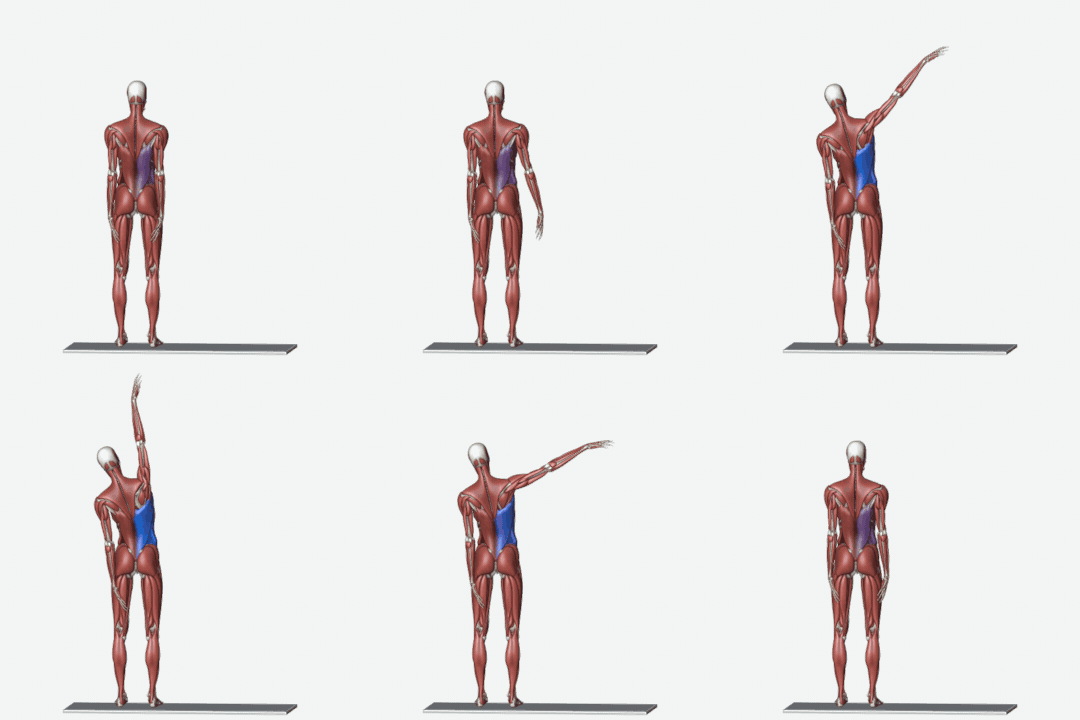
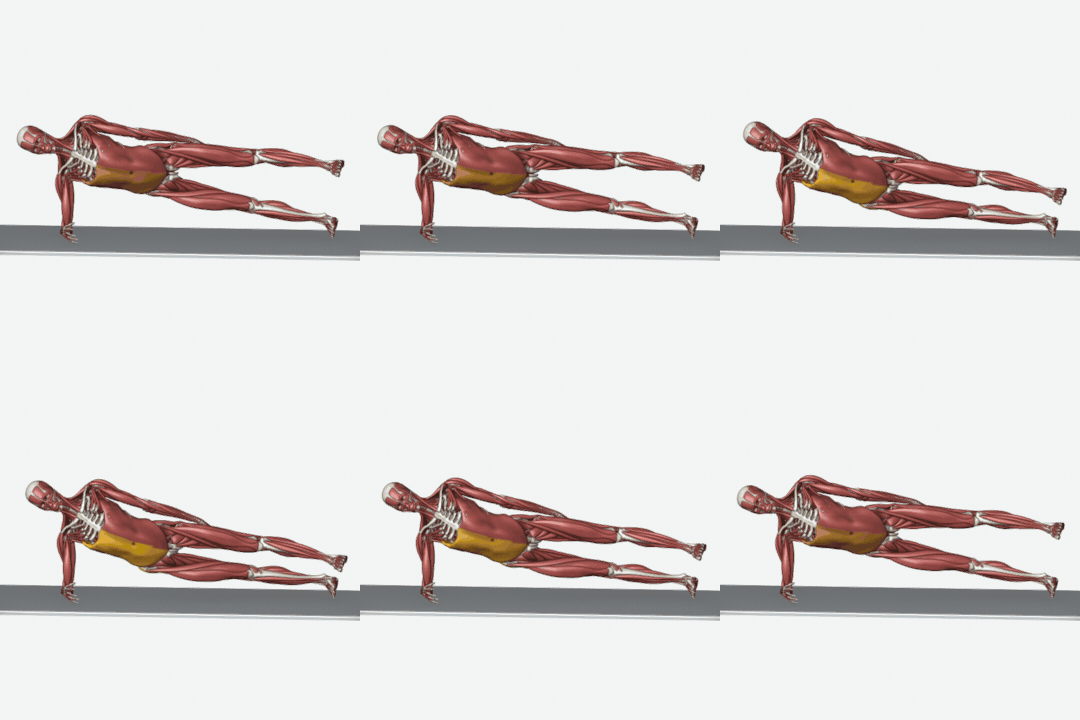
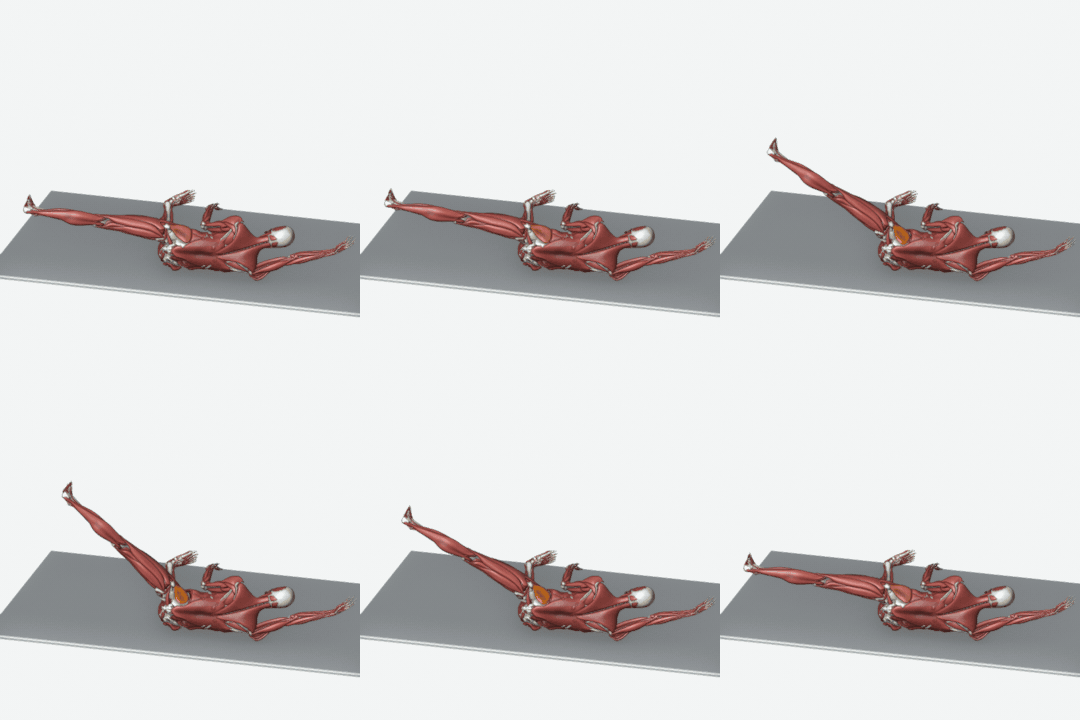
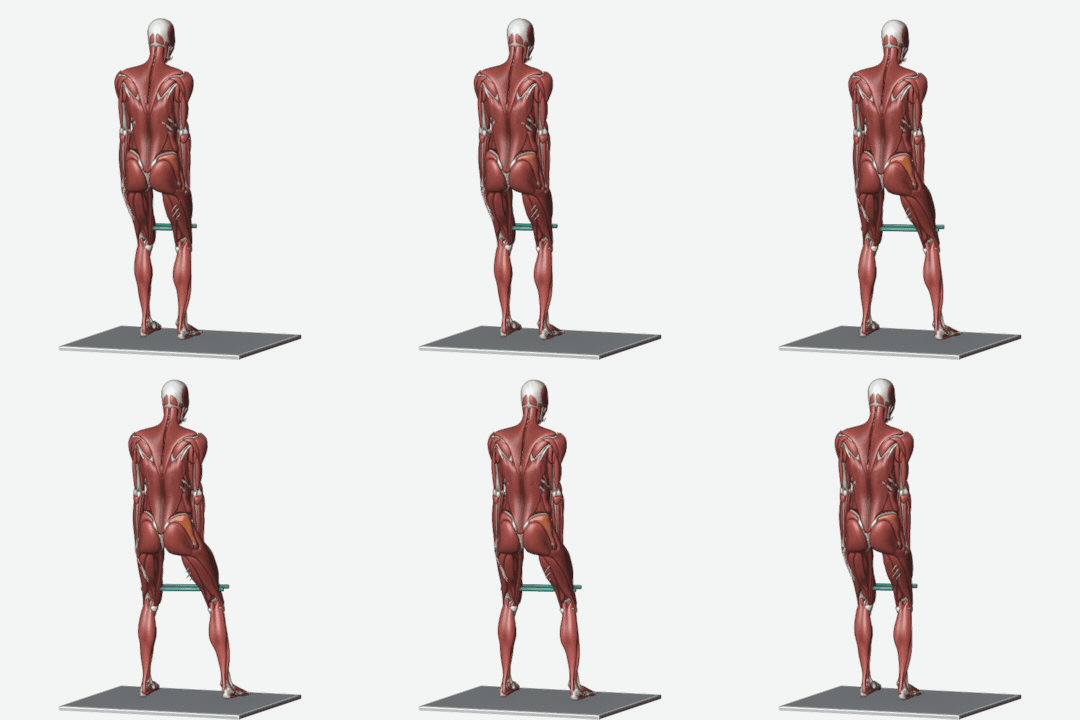
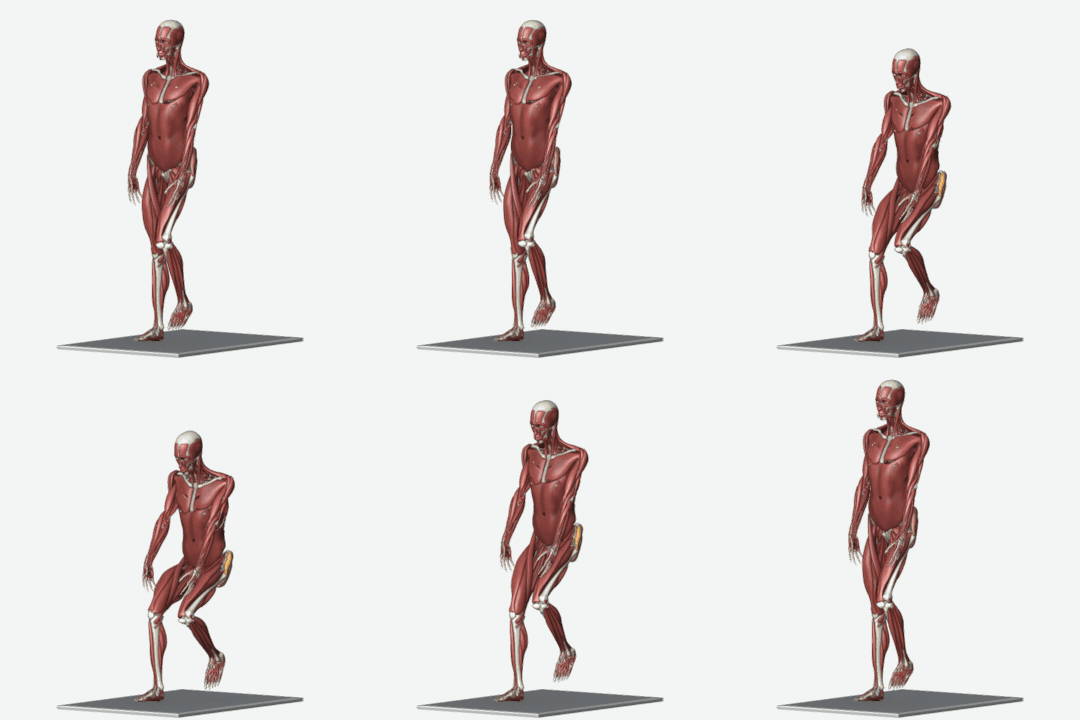
This example is for a moderate grade; each stage runs shorter or longer with the measured grade, and a person's own programme is written after assessment, around their other conditions and limits. If a movement causes pain, stop it and contact the clinic. Muscle colours in the animations: orange working, blue stretching, amber holding still.
Every number on this page is measured on the skin surface in a photograph. That is not the same as a measurement taken on a radiograph: it correlates with one and does not replace it. Wherever the decision depends on imaging, this page and the report itself say so.
What happens at the clinic
The assessment starts with three standing photographs — front, side and back. Every angle is measured on those photographs, the report prints the number and the grade for each, and the exercise programme is built from those numbers rather than from a template. Posture analysis explains the whole path, and the online assessment can be started from your own photograph now.
Frequently asked questions
At what point is lateral trunk shift reported?
When upper body shifted to one side (lateral trunk shift) is above 1 cm, it is reported as a finding. That is where the "Mild shift" band begins. The bands come from: Coronal trunk balance; a shift beyond ~2 cm is the conventional decompensation threshold
Can lateral trunk shift be assessed from a photograph?
A photograph gives a number, which most assessments do not have. But it is a surface measurement and it does not replace imaging. Measured with a plumb line from the C7 spinous process to the gluteal cleft.
What is the most severe grade?
The worst band in this table is "Severe shift". The grade is printed beside the measurement itself in the report, so it is always clear which number produced the word.