
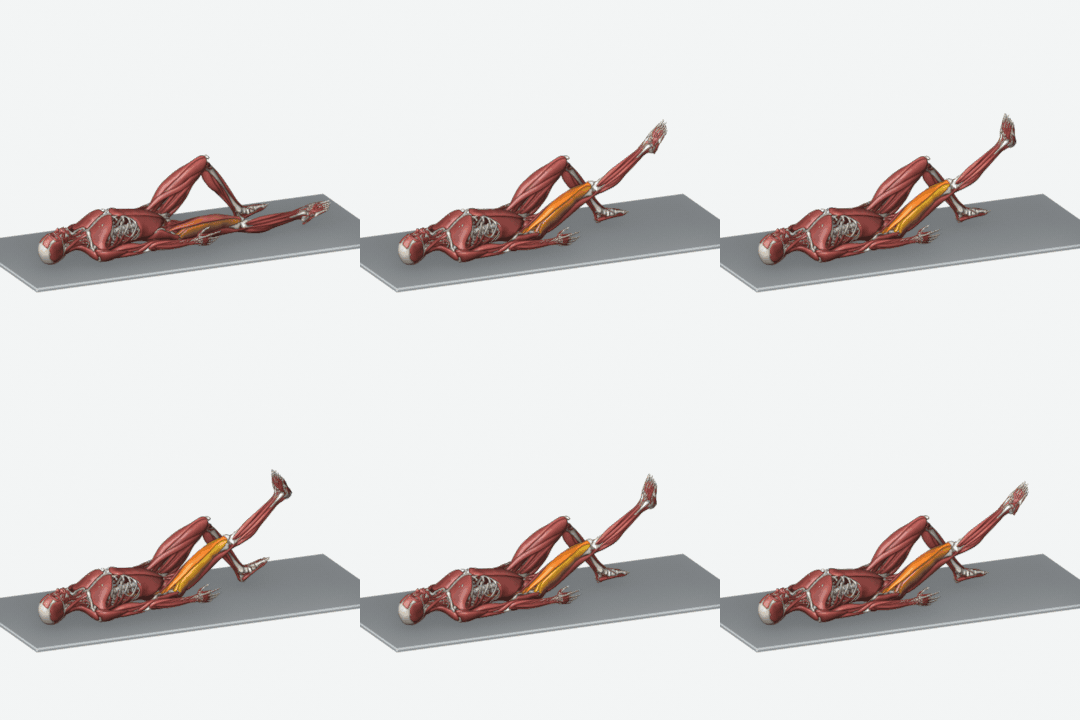
How to do it
Lie on your back with the other knee bent and that foot flat. Tighten the front of the thigh until the knee is fully straight, lift the leg to the height of the other knee, hold three seconds and lower slowly. The knee stays straight throughout and the low back is not pressed into the floor.
Default dose
3 × 12 · 3s · each side
This is the library's default dose. Each person's programme is set after assessment, around the grade of their finding and their own conditions and limits.
Muscles involved
- working Rectus femoris (quadriceps), Iliopsoas (hip flexor)
- holding still Vastus lateralis (quadriceps), Vastus medialis (quadriceps)
Muscle colours in the animation: orange working, blue stretching, amber holding still. These muscles were measured on the 3D model.
Where it sits in a programme: Activate the weak
The third phase is activation: strengthening a muscle that has become weak or underused, with controlled movement and light load, so it can carry its share of holding the body up.
Which postural findings it is prescribed for
It appears in the example programme on these pages:
Take care
- If the movement causes pain or makes pain worse, stop and contact the clinic or your doctor.
Source
Textbook:
- Kendall FP, McCreary EK, Provance PG, Rodgers MM, Romani WA. Muscles: Testing and Function with Posture and Pain. 5th ed. Lippincott Williams & Wilkins; 2005.
The classic reference for muscle testing and the posture types — sway back, flat back, lordosis — with the short and weak muscles of each.