
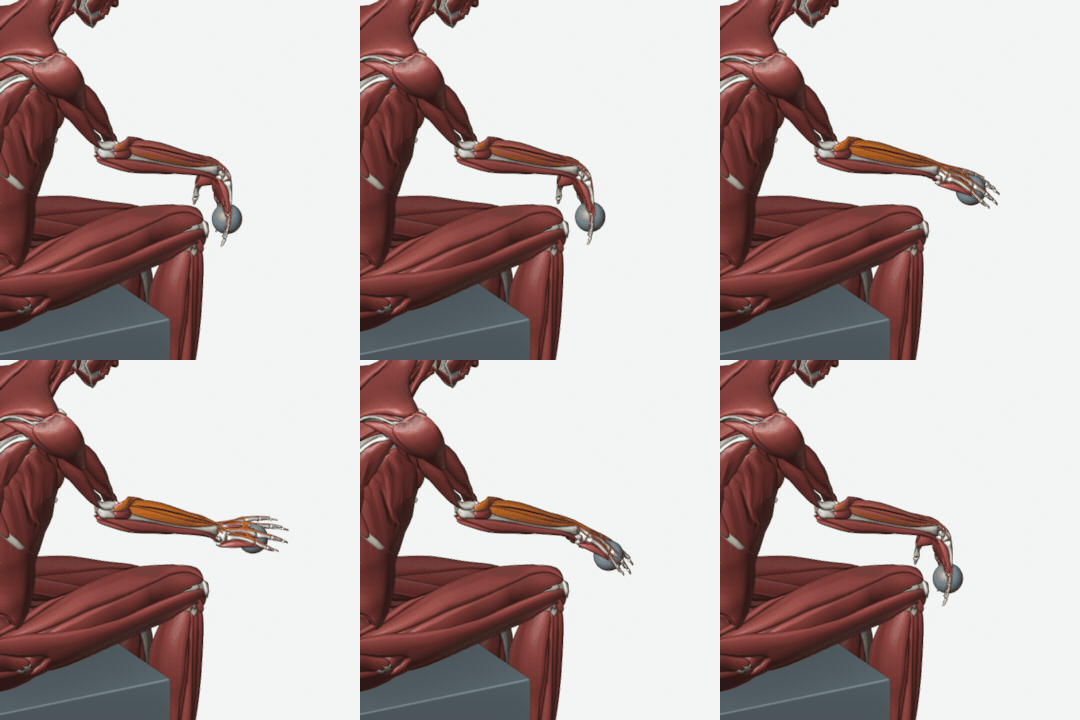
How to do it
Sit with the forearm on the thigh, palm down and the wrist past the knee. With a light weight, lift the back of the hand slowly and lower over three seconds. Pain up to 3 out of 10 is acceptable if it has settled by the next day.
Default dose
3 × 15
This is the library's default dose. Each person's programme is set after assessment, around the grade of their finding and their own conditions and limits.
Muscles involved
- working Wrist and finger extensors
Muscle colours in the animation: orange working, blue stretching, amber holding still. These muscles were measured on the 3D model.
Where it sits in a programme: Activate the weak
The third phase is activation: strengthening a muscle that has become weak or underused, with controlled movement and light load, so it can carry its share of holding the body up.
Which postural findings it is prescribed for
It appears in programmes the tool prescribes after a musculoskeletal assessment.
Take care
- If the movement causes pain or makes pain worse, stop and contact the clinic or your doctor.
Source
Trial or systematic review:
- Stasinopoulos D, Stasinopoulos I. Comparison of effects of Cyriax physiotherapy, a supervised exercise programme and polarized polychromatic non-coherent light (Bioptron light) for the treatment of lateral epicondylitis. Clin Rehabil. 2006;20(1):12-23.
Trial: an eccentric programme with static stretching of the wrist extensors did best. - Coombes BK, Bisset L, Vicenzino B. Management of lateral elbow tendinopathy: one size does not fit all. J Orthop Sports Phys Ther. 2015;45(11):938-49.
Progressive loading of the wrist extensors is the core of exercise treatment for tennis elbow.