
What it means
Excessive rounding of the upper back with forward shoulders and a forward head.
Where it comes from
Weak thoracic extensors with a short chest, usually from years of sitting.
How it is measured
It is measured on the side view, in the sagittal plane. The defining measurement is Rounded upper back (Thoracic kyphosis), and it is reported as a finding from above 45°. The number is computed from landmarks on that photograph — not estimated by eye, and not compared against a stock example.
What the numbers mean
| Measurement | Grade |
|---|---|
| up to 45° | Within normal range |
| 45–55° | Mild hyperkyphosis |
| 55–70° | Moderate hyperkyphosis |
| 70° and above | Severe hyperkyphosis |
Source of the bands: Conventional 20-45° thoracic window; surface measurement, not a radiographic Cobb angle
What is usually seen alongside it
- Where the head sits over the shoulder (Craniovertebral angle) — below 50°
- Shoulders rolled forward (Scapular protraction) — above 3°
None of these is a diagnosis on its own. Together they corroborate the finding; apart, they do not refute it — a measurement nobody took counts neither for nor against.
What confirms it
To separate postural from structural: a postural curve straightens on active extension or lying prone, a structural one does not. Scheuermann's is confirmed only on a standing lateral radiograph.
Age-related hyperkyphosis — its causes, and one common belief that is wrong
An increasing thoracic curve is common with age, and the first explanation people reach for is osteoporosis and vertebral fracture. The evidence treats that as only part of the picture.
The figure that moves the common belief
Reviewing seventy-seven studies, Roghani and colleagues [1] report that roughly 60 to 70 per cent of the most severe cases show no evidence of underlying vertebral compression fracture. Their conclusion is explicit: age-related hyperkyphosis is not equivalent to spinal osteoporosis.
The other contributors the same review lists are degenerative disc disease, weakness of the back extensor muscles, and genetic predisposition — and they treat extensor strength and endurance as important for maintaining normal alignment.
Why it matters
Katzman and colleagues [2] associate age-related hyperkyphosis with low bone mass, vertebral compression fractures and degenerative disc disease, and note that it contributes to difficulty with activities of daily living and a decline in physical performance. The subject is function, not appearance.
The same paper makes a point that is rarely repeated: effective treatments exist, but there is no public health approach to preventing hyperkyphosis among older adults.
So what is the number for
It measures the curve, not its cause. If the curve is above the reference range, the next question is why — and the answer differs between vertebral fracture, disc degeneration and muscle weakness, which changes what should be done about it.
⚠️ In older adults, or where osteoporosis is known, an increasing curve needs medical assessment. Exercising without knowing whether a vertebra has fractured is not a decision worth making.
References
- Roghani T, Zavieh MK, Manshadi FD, King N, Katzman W. Age-related hyperkyphosis: update of its potential causes and clinical impacts — narrative review. Aging Clin Exp Res. 2017;29(4):567–577. PMID 27538834 · DOI 10.1007/s40520-016-0617-3
- Katzman WB, Wanek L, Shepherd JA, Sellmeyer DE. Age-related hyperkyphosis: its causes, consequences, and management. J Orthop Sports Phys Ther. 2010;40(6):352–360. PMID 20511692 · DOI 10.2519/jospt.2010.3099
The evidence on this
Study summaries that measured this finding — with their numbers and their limits.
- How well does exercise work for forward head — Systematic review and meta-analysis, 13 randomised controlled trials
- Does bad posture mean pain — Systematic scoping review, 12 databases
- What breathing adds to kyphosis exercise — Systematic review and meta-analysis, 5 trials
- How smartphone use and neck pain are related — Systematic review and meta-analysis, 7 retrospective studies
- How heavy can a school bag be — Systematic review, 12 papers
The exercise programme
The thoracic spine has lost its extension. Until that movement returns, neither the shoulder nor the neck correction will hold.
The stages advance on a standard, not on the calendar:
- Stage 1 — release and wake up — weeks 1–4: Thoracic foam roll, Doorway pectoral stretch, Latissimus stretch, Open book (thoracic rotation)
Move on: When the movement is done without pain and without compensating, and the stretch is no longer what limits it. - Stage 2 — control — weeks 3–8: Doorway pectoral stretch, Latissimus stretch, Open book (thoracic rotation), Prone back extension, Prone Y — lower trapezius, Prone T, Wall angel
Move on: When the target muscle is felt through the whole range and the last set looks like the first. - Stage 3 — load and integration — weeks 6–16: Prone back extension, Prone Y — lower trapezius, Prone T, Wall angel, Diaphragmatic breathing
Move on: When the corrected pattern holds in everyday movement and under fatigue.
Each session 15–25 minutes, 4–6 times a week, for at least 12 weeks. (the training phases' default, not a study's result)
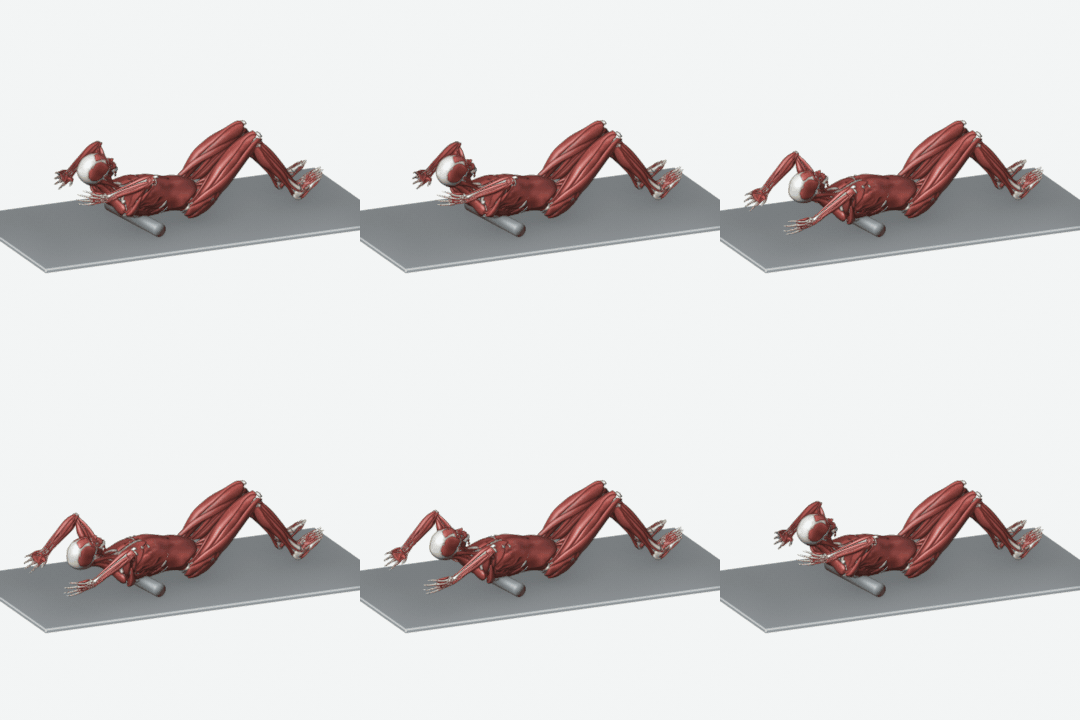
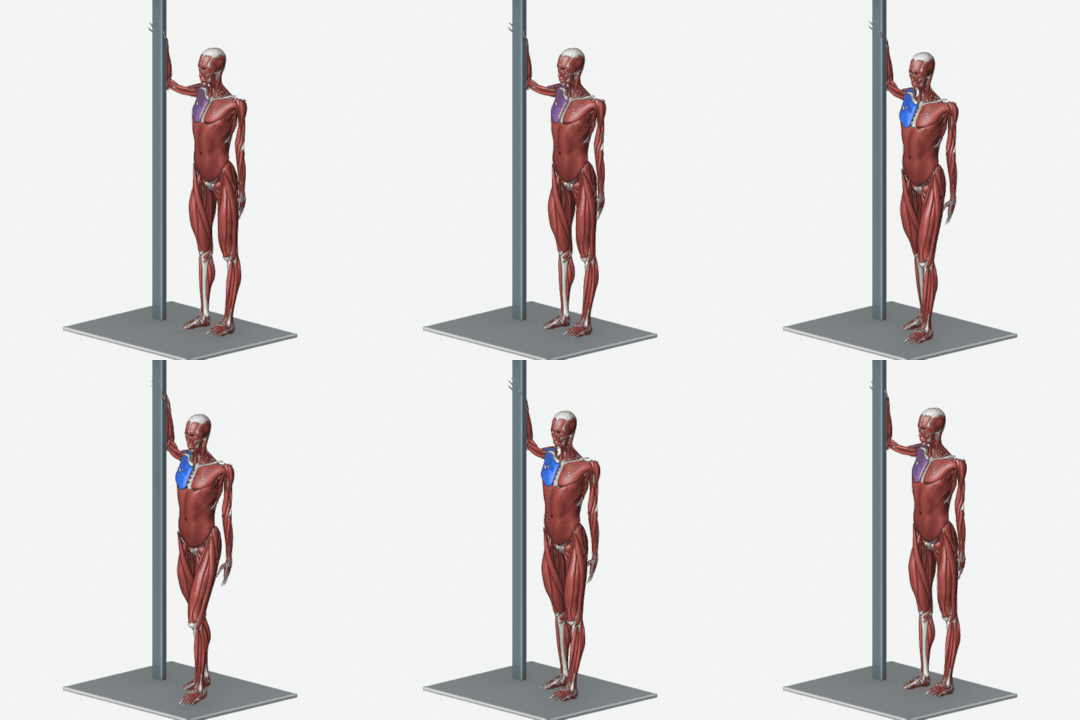
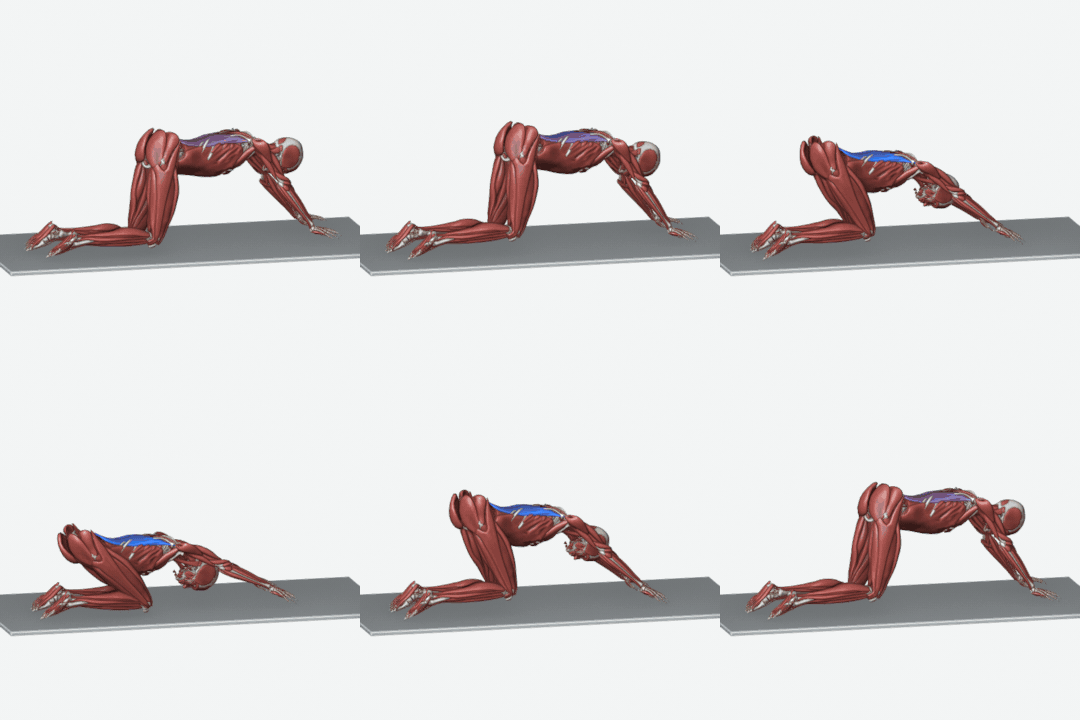
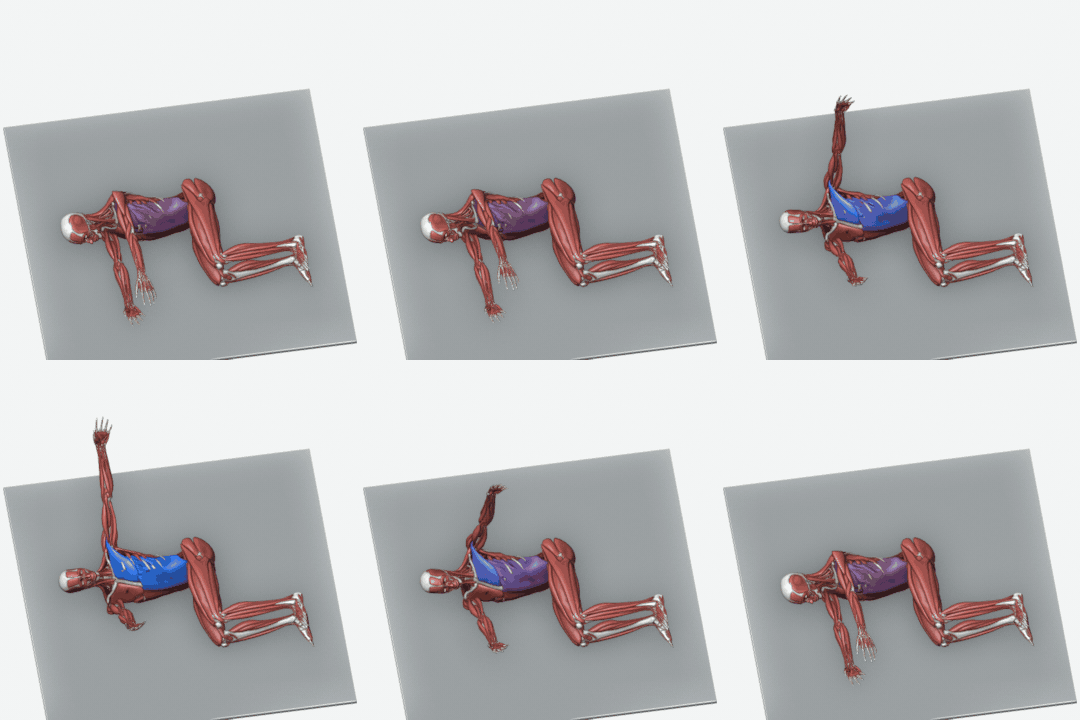
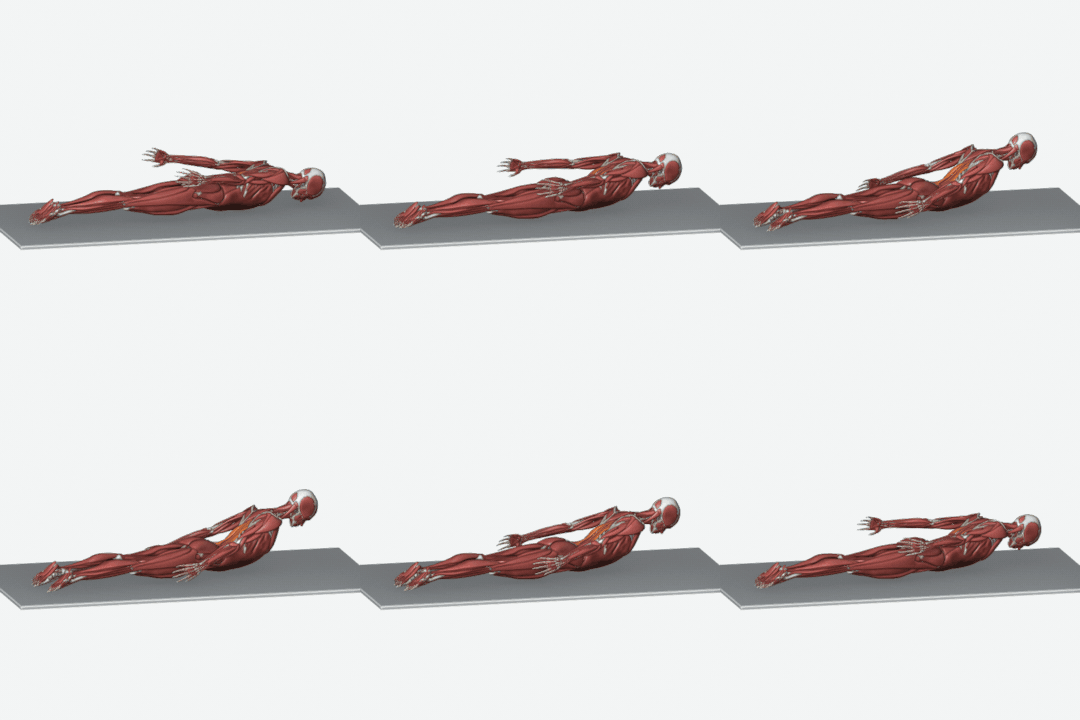
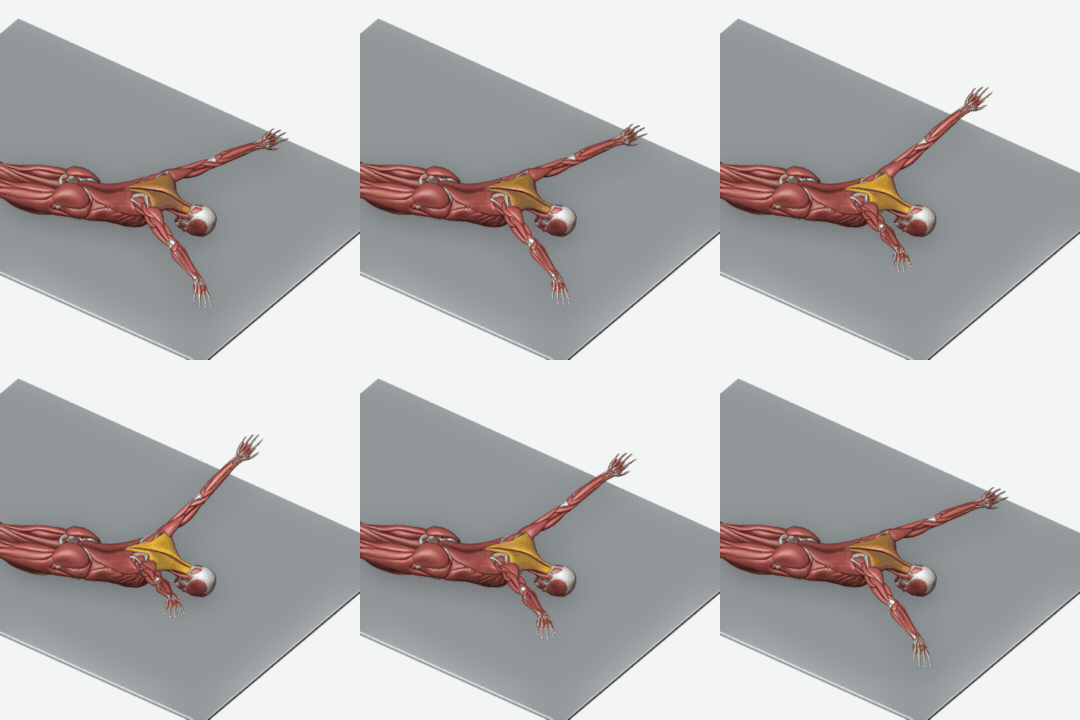
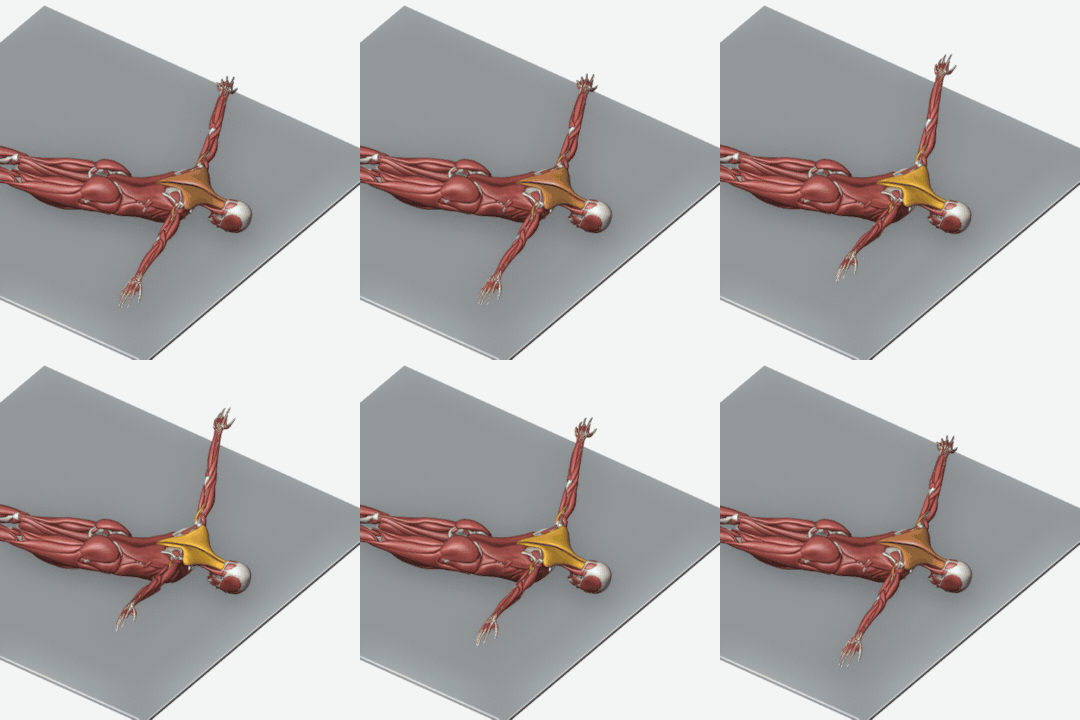
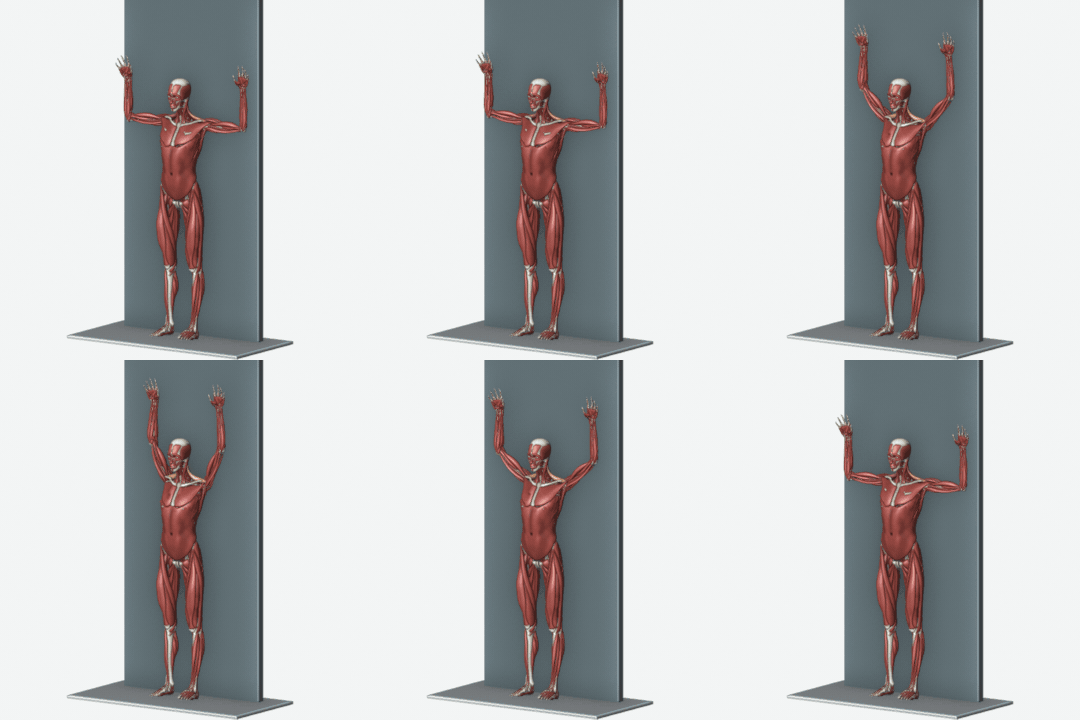
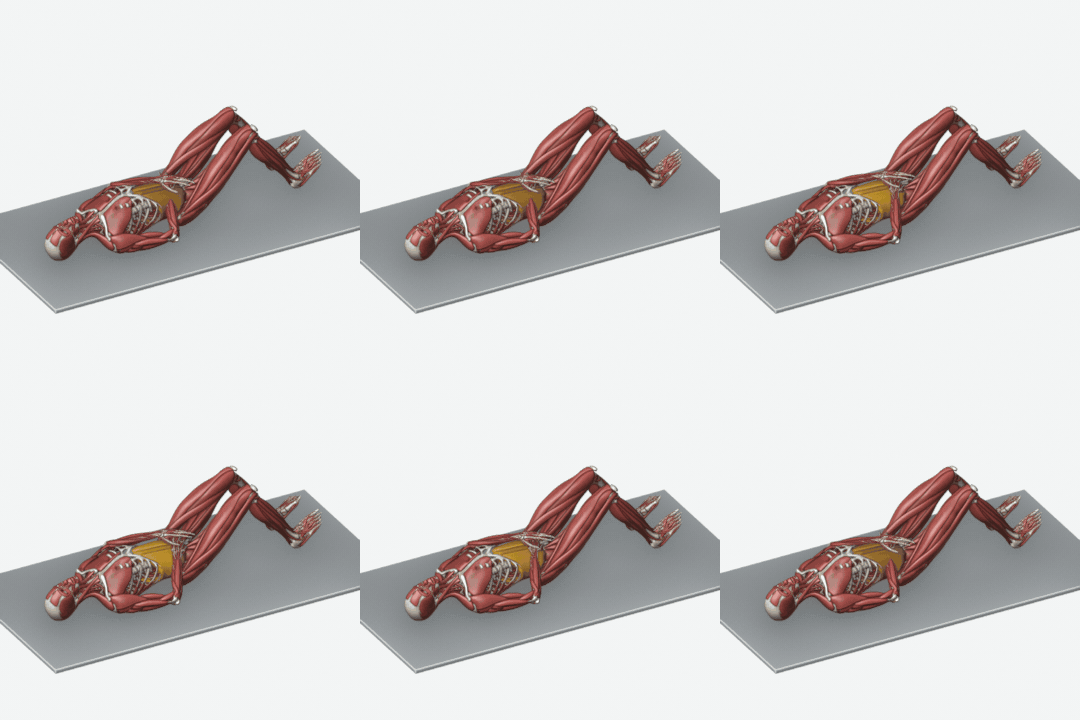
This example is for a moderate grade; each stage runs shorter or longer with the measured grade, and a person's own programme is written after assessment, around their other conditions and limits. If a movement causes pain, stop it and contact the clinic. Muscle colours in the animations: orange working, blue stretching, amber holding still.
Every number on this page is measured on the skin surface in a photograph. That is not the same as a measurement taken on a radiograph: it correlates with one and does not replace it. Wherever the decision depends on imaging, this page and the report itself say so.
What happens at the clinic
The assessment starts with three standing photographs — front, side and back. Every angle is measured on those photographs, the report prints the number and the grade for each, and the exercise programme is built from those numbers rather than from a template. Posture analysis explains the whole path, and the online assessment can be started from your own photograph now.
Frequently asked questions
At what point is thoracic hyperkyphosis reported?
When rounded upper back (thoracic kyphosis) is above 45°, it is reported as a finding. That is where the "Mild hyperkyphosis" band begins. The bands come from: Conventional 20-45° thoracic window; surface measurement, not a radiographic Cobb angle
Can thoracic hyperkyphosis be assessed from a photograph?
A photograph gives a number, which most assessments do not have. But it is a surface measurement and it does not replace imaging. To separate postural from structural: a postural curve straightens on active extension or lying prone, a structural one does not. Scheuermann's is confirmed only on a standing lateral radiograph.
What is the most severe grade?
The worst band in this table is "Severe hyperkyphosis". The grade is printed beside the measurement itself in the report, so it is always clear which number produced the word.