
How to do it
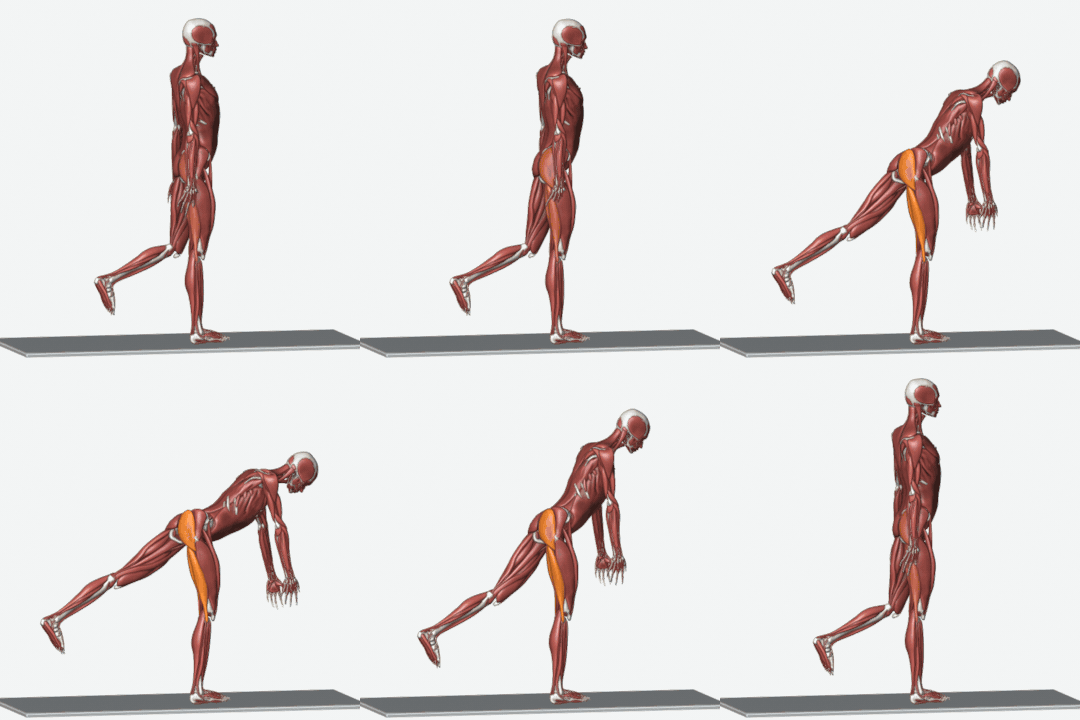
On one leg with a soft knee. Tip the trunk and the free leg forward together as one straight line until the back of the thigh stretches; the pelvis stays square to the floor. Squeeze the glute to come back up.
Default dose
3 × 8 · each side
This is the library's default dose. Each person's programme is set after assessment, around the grade of their finding and their own conditions and limits.
Muscles involved
- working while lengthening Gluteus maximus, Hamstrings (biceps femoris), Hamstrings (semimembranosus and semitendinosus)
Muscle colours in the animation: orange working, blue stretching, amber holding still. These muscles were measured on the 3D model.
Where it sits in a programme: Integrate
The fourth phase is integration: using the new pattern in whole, everyday movements — standing, bending, squatting, walking — so the correction does not stay on the exercise mat.
Which postural findings it is prescribed for
It appears in the example programme on these pages:
Take care
- If the movement causes pain or makes pain worse, stop and contact the clinic or your doctor.
Source
Measurement study:
- Distefano LJ, Blackburn JT, Marshall SW, Padua DA. Gluteal muscle activation during common therapeutic exercises. J Orthop Sports Phys Ther. 2009;39(7):532-40.
EMG: gluteus medius and maximus activity across twelve common exercises — side-lying hip abduction (the most gluteus medius), the clamshell, the banded side-step, the single-limb squat and deadlift, and lunges.